ADVERTISEMENT

ADVERTISEMENT



The curtain rang down on Milano Cortina 2026 in a burst of colour, gaiety and celebrations
Canada finished 11th with a tally of 21 medals, including five golds. While Africa ended without a medal, South America had a consolatory gold medal won by Brazil.
-
 Prabhjot Paul Singh
 - Sun, 22, Feb 2026
- 22:24 EST
- 27
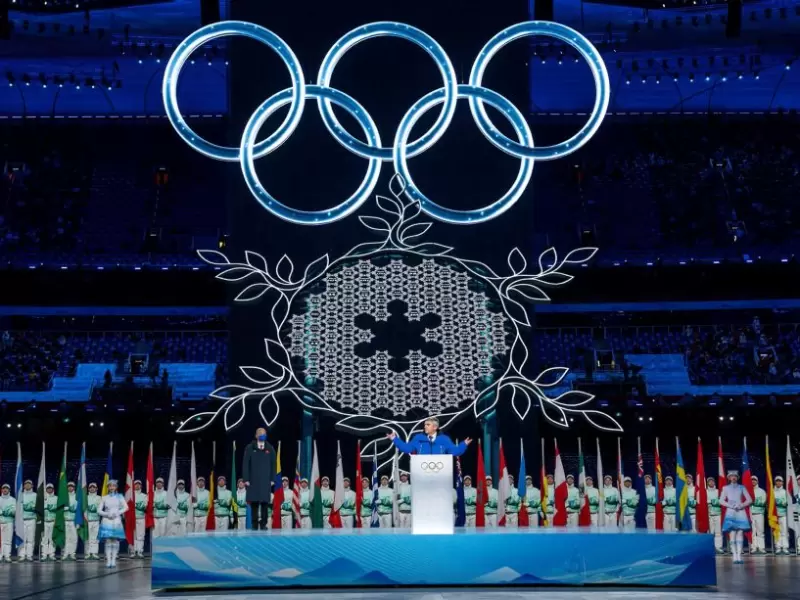 Beijing 2022 Olympic Winter Games / Olympics.com
All good things must come to an end. And the Winter Olympics are no different. After a 16-day spectacle of glory, the Games ended on a pleasant note for all the participating nations in general and the U.S. in particular, as it romped home with the "gold medal" of the Games—the men’s ice hockey title—after a gap of 46 years.
Norway finished at the top of the medals tally for the fourth consecutive time by aggregating 41 medals, including 18 gold and 12 silver, while the U.S.A. finished second with 33 medals—12 gold, 12 silver, and 9 bronze. Italy piled up its biggest medal tally in these Winter Olympic Games with 30 medals, including 10 golds, to finish below the Netherlands. The Dutch also had 10 gold medals out of a total of 20.
Canada finished 11th with a tally of 21 medals, including five golds. While Africa ended without a medal, South America had a consolatory gold medal won by Brazil. Australia, the new force in Winternter Olympics, won six medals, including three gold.
Asian nations were placed third behind Europe and the Americas. Japan led the Asian challenge with five golds in a total harvest of 24 medals, followed by China with 15 medals (five gold, four silver, and six bronze), while Korea was the third Asian nation to do fairly well, as it ended with 10 medals, including three gold and four silver.
“Bellissimo!” echoed in the historic Arena of Verona as Milano Cortina 2026 came to an epic conclusion following 16 days of absolute sporting delight. The Olympic Winter Games featured close to 2,900 athletes across 16 disciplines and 116 events competing for a total of 1,146 medals. A program of laser, music, and official ceremonies provided the climax to the largest assembly of winter athletes.
In a fitting end to the spectacle, ice hockey powerhouses Canada and the United States brought the curtain down with a men’s final for the ages. In the last event out of five finals on the last day, Team U.S.A. triumphed over Canada to claim its first gold since 1980 with its 2-1 overtime victory.
A Jack Hughes goal in overtime broke the deadlock to give Team U.S.A. its first men’s ice hockey gold medal and the 12th gold medal of the current Olympics. The epic final clash brought the sports program to a climactic conclusion with the United States winning their third Olympic gold medal in men’s ice hockey and the first since 1980.
Canadians were heartbroken as they lost both the women's and men's hockey finals to their archrivals and neighbours, the U.S..
Chasing a record-extending 10th gold medal in men’s ice hockey, Canada scored the equaliser via Cale Makar late in the second period after Matt Boldy’s opener for the U.S.A. early in the first. With teams deadlocked after regulation time, Hughes delivered the golden goal less than two minutes into overtime to send U.S. fans into a frenzy.
Swedish skip Anna Hasselborg delivered a takeout to break the tie in the 10th end for a narrow 6-5 victory over Switzerland to claim the women’s gold medal. In doing so, Hasselborg and her team gave Sweden its fourth Olympic title.
Emulating their triumph at PyeongChang 2018, Hasselborg became only the second woman, after fellow Swede Anette Norberg, to win two Olympic titles as skip. Sara McManus, Agnes Knochenhauer, and Sofia Scharback have also all now won two golds, as well as a bronze from Beijing 2022.
Johannes Lochner led Germany to a 1-2 finish on the podium, beating defending champion and sliding legend Francesco Friedrich into second place in the four-man bobsleigh.
Ending his career on a high, Lochner bagged both the two-man and four-man gold medals, denying Friedrich the three-peat. Lochner and his crew, made up of Thorsten Margis, Jörn Wenzel, and Georg Fleischhauer, ended their fourth run with a combined time of 3:37.57.
Friedrich’s crew finished second place in 3:38.14, with the Swiss quartet claiming bronze (3:38.64).
Margis became the first-ever athlete to win five Olympic titles in bobsleigh, while Friedrich boasts six medals—four gold and two silver.
Swedish skier Ebba Andersson bagged her first gold medal of Milano Cortina 2026, winning the women's 50km mass start classic in the final cross-country skiing event at these Games. Andersson ended her campaign on a high note with her fourth medal in Italy, following her three silver medals.
The Swede finished two minutes and 15.3 seconds (2:15.3) ahead of the second-placed
Heidi Weng of Norway, with Switzerland's Nadja Kaelin winning a sprint for the line to take bronze.
Eileen Gu finished her Olympic Games with a flourish, throwing down an impressive third-run score of 94.75 to bag the women’s freeski halfpipe gold medal. She is now the most decorated freeskier in Olympic history.
The superstar from the People’s Republic of China extended her career Olympic haul to six medals, three at these Games alone, with silver in the slopestyle and Big Air. The 22-year-old shared the halfpipe podium with compatriot Li Hui, while Zoe Atkin (92.50) of Great Britain finished third for bronze.
Discover more at New India Abroad.
Related









ADVERTISEMENT

ADVERTISEMENT
E Paper
Video

Comments
Start the conversation
Become a member of New India Abroad to start commenting.
Sign Up Now
Already have an account? Login