ADVERTISEMENT

ADVERTISEMENT



Sikh soldiers and the world wars: Europe continues to honor supreme sacrifices
The sacrifices made by Sikh soldiers during World Wars I and II as part of the British Army are increasingly being documented and recognized through the erection of memorials across Europe.
-
 Prabhjot Paul Singh
 - Sat, 20, Dec 2025
- 23:02 EST
- 10
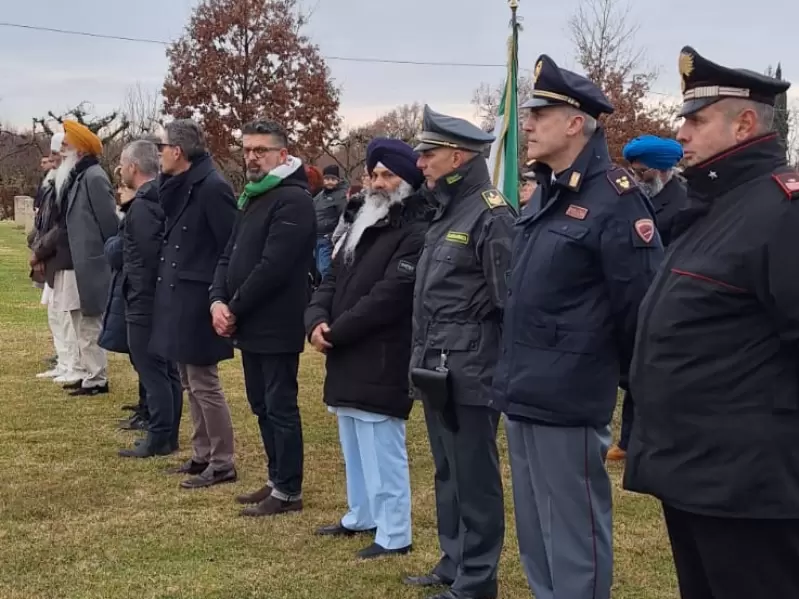 This week, the committee, in coordination with the Fascia city council, organized a large event commemorating the commune’s liberation and honoring the sacrifices of at least five Sikh soldiers. / Prabhjot Paul Singh
Sobriety, solemnity, military honors and moments of celebration continue to mark commemorations across Europe — particularly in Belgium and Italy — honoring the supreme sacrifices made by Sikh soldiers during the two world wars.
These observances are typically held between September and January to coincide with the dates when local villages, towns and cities became battlefields. Indian soldiers, and Sikh soldiers in particular, fighting in British Army uniforms, played a crucial role in halting German advances and defending local populations far from their homeland.
This correspondent visited several battle sites where Sikh soldiers made the ultimate sacrifice. Locals continue to praise their courage in enduring extreme weather, unfamiliar terrain and the hardship of fighting thousands of miles from home for the freedom of people they barely knew.
“They remain our all-time heroes,” said an Italian resident whose father fought alongside Sikh soldiers.
The sacrifices made by Sikh soldiers during World Wars I and II as part of the British Army are increasingly being documented and recognized through the erection of memorials across Europe.
ALSO READ: Italians honor Sikh soldiers
Bhupinder Singh of the Netherlands has taken on the task of chronicling the role, efforts and sacrifices of Sikh soldiers during the wars. He has published multiple books on the subject. Earlier this week, an event was held in Belgium to mark fighting that took place there in October 1918. Bhupinder Singh, also known as Bhupinder Singh Holland, recalled his engagements with Belgian authorities since 1998 that eventually led to the installation of Sikh war memorials.
At gurdwaras near these memorials, special congregations are held annually to mark the martyrdom of Sikh soldiers. Members of the Sikh community join local residents in commemorating victories over German forces during World War II.
As many Sikh soldiers hailed from Punjab’s Majha region, similar commemorative events are also held in India.
In Italy, the Sikh Soldiers Yaadgar Committee, led by Prithipal Singh, has worked closely with local commune, city and provincial authorities to raise memorials and preserve the history of Sikh soldiers who fought under unfamiliar climatic and living conditions.
“They overcame every hardship and fought gallantly as if defending their own land and people,” Prithipal Singh said.
This week, the committee, in coordination with the Fascia city council, organized a large event commemorating the commune’s liberation and honoring the sacrifices of at least five Sikh soldiers.
Fascia had earlier honored one of the fallen Sikh commanders, Mohan Singh, with a gold medal. Locals continue to hold Sikhs in high regard, Prithipal Singh said.
Following prayers at a local church, community members participated in a Sikh Ardas before the commemorations began. The presence of Italian troops added a ceremonial dimension to the event. Members of the Sikh Soldiers Yaadgar Committee, including Majinder Singh Suzzara, Iqbal Singh, Gurmail Singh Bhatti and Harjit Singh, paid floral tributes at the cremation site of the Sikh soldiers.
Schoolchildren, local police, freedom fighters and their families were also among those who took part in the commemorations.
Related








ADVERTISEMENT
ADVERTISEMENT
E Paper
Video

Comments
Start the conversation
Become a member of New India Abroad to start commenting.
Sign Up Now
Already have an account? Login