ADVERTISEMENT

ADVERTISEMENT



Mapping the vaccine landscape: Trust, turbulence and the future of U.S. immunization policy
For immigrant communities, particularly undocumented families, vaccine access now intersects with fears of immigration enforcement.
-
 Ritu Marwah
 - Mon, 02, Mar 2026
- 10:21 EST
- 13
 Representative image / Pexels
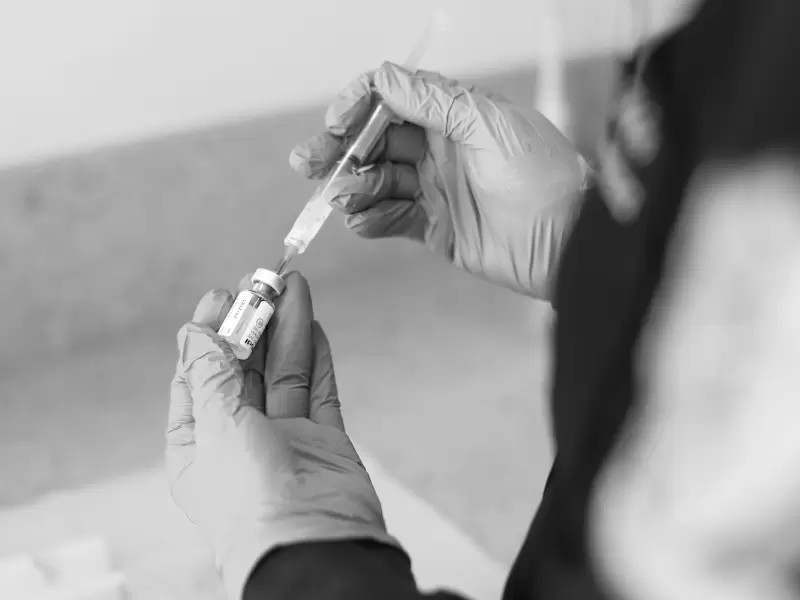
As vaccine-preventable diseases such as measles and whooping cough resurface across the United States, a parallel crisis is unfolding: a sharp erosion of public trust.
Roughly one in six parents, 16 percent, report having skipped or delayed a recommended vaccine for their child, according to a 2025 poll jointly released by the Kaiser Family Foundation and The Washington Post. The findings come amid growing skepticism about vaccines and mounting controversy surrounding federal vaccine guidance.
At a recent American Community Media Zoom briefing, Dr. Richard Besser, president and CEO of the Robert Wood Johnson Foundation and former acting director of the Centers for Disease Control and Prevention, warned that the nation is at a precarious crossroads.
“There was nothing I did in more than 30 years of pediatrics that had more proven value than ensuring children were vaccinated fully and on time,” Besser said. “Now we are moving in the wrong direction.”
ACIP upheaval and political crosscurrents
Central to the current turmoil is the fate of the Advisory Committee on Immunization Practices (ACIP), the independent expert panel that has long reviewed scientific evidence and issued vaccine recommendations to the CDC.
The committee’s recent meeting was canceled, following controversy over new federal leadership and changes to its structure. Besser criticized what he described as political interference and the dismantling of longstanding safeguards meant to insulate scientific review from ideology.
During his 13 years at the CDC, including his tenure as acting director at the start of the 2009 H1N1 pandemic, Besser said he never witnessed political leaders attempt to override ACIP’s scientific recommendations.
“The federal advisory committee system is designed to limit political influence,” he said. “What we’re seeing now would have been unthinkable.” In response to concerns over federal guidance, organizations such as the American Academy of Pediatrics (AAP) have stepped forward with independent vaccine recommendations. Several states are also forming regional coalitions to review evidence and issue their own guidance.
A research initiative at the University of Minnesota, the Vaccine Integrity Project, is working to provide independent scientific analysis previously conducted through ACIP.
Measles as a warning signal
Besser pointed to measles outbreaks in states such as Texas and South Carolina as evidence of declining vaccine coverage. Measles, he said, is a “marker disease” that reflects how well, or poorly, a community is vaccinating. “If you are not vaccinated, measles will find you,” he said.
The measles vaccine is approximately 95% effective, meaning a small percentage of vaccinated individuals may still contract the disease. But widespread community vaccination dramatically reduces transmission and protects vulnerable individuals who cannot be vaccinated or for whom vaccines are less effective.
Efforts in several states to remove school vaccine requirements are particularly troubling, Besser added. “If you’re sending your child to kindergarten, you don’t know whether they’re sitting next to an unvaccinated child.”
COVID-19 and the trust gap
The COVID-19 pandemic accelerated vaccine skepticism, according to Besser. While mRNA vaccines were highly effective in preventing severe disease and death, the public struggled with a key epidemiological concept: vaccines reduce risk but do not eliminate it entirely.
“Safe is not a black-and-white term,” Besser said. “It’s about weighing risks, the risk of vaccination versus the risk of disease.” He emphasized that rare side effects often become apparent only after millions of doses are administered, a reality for any new medical intervention. Systems to monitor vaccine safety exist precisely to detect and respond to those rare events.
Compounding public confusion, Besser argued, was limited direct communication from the CDC during COVID-19, which allowed political leaders to frame evolving scientific guidance as inconsistency rather than learning. “When public health is working effectively, it’s invisible,” he said.
Immigrant communities and access fears
For immigrant communities, particularly undocumented families, vaccine access now intersects with fears of immigration enforcement. While federally qualified health centers traditionally do not collect or share immigration status information, Besser acknowledged that heightened enforcement activity has discouraged some families from seeking care.
“It’s dangerous to have a child who is unvaccinated,” he said. “But it’s understandable that families are worried.”
The global dimension
The United States’ withdrawal from the World Health Organization has further raised alarm among public health leaders.
“Infectious diseases don’t respect borders,” Besser said. “Pulling back from global health engagement will not make Americans safer.” He noted that the U.S. has historically played a central role in global vaccination initiatives and disease surveillance. Retreating from that leadership, he warned, could weaken early warning systems for emerging pathogens and diminish diplomatic influence.
Food policy and broader health equity
Beyond vaccines, Besser addressed broader public health challenges, including food insecurity and ultra-processed foods. While acknowledging growing awareness of diet-related health risks, he argued that policy solutions must address affordability and access.
“Over half of children in America get their main meal from school lunch programs,” he said. “If we’re serious about improving health, we need to invest there.”
Health inequities remain stark. In Mercer County, New Jersey, Besser noted, life expectancy varies by 14 years between affluent Princeton and nearby Trenton, just 14 miles apart. “We are the only wealthy nation where access to healthcare depends so heavily on ability to pay,” he said.
Preparing for the next pandemic
Another pandemic, Besser said, is inevitable. Whether caused by influenza or a novel virus, the next global outbreak will test a public health system he believes has been weakened. “We will be less prepared for the next pandemic than we were for COVID,” he said, citing reductions in CDC staffing and funding for state and local health departments.
Running both the CDC and the National Institutes of Health under a single acting director, he added, reflects a misunderstanding of the scale and complexity of each institution’s mission.
Rebuilding trust
Despite the turbulence, Besser remains convinced that trust can be rebuilt, but not through political messaging. “My advice to parents is simple,” he said. “If you’re fortunate enough to have a medical provider you trust, ask them. You have a right to have your questions answered.”
“Vaccines remain one of the most powerful tools we have,” Besser said. “There is nothing more tragic than a child getting a disease that could have been prevented by a simple shot.”
Discover more at New India Abroad.
Related

ADVERTISEMENT

ADVERTISEMENT
E Paper
Video

Comments
Start the conversation
Become a member of New India Abroad to start commenting.
Sign Up Now
Already have an account? Login