ADVERTISEMENT
ADVERTISEMENT



Jaishankar condemns attacks on merchant shipping at ASEAN forum
Minister also backed counterterrorism cooperation and legally binding South China Sea code.
-
 IANS
IANS - Thu, 23, Jul 2026
- 05:46 EDT
- 27
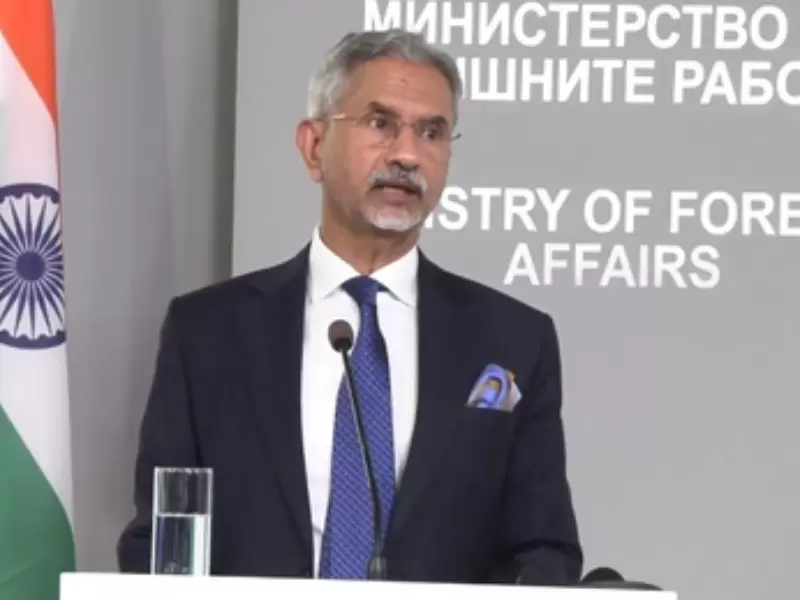 External Affairs Minister S. Jaishankar. / IANS
External Affairs Minister S. Jaishankar on Thursday described attacks on merchant shipping and civilian infrastructure as "unacceptable," stressing that commerce through international waterways must remain safe and unimpeded.
Addressing the 33rd ASEAN Regional Forum (ARF) Ministerial Meeting in Manila, Jaishankar highlighted the forum's role in addressing political and security issues in the Indo-Pacific amid global uncertainties.
Also read: US student visa rule may disrupt degrees
Following the meeting, Jaishankar said on X that he welcomed the Manila Plan of Action, noting that its five pillars align with India's approach to the Indo-Pacific.
"Welcomed the Manila Plan of Action and highlighted that its five pillars are aligned with India's own approach to the Indo-Pacific. India promotes a collaborative approach to disaster relief, sharing best practices, developing common SOPs and undertaking real-time & table top exercises," he posted.
"Highlighted that attacks on maritime shipping and civilian infrastructure are unacceptable, and commerce through international waterways should remain safe and unimpeded," he added.
Jaishankar said India continues to advocate for the Coalition for Disaster Resilient Infrastructure and regularly deploys field hospitals, search and rescue teams, relief materials and medical supplies during humanitarian crises.
He noted that India has recently supported rehabilitation efforts following cyclones in Sri Lanka, the Philippines and Jamaica, as well as earthquakes in Myanmar, Venezuela and Afghanistan.
Calling for zero tolerance toward terrorism, Jaishankar said there should be no doubt that terrorist acts would have consequences and urged countries to prioritize efforts to disrupt terrorist financing.
He noted that India co-chairs the ASEAN Defence Ministers' Meeting-Plus (ADMM-Plus) Experts' Working Group on Counter-Terrorism with Malaysia and is leading efforts to prepare a compendium of best practices.
On maritime security, Jaishankar highlighted India's Information Fusion Centre, the Indo-Pacific Maritime Domain Awareness initiative, and the deployment of Indian naval assets from the North Arabian Sea to the Western Pacific.
He said these efforts contribute to countering piracy, trafficking and narcotics smuggling while helping secure maritime commerce.
Jaishankar also called on the international community to remain vigilant against efforts that undermine non-proliferation and disarmament. He advocated a responsible, human-centric approach to artificial intelligence and greater international cooperation on cybercrime.
Reaffirming India's position on the South China Sea, he said India supports a "substantive, effective and legally binding" Code of Conduct that is fully compliant with the 1982 United Nations Convention on the Law of the Sea (UNCLOS) and does not prejudice the legitimate rights of all users.
His remarks came amid continuing tensions in the South China Sea, where competing territorial claims by China, the Philippines, Vietnam, Malaysia, Brunei and Taiwan have led to repeated confrontations, making the waterway a key strategic flashpoint in the Indo-Pacific.
Discover more at New India Abroad.
Leave A Comment
Related


ADVERTISEMENT

ADVERTISEMENT
E Paper
Video

Comments
Start the conversation
Become a member of New India Abroad to start commenting.
Sign Up Now
Already have an account? Login