ADVERTISEMENT

ADVERTISEMENT



Indian Americans who owned the year
From boardrooms to ballots and labs to live stages, Indian Americans didn’t just show up in 2025—they set the agenda and moved the needle.
-
 Manvi Pant
 - Wed, 31, Dec 2025
- 01:30 EST
- 18
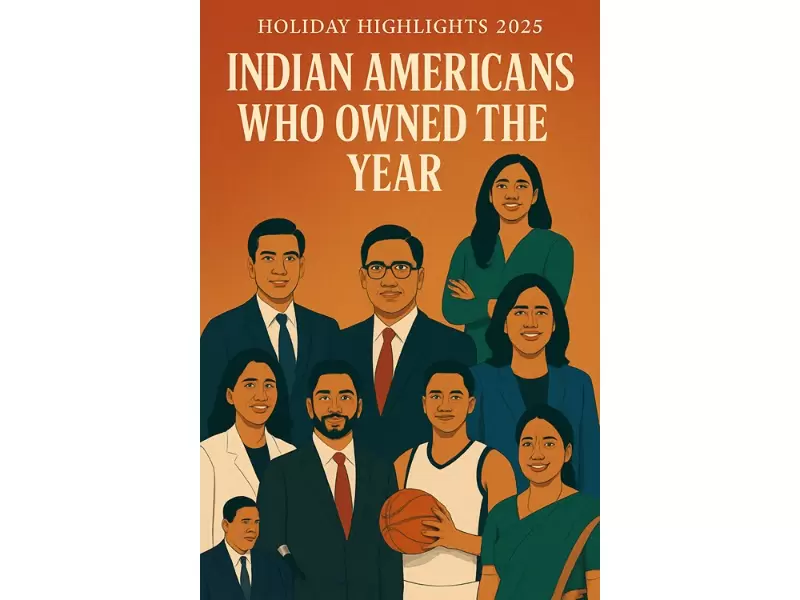 Representative Image / AI-generated
Representation turned into domination in the best way. If 2025 were a coffee-table magazine, Indian Americans would be on every other cover. This year felt less like representation and more like a takeover across politics, tech, science, sports, entertainment, and culture.
Read on to know why…
The bold voices in politics:
This year marked a significant moment for Indian Americans in the political sphere. Some new faces emerged across city councils, state legislatures, and national platforms, bringing bold vision, clarity of thought, and new-age ideas to the fore.
Leaders like Ro Khanna remained a key voice in tech regulation and economic justice, while Gen Z organizers infused new energy into grassroots politics.
On the other hand, leaders like Pramila Jayapal remained central to progressive debates on immigration reform, healthcare, and workers’ rights. What truly stood out, though, was the campaign style. Absolute deal-maker!
More TikTok, more data-driven, more community-backed. Think town halls mixed with viral reels and smart digital storytelling, remember Zohran Mamdani?
Also Read: Indian-origin oncologist joins Florida's cancer institute
The big brain in business:
This was a golden year for Indian American leadership. Tech leaders didn't just participate in global decision-making—they led it and shaped it. Sundar Pichai remained at the helm of Google, steering the company through an AI-first era with steady authority and long-term vision.
At Microsoft, Satya Nadella continued redefining enterprise innovation, positioning AI as both a productivity tool and a cultural shift. Beyond these familiar names, a new generation stood firmly in the spotlight.
For instance, TIME's 2025 CEO of the Year, Neal Mohan, led YouTube through critical conversations around creator economies, regulation, and platform responsibility.
Arvind Krishna of IBM pushed the future of hybrid cloud and enterprise AI, while Shantanu Narayen continued to position Adobe at the intersection of creativity, data, and digital trust.
Together, all of this reflected a leadership that felt less symbolic and more structural—Indian Americans not just succeeding within their own territories but actively expanding into other mainstream divisions, being future-ready.
For the young Indian-American founders, the VC room grew louder, the pitch decks grew sharper, and their vision grew bolder.
Next-gen innovation in science and space:
If a genius had a nationality this year, it would’ve worn an Indian American badge. Sunita Williams remained a global icon in space exploration, inspiring a fresh wave of young scientists and engineers.
Swati Mohan, whose calm voice once guided a Mars landing, stood tall as a symbol of scientific leadership blending precision with quiet authority.
In medicine and research, figures like Siddhartha Mukherjee reshaped how we think about cancer—not just as a disease, but as a deeply human story—and leaders such as Reshma Kewalramani pushed biotechnology toward breakthroughs that save lives at scale. From AI labs and climate research to public health and green energy innovation, Indian Americans have done extremely well this year.
Main character energy in Indian Americans:
2025 surely belonged to Indian Americans in pop culture. Mindy Kaling continued shaping smart, funny, culturally rich storytelling in Hollywood. Hasan Minhaj dominated the stand-up and political satire space, blending comedy with commentary.
Kal Penn stayed relevant across acting, writing, and activism. Authors, filmmakers, YouTubers, and digital creators made Indian American identity look and feel bold, stylish, and mainstream.
Even global stars like Priyanka Chopra Jonas influenced Hollywood conversations around South Asian representation, blurring borders and stereotypes. Music, streaming, fashion, and social media all carried shades of what is called “desi pride.”
The game changers in sports:
Quiet but powerful could easily describe Indian Americans in sports. Tennis star Rajeev Ram continued to represent with consistency and excellence on the international stage.
At the same time, young Indian American athletes claimed their space across basketball courts, track fields, esports arenas, and collegiate leagues throughout the U.S. The narrative shifted from “rare presence” to “rising standard.” Coaches noticed. Commentators took note. Fans followed.
Power with purpose for social impact:
Away from the spotlight, Indian American changemakers focused on building strong, lasting foundations. Nonprofit leaders launched programs expanding education access, youth mentorship, and immigrant rights, while community organizers strengthened voter awareness, mental health support, and leadership pipelines for the next generation. It wasn’t flashy, but it was deeply powerful.
Related



.png)
ADVERTISEMENT
ADVERTISEMENT
E Paper
Video

Comments
Start the conversation
Become a member of New India Abroad to start commenting.
Sign Up Now
Already have an account? Login