ADVERTISEMENT
ADVERTISEMENT



India rejects proposal to expand only non-permanent UNSC membership, calls it 'bordering on failure'
India says meaningful U.N. Security Council reform must include an expansion of permanent membership.
-
 IANS
IANS - Tue, 16, Jun 2026
- 02:28 EDT
- 29
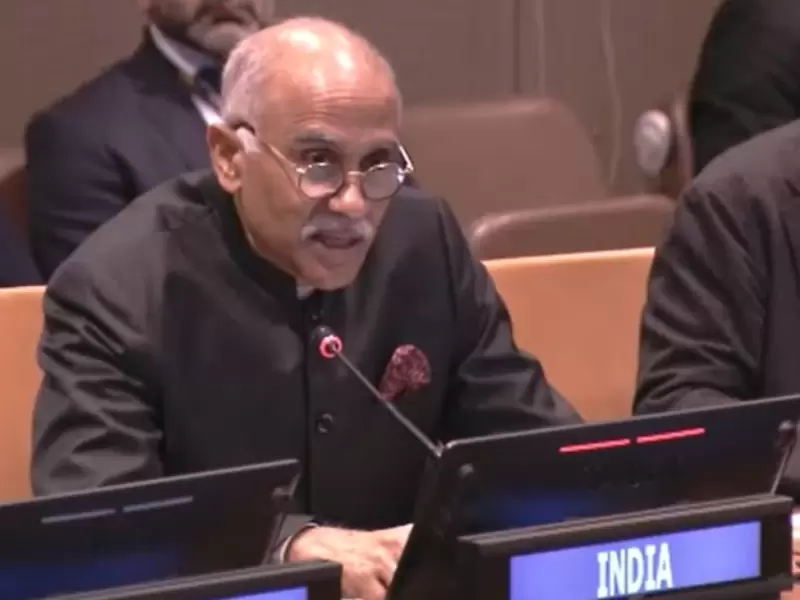 India's Permanent Representative to the UN, P. Harish, speaks during discussions on U.N. Security Council reform at the UN headquarters. / UN
India has rejected proposals to expand only the non-permanent category of the United Nations Security Council (UNSC), arguing that such a move would leave the body's existing power structure unchanged.
Speaking at a meeting of the Intergovernmental Negotiations (IGN) process on Security Council reform on June 16, India's Permanent Representative to the United Nations, P. Harish, said reform without expanding permanent membership would fail to address longstanding inequities within the Council.
Also Read: Indian EAM Jaishankar urges recognition of India’s contributions to science
"UNSC reform would be grossly inadequate, bordering on failure, if expansion is limited only to the non-permanent category," Harish said.
The Security Council currently consists of five permanent members — China, France, Russia, the United Kingdom, and the United States — along with 10 non-permanent members elected for two-year terms.
Harish said expanding only non-permanent seats would not alter what he described as the decision-making monopoly of the P5, the Council's five permanent members.
"Groups and member states have waited this long for real and meaningful reform," he said, reiterating India's longstanding position that both permanent and non-permanent membership categories should be expanded.
The remarks come amid continuing disagreements among U.N. member states over how to reform the Security Council, an issue that has been debated for decades.
A group known as Uniting for Consensus (UfC), led by Italy and including Pakistan, has opposed the addition of new permanent members and instead supports expanding only the non-permanent category.
Without naming the group directly, Harish criticized what he described as efforts by "status-quoists" to slow progress on reform.
"'Nothing is agreed until everything is agreed' must not become a tool to block progress," he said.
Harish also called for text-based negotiations, urging the co-chairs of the reform process to prepare a formal negotiating text with clearly defined milestones and timelines.
"IGN cannot be fundamentally different from other U.N. processes, wherein negotiations are held on the basis of a text," he said.
India has consistently argued that expanding permanent membership would make the Security Council more representative of contemporary global realities and provide greater balance within the U.N.'s most powerful body.
Harish also criticized portions of the "Elements Paper" prepared by the IGN co-chairs, particularly suggestions for further discussion on the concept of permanent membership.
Citing Article 23 of the U.N. Charter, he said the distinction between permanent and non-permanent members is already clearly defined.
"Article 23 clearly categorizes the UNSC members into two: permanent and non-permanent. Therefore, the definition of a permanent seat needs no further elaboration," he said.
India, along with Brazil, Germany, and Japan, has long sought permanent membership as part of broader Security Council reforms.
Discover more at New India Abroad.
Related




ADVERTISEMENT

ADVERTISEMENT
E Paper
Video

Comments
Start the conversation
Become a member of New India Abroad to start commenting.
Sign Up Now
Already have an account? Login