ADVERTISEMENT
ADVERTISEMENT



PM Modi pays homage to Jnanpith awardee Vinod Kumar Shukla
Prime Minister Narendra Modi expressed deep sorrow over Shukla’s demise.
-
 IANS
IANS - Wed, 24, Dec 2025
- 02:02 EST
- 58
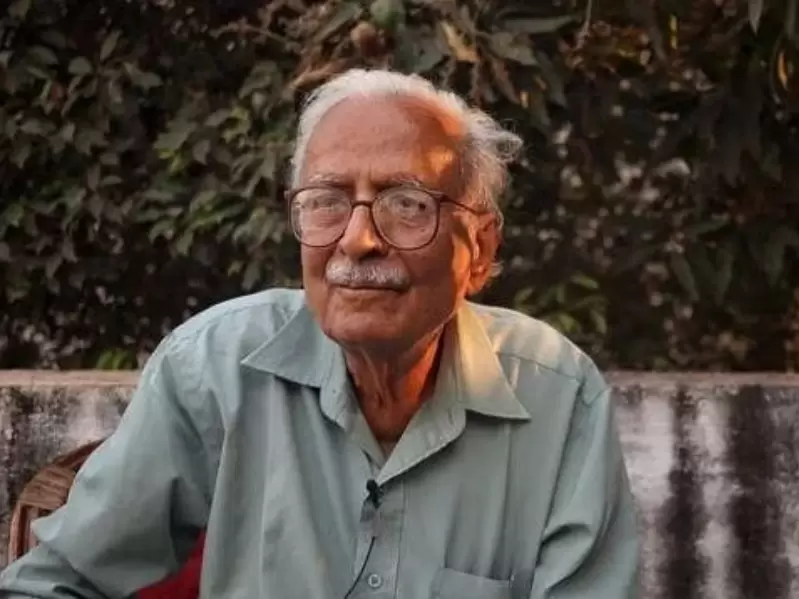 Vinod Kumar Shukla / Wikipedia
Renowned Hindi litterateur and Jnanpith Award recipient Vinod Kumar Shukla passed away on Dec. 23 at the age of 89 while undergoing treatment at AIIMS Raipur.
Shukla, celebrated for his experimental yet simple style of writing, breathed his last at 4:48 PM after battling multiple organ infections.
He had been admitted to AIIMS on Dec. 2 due to breathing difficulties and was placed on oxygen support with a ventilator.
His last rites were performed on Dec. 24 at 11 AM at Marwari Muktidham in Raipur. He is survived by his wife, son Shashwat, and a daughter.
Prime Minister Narendra Modi expressed deep sorrow over Shukla’s demise. In a heartfelt tribute posted on his X handle, the Prime Minister wrote: “Deeply saddened by the demise of the renowned writer Vinod Kumar Shukla ji, a recipient of the Jnanpith Award. He will always be remembered for his invaluable contribution to the world of Hindi literature. My condolences are with his family and admirers in this hour of grief. Om Shanti.”
Born on Jan. 1, 1937, in Rajnandgaon district of Chhattisgarh, Shukla chose teaching as his profession but dedicated his life to literary creation.
His first poem, ‘Lagbhag Jaihind’, was published in 1971, marking the beginning of a remarkable journey in Hindi literature.
His notable novels include ‘Deewar Mein Ek Khidki Rehti Thi’, ‘Naukar Ki Kameez’, and ‘Khilega To Dekhenge’.
Filmmaker Mani Kaul adapted ‘Naukar Ki Kameez’ into a Bollywood film in 1979, while ‘Deewar Mein Ek Khidki Rehti Thi’ earned him the Sahitya Akademi Award.
Shukla’s writing was distinguished by its natural simplicity and unique style, often weaving everyday life into profound narratives.
His works brought recognition to Indian literature on the international stage, instilling a new consciousness among readers.
In 2024, he was honoured with the 59th Jnanpith Award, becoming the first writer from Chhattisgarh to receive this prestigious accolade.
He is the 12th Hindi writer to be conferred with the award.
Vinod Kumar Shukla’s unparalleled contribution to Hindi literature, his creativity, and his distinctive voice will remain etched in golden letters in literary history.
His passing marks the end of an era, but his legacy will continue to inspire generations of readers and writers.
Leave A Comment
Related








ADVERTISEMENT

ADVERTISEMENT
E Paper
Video

Comments
Start the conversation
Become a member of New India Abroad to start commenting.
Sign Up Now
Already have an account? Login