ADVERTISEMENT
ADVERTISEMENT



Not to Complain Is What I Learned From My Dad
Journalist Prabhjot Paul Singh reflects on his father's quiet resilience, unwavering gratitude, and lifelong lesson of never complaining.
-
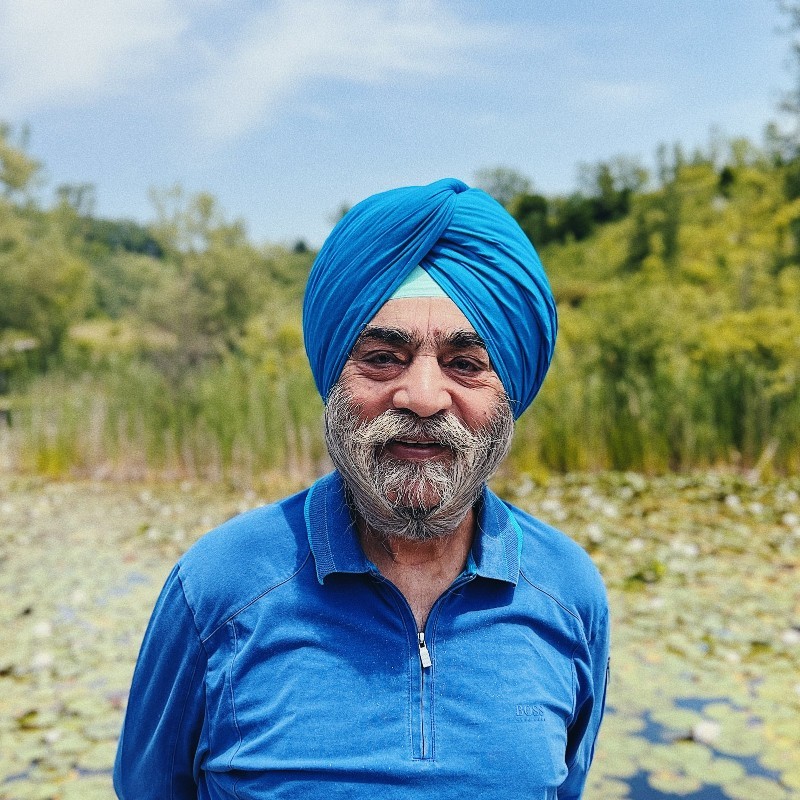 Prabhjot Paul Singh
 - Mon, 22, Jun 2026
- 01:54 EDT
- 26
 Representative image / Pexels
He was sober, suave, strong, and a simpleton. Devastated by a paralytic stroke that also took away his eyesight, he remained bedridden for his last 18 years and never complained. Whenever and whoever came to enquire about him or his health, he would acknowledge the “blessings” of the Almighty without ever complaining of his suffering or his health.
I grew up hearing him say “Shukar Hai” (thanks to the kindness of the Almighty) from my early childhood until he passed away six weeks before I turned 20. He never lost the verve to live and live a happy, contented life.
He followed his routine meticulously. Disciplined to the core, he never compromised, without allowing his disabilities to impact his day-to-day life.
Healthy and smart, a wrestler and a horse rider in his early days, he was still very strong, as at times I would jokingly test his hand grip. Invariably, I would fail to get my hand out of his grip, saying, “Darji, Tussi Purnayan khurakan khadian” (Dad, you have grown on old healthy diets), and he would laugh it away.
For almost two decades, he was not allowed any sweets or fried food. His food would have little or no salt. A cup of milk with two homemade biscuits followed by an apple or an orange between his breakfast and lunch were all that he would get until noon. At 7 in the morning, after he had finished his recitation of “Nitnem” (Gurbani) and listening to the morning broadcast from Jalandhar station of All India Radio, he would get a cup of tea. Because of a paralytic stroke, high blood pressure, and no eyesight, my mother was very careful about his diet control. He was very particular about taking his daily medicines on time.
He never liked anyone trying to help him with his routine activities. Invariably, he would get up at 4 in the morning, use the wall of his room to guide him to the washroom, where after his morning bath, he would come back to his bed, change into a new shirt and pyjama (they had to be properly ironed), and then tie his “Saffa” (turban).
His instructions used to be clear. Before retiring for bed at night, my mother had to put beside his bed his new set of properly ironed clothes and the “Saffa” ready to be tied. His clothes and “Saffa” had to be immaculately spick-and-span, clean, and white. Though he could not see, he could still make out if his shoes were not polished properly.
My mother would often joke with him, saying what difference it made if his shoes were not polished. He would retort, saying it made a huge difference.
“I can feel if my clothes are not properly ironed or my shoes are not polished.”
After his breakfast around 9, he would have a nap for an hour or so. In winter, he would prefer to rest in the sun. After eating his fruit, he would walk around the house or even go out for a little walk with support from my mother or anyone in the house.
He would be back in his bed before noon and switch on the radio for the afternoon program. He would listen to devotional music, news, and at times running commentary of important games covered by All India Radio. At times, I would get my updates on sports matches from him on my return from school.
His lunch used to be very simple. Four small chapatis, without butter, with a bowl of daal (pulses) and subzi (fresh vegetables). After lunch, he would continue to enjoy the radio broadcast and then retire for his second nap.
Around 3 to 3:30, I had to be with him. I would sit close to him and recite “Sukhmani Sahib.” It would take one hour to 75 minutes. After I finished reciting the path, I was allowed to go out to join my friends for the evening games until 6:30, when he would be ready to go to the gurdwara.
It was my duty to take him to a nearby gurdwara, which was hardly a kilometer away. He would hold a stick in his right hand, and I would hold a finger of his left hand and walk him to the gurdwara, where he would join the early evening prayers. His instructions used to be that we should be home before it got dark. Once home, he would have his early dinner, and by the time it was 8 or 8:30, he would retire for the day.
Once or twice a month, especially on holidays, he preferred to visit his old workplace or business. Since he had lost one eye in his childhood while playing “Gulli Danda,” he lost the second in a severe paralytic attack in which the main artery feeding his eye ruptured. Despite consulting the best eye surgeons of his time, his eyesight could not be restored. He, however, had no regrets about spending his last 18 years unable to see. Still, he had no complaints. His USP used to be living in the present and living happily with the grace of the Almighty.
After the 1947 Partition, our family, like hundreds of others, was devastated. He, however, took it as the will of the Almighty. He tried to reconstruct his life. A severe paralytic stroke was another crucial blow to him, because of which the coal business he started in Ludhiana needed someone else to supervise and control. At that time, my eldest brother was in engineering college, and the second eldest was in school doing his higher secondary. Both had to give up their studies and take control of their dad’s business.
As a school-going kid, I had a holiday from school escorting my dad to his old workplace. I would walk him to the nearest bus stop, from where it would take almost an hour to reach our coal depot located near Police Station No. 3. He would interact with workers and neighbors at our coal depot and spend the day there. In the evening, we would take the bus back home.
Despite his busy routine and high spirits, age started taking a toll on his health. His movements gradually became restricted. He started developing bedsores. Since I had grown up and gotten into college, my routine also changed. Though I would still take time out to recite Sukhmani Sahib and take him to the gurdwara in the evening, their frequency started dropping. Interestingly, there was no letup in his “gratitude” for the Almighty and his trust and faith in his “Waheguru.” He would smile more than ever complain.
On the day he left for his heavenly abode, I was away at my college attending the farewell party normally given to the B.Sc. final-year students by the second-year students. It was only later that I realized that when I asked for his permission to go to college, it was the last time he had sent me there with a smile. His condition was serious as my mother and some of our neighbors were reciting Sukhmani Sahib to him. For the two hours I was away, all was finished. He had gone.
He wanted me to be a doctor. And he left a day before my B.Sc. final practical exams, where to start. I missed the first practical because it coincided with his cremation. I missed going to medical college.
I switched paths and decided to be a journalist. After all, he had taught me to be a fighter and not allow hardships to impact my thinking. It has been 52 years since he left, but his smiling face and the message, “Be thankful to the Almighty,” keep reminding me what a great soul and inspiration he had been to me and our family.
“Darji,” you are with us forever.
Discover more at New India Abroad.
Related







ADVERTISEMENT

ADVERTISEMENT
E Paper
Video

Comments
Start the conversation
Become a member of New India Abroad to start commenting.
Sign Up Now
Already have an account? Login