ADVERTISEMENT
ADVERTISEMENT



Leaked cable lends weight to claim of US hand in Imran Khan's ouster
The cable- I-0678-released by investigative news platform Drop Site lends weight to the allegations levelled by the former Pakistani PM Imran Khan who has repeatedly alleged a foreign hand in his ouster from the post.
-
 Shikha Salaria
 - Mon, 18, May 2026
- 13:39 EDT
- 132
 Representative Image / AI generated
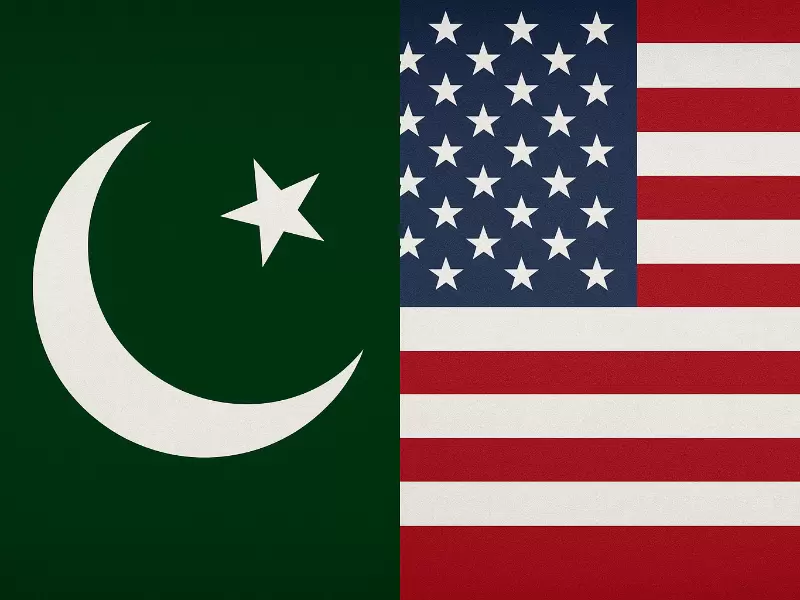
The US wanted a no-confidence motion against former Pakistani Prime Minister Imran Khan to succeed which could result in Washington “forgiving” Islamabad for Khan's visit to Russia that coincided with the beginning of the Ukraine war, according to a leaked Cypher cable that pertains to a discussion between former Pakistani ambassador to the US Asad Majeed Khan and US diplomat Donald Lu who had been serving as the assistant secretary of State for South and Central Asian Affairs between 2021 to 2025.
The cable, I-0678, released by investigative news platform Drop Site lends weight to the allegations levelled by the former Pakistani PM Imran Khan who has repeatedly alleged a foreign hand in his ouster from the post.
Also Read: India vows to crush terror 'ecosystem', a year after Pakistan conflict
In the cable dated March 7, 2022, the former ambassador Asad Majeed Khan tells the Pakistani foreign secretary about how Washington viewed Imran Khan's visit to Russia which had coincided with the beginning of Russia's war against Ukraine.
Further, it also states that Pakistan had objected to the US applying different criteria for India and Pakistan to which the US diplomat responded that Washington looked at the "US-India relationship very much through the lens of what was happening in China."
The former Pakistani PM has repeatedly alleged that the US had indulged in a conspiracy with the Pakistan Muslim League-N and Pakistan Peoples Party, the main competitors of Khan's Pakistan Tehreek-e-Insaf (PTI) to ouster him from the post of the Pakistani PM due to his attempt to pursue an independent foreign policy.
The content of the leaked cable align with Khan's previous allegations. Earlier, Khan had alleged that "America wanted him, personally gone....and everything would be forgiven."
According to the leaked cable, Lu told ambassador Majeed Khan that people in the US and Europe were quite concerned about why Pakistan was taking such an aggressively neutral position (on Ukraine), if such a position was even possible.
""It does not seem such a neutral stand to us”. He shared that in his discussions with the NSC, “it seems quite clear that this is the PM’s policy”. He continued that he was of the view that this was “tied to the current political dramas in Islamabad that he (Prime Minister) needs and is trying to show a public face”. I replied that this was not a correct reading of the situation as Pakistan’s position on Ukraine was a result of intense inter agency consultations. Pakistan had never resorted to conducting diplomacy in the public sphere. The Prime Minister’s remarks during a political rally were in reaction to the public letter by European Ambassadors in Islamabad which was against diplomatic etiquette and protocol. Any political leader, whether in Pakistan or the US, would be constrained to give a public reply in such a situation," the Pakistani ambassador told his foreign secretary according to the leaked cable.
"I asked Don (Lu) if the reason for a strong US reaction was Pakistan’s abstention in the voting in the UNGA. He categorically replied in the negative and said that it was due to the PM’s visit to Moscow. He said that “I think if the no confidence vote against the Prime Minister succeeds, all will be forgiven in Washington because the Russia visit is being looked at as a decision by the PM. Otherwise, I think it will be tough going ahead”.
He paused and then said “I cannot tell how this will be seen by Europe but I suspect their reaction will be similar”. He then said that “honestly I think isolation of the PM will become very strong from Europe and the US”. Don further commented that it seemed that the PM’s visit to Moscow was planned during the Beijing Olympics and that there was an attempt by the PM to meet Putin which was not successful and then this idea was hatched that he would go to Moscow. I told Don (Lu) that this was a completely misinformed and wrong perception. The visit to Moscow had been in the works for at least a few years and was the result of a deliberative institutional process. I stressed that when the PM was flying to Moscow, the Russian invasion of Ukraine had not started and there was still hope for a peaceful resolution," the leaked cable further quoted the ambassador as having told his foreign secretary.
It further states that when the ambassador pointed out that leaders of European countries were also traveling to Moscow around the same time, Lu interjected that “those visits were specifically for seeking resolution of the Ukraine standoff while the PM’s visit was for bilateral economic reasons.”
“I also told Don (Lu) that Pakistan was worried of how the Ukraine crisis would play out in the context of Afghanistan. We had paid a very high price due to the long-term impact of this conflict. Our priority was to have peace and stability in Afghanistan, for which it was imperative to have cooperation and coordination with all major powers, including Russia. From this perspective as well, keeping the channels of communication open was essential,” the contents of the leaked cable state.
According to the cable, the ambassador further told the US diplomat that while the Pakistani side had been consistently sensing reluctance on the part of the US leadership to engage with its leadership, the reluctance had created a perception in Pakistan that “it was being ignored and even taken for granted.”
Further, the cable revealed that Pakistan in fact raised the lack of support to it from the US on the issue of Kashmir even as the South Asian country felt that the US expected Pakistan’s support on all issues.
“There was also a feeling that while the US expected Pakistan’s support on all issues that were important to the US, it did not reciprocate and we do not see much US support on issues of concern for Pakistan particularly on Kashmir,” the cable quoted the ambassador as having told Lu.
“Pakistan valued continued high-level engagement and for this reason the Foreign Minister sought to speak with Secretary Blinken to personally explain Pakistan’s position and perspective on the Ukraine crisis. The call has not materialised yet. Don (Lu) replied that the thinking in Washington was that given the current political turmoil in Pakistan, this was not the right time for such engagement and it could wait till the political situation in Pakistan settled down,” the cable quoted the Pakistani ambassador as having told his foreign secretary.
Significantly, the ambassador also wrote to his senior that he had told Lu that Pakistan had seen his defence of the Indian position on the Ukraine crisis during the recently held Senate sub-committee hearing on US-India relations.
“It seemed that the US was applying different criteria for India and Pakistan. Don (Lu) responded that the US lawmakers’ strong feelings about India’s abstentions in the UNSC and UNGA came out clearly during the hearing. I said that from the hearing, it appeared that the US expected more from India than Pakistan, yet it appeared to be more concerned about Pakistan’s position. Don (Lu) was evasive and responded that Washington looked at the US-India relationship very much through the lens of what was happening in China. He added that while India had a close relationship with Moscow, “I think we will actually see a change in India’s policy once all Indian students are out of Ukraine,” the cable quoted the ambassador as having told Lu.
Discover more at New India Abroad.
Leave A Comment
Related




.jpeg)
ADVERTISEMENT

ADVERTISEMENT
E Paper
Video

Comments
Start the conversation
Become a member of New India Abroad to start commenting.
Sign Up Now
Already have an account? Login