ADVERTISEMENT
ADVERTISEMENT



Kabaddi: from glory to crisis. What is the way out?
Beginning in November and continuing till the end of April every year, almost every major village in Punjab has an international Kabaddi tournament featuring most of the top players.
-
 Prabhjot Paul Singh
 - Mon, 12, Jan 2026
- 21:37 EST
- 199
 Representative image / Pexels
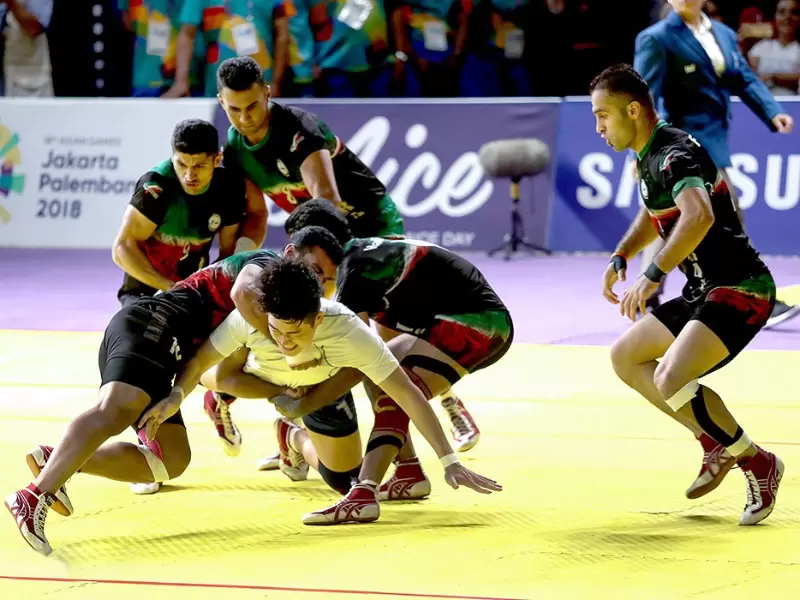
“Circle Kabaddi does not need illegality; it needs structuring and legal recognition,” says Surrey-based international sports promoter and thinker Tejinder Singh Aujla. Reacting to the recent announcement that the holding of all Circle (Punjabi style) Kabaddi Tournaments worldwide is suspended throughout 2026, except in Punjab (in India) (tournaments can continue till the end of April this year), Tejinder Singh Aujla has come out with a blueprint that can pull this mother sport out of its current crisis.
Considered as one of the richest but unorganised sports, it has been greatly devastated by recent incidents of the killing of some eminent players of the sport. Starting with the killing of Sandeep Nangal Ambian in 2020, the sport drew more negative publicity as a streak of murders has continued with Arvinder Pal Singh Padda, Gurmail Singh Batala, Dharminder Singh, Hardeep Singh, Sukhwinder Singh Naini, Jagwinder Singh, Sonu Nolta Panchkula, Tejpal Singh, and Gurwinder Singh. The latest was of Kanwar Digvijay Singh, alias Rana Balachauria, at Mohali at a venue of a kabaddi tournament in December last year.
Beginning in November and continuing till the end of April every year, almost every major village in Punjab has an international Kabaddi tournament featuring most of the top players. The prize money in these tournaments not only runs in lakhs of rupees but also includes cars, Bullet motorcycles, and gold coins as special awards for best raiders and stoppers.
ALSO READ: India says Ahmedabad 'ideal city' for Commonwealth Games
Because of the lack of coordination between different organisers or professional jealousies, players owing allegiance to one group are prohibited from participating in the tournaments organised by the rival groups. It is probably one reason that has led to the suspension of the Kabaddi tournaments worldwide for a year. A larger section of Kabaddi organisers or promoters met in December, where they, while deciding to suspend the tournaments, also announced the formation of the Federation of International Kabaddi Federations and Associations (FIFKA). The proposed FIFKA has been mandated to prepare a charter or a rule book to govern the sport worldwide so as to discipline both players and organisers, besides scheduling the events, including all major tournaments.
Circle Style (Punjab style) Kabaddi is synonymous with the global Punjabi community. Once Jagrup Singh Brar, one of the longest-serving MLAs in British Columbia, remarked, “We Punjabis have two hearts; one beats for our ancestral land (Punjab, India), and the other for the country that we have made our second home.”
Taking his quote further, Tejinder Singh Aujla says that “of two Punjabi hearts, one beats for Kabaddi and the other for field hockey. It is why our ancestors took both these sports with them wherever they went and settled down.” It explains how Kabaddi tournaments have become an integral part of life for the Punjabi settlers overseas.
Kabaddi is the cheapest team sport. It needs no equipment. In fact, it is the distillation or the combination of the best of three basic Olympic sports—athletics, gymnastics, and wrestling. A good Kabaddi player has to be a good runner or sprinter, an acrobat, and a wrestler who can quickly free himself from the holds of his opponent. Normally, Kabaddi players are classified into two groups—raiders and stoppers—but now the third group, a mix of the two—all-rounders—has also asserted its existence.
Kabaddi, particularly the Punjab or Circle Style, says Tejinder Aujla, is not merely a sport; it is a cultural emblem of the Punjab region—the area of Spata Sindhu (undivided Punjab)—and its surroundings, carrying centuries of rural tradition, valor, and communal pride. Known as the “mother game of Punjab,” it is the heart and soul of the Punjabi populace. Traditionally played on open grounds with minimal equipment, Kabaddi has historically reflected the spirit of village life, where courage, stamina, and skill were the fundamental credentials of the game. For generations, Kabaddi thrived as a community festival, a test of physical prowess, and a source of local identity.
Its roots trace back to northern India, especially the rural undivided Punjab of pre-1947—today covering areas of Pakistani Punjab, Indian Punjab, Haryana, and parts of Himachal Pradesh and Rajasthan—where it was played during harvest festivals, religious gatherings, and local fairs.
Tejinder Aujla further says that, unlike standardised and formally organised sports, over time, a lot of undefined rules have crept into Kabaddi. The sport remained inclusive, accessible, and completely reliant on local talent. Villagers nurtured players who became celebrated community heroes. With the growth of media and private funding in recent decades, Circle Kabaddi began attracting large audiences and substantial monetary support. The game evolved from informal village competitions into lucrative yet disorganised tournaments, often with prize money running into crores of rupees. Spectator interest exploded, and Kabaddi became a weekend spectacle across northern India and among the diaspora worldwide.
However, says Tejinder Aujla, along with money came challenges that the sport was never institutionally and organizationally equipped to handle. Unlike other established sports, which gradually entered formal federations and well-organized structures from the national to district level, holding well-organised competitions affiliated with government sports associations, Kabaddi remained fragmented.
Mushroom growth, like weeds, of organizations and promoters claimed authority not only over tournaments, rules, and player registrations, but also over the sport of kabaddi as a whole. Governance was opaque: selections were influenced by tyranny rather than well-organised democratic ways on and off the field, corruption, personal loyalties, regional dominance, and sometimes caste and political affiliations rather than merit. Irregularities, unlawful acts, jungle law, corruption, no accountability, no transparency, the creeping in of drug mafias and gangsters, the use of illegal substances, and killing by bullet or by using illicit substances are not uncommon. Kabaddi is running like an unlawful syndicate. It’s not recognised by any government sports authority.
Despite its popularity and funding, Circle Kabaddi remained governance-poor, lacking the checks and balances that professional sport demands. In these circumstances, it is difficult to see how the sport can grow or evolve to the level of other well-established games. Instead, there is a real danger that it will continue to decline—and, in many ways, it already is. This is the question of the hour: whether the stakeholders of the sport take responsibility and clean the mess themselves, or whether the situation will be addressed under the hammer of law by elected administrative authorities.
In fact, public oversight has become inevitable. He asserts that bringing the sport under lawful governance and institutional regulation is not a threat but a necessity. It is the cardinal duty and responsibility of elected representatives and governing institutions to ensure transparency, accountability, and the long-term protection of a sport that holds deep cultural and social significance. The future of Circle Kabaddi depends on visionary leadership—statesman-like custodians who prioritise integrity, culture, and growth over personal gain. Only then can the sport transition from a lucrative spectacle to a sustainable professional institution. With proper governance, Kabaddi can preserve its traditional essence while evolving into a globally respected sport.
Nowadays, Kabaddi is experiencing one of its lowest phases. The sport is suffering from poor organisation, widespread corruption, infiltration by criminal gangs, incidents of violence, doping, and a complete absence of long-term vision. Lacking credible leadership and institutional direction, Kabaddi has gradually slipped into a quasi-lawless state.
At this critical juncture, the thinkers, intellectuals, and responsible representatives of the Punjabi populace must come forward to safeguard this heritage sport. Kabaddi must be reorganised and structured like a permanent, well-established professional sport. What is urgently required is a clear, time-bound vision—a ten-year strategic plan—to build a robust organisational framework from the grassroots to the highest level, adds Tejinder Aujla.
He says he has prepared a blueprint to pull this mother sport of Punjabis from crisis back to glory and from popular spectacle to professional sport. Those interested can get the blueprint from him by contacting him
Read more stories on NewIndiaAbroad
Related




ADVERTISEMENT

ADVERTISEMENT
E Paper
Video

Comments
Start the conversation
Become a member of New India Abroad to start commenting.
Sign Up Now
Already have an account? Login