ADVERTISEMENT
ADVERTISEMENT



Jeeva Clinical Trials CEO urges AI ready clinical infrastructure shift
The CEO said modernization is critical to ensuring artificial intelligence can effectively power clinical trial execution and accelerate drug development.
-
1759953093.png) Staff Reporter
Staff Reporter - Tue, 24, Feb 2026
- 15:06 EST
- 75
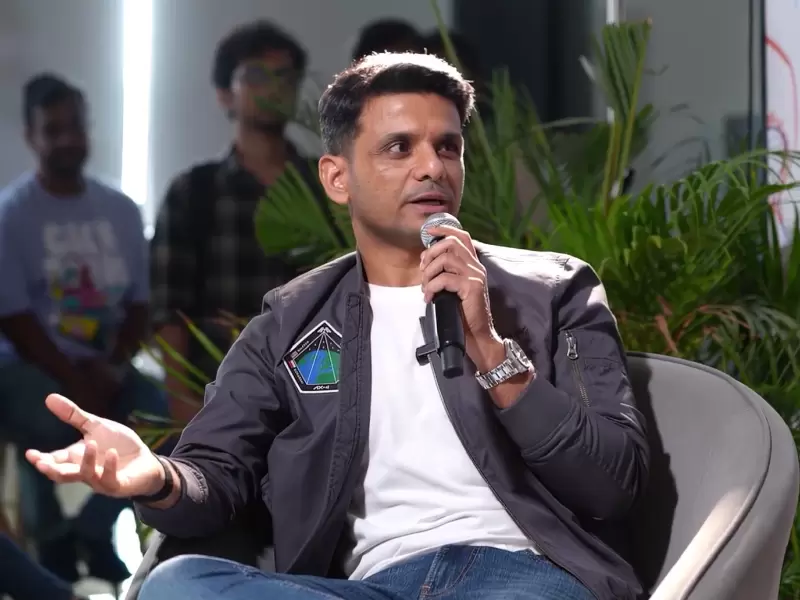
 Logo of Jeeva Clinical Trials and (inset) Harsha K. Rajasimha, founder and CEO of Jeeva Clinical Trials / Courtesy: Jeeva Clinical Trials
Harsha K. Rajasimha, founder and CEO of Virginia-based health-tech company Jeeva Clinical Trials, has renewed his call for pharmaceutical and clinical research organizations to modernize their IT infrastructure.
He argued that artificial intelligence will not meaningfully transform drug development without foundational system upgrades.
ALSO READ: AI in healthcare to be remembered for billions of lives it helped improve
“AI is not the constraint,” said Rajasimha. “The constraint is infrastructure. If you deploy advanced intelligence on siloed, outdated systems, you amplify inefficiency. If you deploy AI on a unified, cloud-native architecture, you amplify speed, compliance, and patient impact.”
The message, first expressed in a recent thought leadership article by Rajasimha, has gained momentum following discussions at the recently held AI Impact Summit 2026 in India, JPMorgan Healthcare Conference 2026, and BIO Biotech Showcase 2026 in California. Across these global forums, industry leaders underscored that while AI capabilities are advancing rapidly, infrastructure modernization is lagging.
AI applications now span predictive enrollment modeling, protocol optimization, and real-time financial forecasting. However, conference discussions highlighted persistent challenges, including fragmented legacy systems, data harmonization gaps, and validation complexity.
At JPMorgan, investor conversations centered on capital efficiency and trial acceleration, while at the BIO Biotech Showcase, executives emphasized shortening development timelines and reducing risk.
According to Rajasimha, organizations face two strategic paths. One approach layers AI onto fragmented legacy systems, which may limit disruption but perpetuates data silos, manual reconciliation, technical debt, and costly systems integration. The alternative involves transitioning to unified, AI-native, cloud-based platforms that enable real-time data visibility, embedded AI within validated workflows, automated compliance tracking, multi-site scalability, and dynamic forecasting.
“The difference is structural,” Rajasimha stated. “AI cannot sit outside your operational backbone. It must be embedded within a unified system designed for intelligence from day one.”
Rajasimha argued that infrastructure decisions have immediate financial and human implications. “Every month of delay in drug development represents enormous financial cost and human cost,” he said. “When infrastructure is unified and AI-native, you can reduce site start-up times, detect risks earlier, forecast revenue accurately, and accelerate trial execution. That is not theoretical—that is operational transformation.”
Throughout 2026 industry conferences, regulatory readiness remained a recurring theme. AI systems must operate within 21 CFR Part 11-compliant environments, maintain audit trails, and generate explainable outputs. “Modern AI does not remove compliance responsibility,” Rajasimha noted. “It intensifies the need for validated, secure, cloud-native systems. Compliance must be embedded—not retrofitted.”
Jeeva Clinical Trials, a cloud-based, AI-native unified platform integrating CTMS, EDC, eSource, eConsent, eCOA, centralized scheduling, decentralized or hybrid trial capabilities, and recruitment workflows under one secure login, positions infrastructure modernization as a leadership priority. Designed for sponsors, CROs, and multi-site research networks, the platform supports real-time compliance oversight and automation across the clinical trial lifecycle.
“Organizations with existing complex legacy infrastructure that modernize today will define the next decade of clinical research,” Rajasimha said. “Those who delay will continue layering intelligence on top of inefficiency. The good news is that modernizing your tech infrastructure need not cost millions of dollars anymore."
"With Jeeva's consumption-based transparent pricing, you can get started with a nominal one-time setup/configuration fee and scale on a per-participant-per-month basis as your trials screen and enroll participants across the enterprise. For smaller clinical-stage biopharmaceutical and MedTech sponsors, it's best to start your clinical development journey on a regulatory-grade, modern, unified, and AI-ready platform from day #1,” he concluded.
The company also said it will showcase its AI-embedded unified infrastructure on March 10 and 11 at Informa Connect’s LSX Investival Showcase USA at the Miami Beach Convention Center in Florida.
Discover more at New India Abroad.
Leave A Comment
Related










ADVERTISEMENT

ADVERTISEMENT
E Paper
Video

Comments
Start the conversation
Become a member of New India Abroad to start commenting.
Sign Up Now
Already have an account? Login