ADVERTISEMENT
ADVERTISEMENT



Indian American lawmakers call for reset in US–India ties
Jayapal said Indian American entrepreneurs in her district describe tariff escalations as existential threats.
-
 IANS
IANS - Wed, 10, Dec 2025
- 23:55 EST
- 123
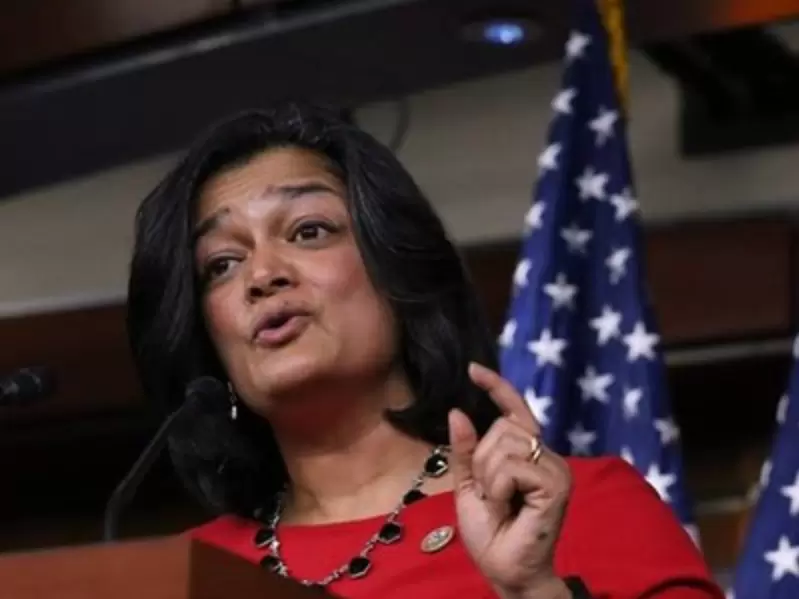 Rep. Pramila Jayapal / X/@RepJayapal
Two of the most influential Indian American lawmakers in Congress — Rep. Ami Bera and Rep. Pramila Jayapal — pressed for a steadier, values-driven and innovation-focused reset in the US–India relationship during a House Foreign Affairs Subcommittee hearing on the strategic partnership.
Bera, a California Democrat and one of the longest-serving Indian American members of Congress, underscored the depth of bipartisan support behind the relationship. “We recently introduced a resolution… talking about three decades of strategy going back to President Clinton to President Bush to President Obama to President Trump’s first term to President Biden,” he told the panel. The message, he said, is that the United States and India “both want… an atmosphere of security, peace, prosperity.”
He said his recent visit to India revealed a maturing strategic alignment. After conversations with officials, business leaders and military officers, Bera said “India understands their long-term interests.”
ALSO READ: Jayapal slams GOP for using immigrants as distraction
While New Delhi must “coexist with China,” he said India increasingly sees its strategic future with “the United States (and) Europe.” He added that India is welcoming new multinational investment, deepening its role in secure supply chains.
On defense cooperation, Bera highlighted strong maritime collaboration and said both sides want to “do more joint training, more exercises” to safeguard freedom of navigation across the Indian Ocean.
He also criticized the administration’s $100,000 H-1B fee, arguing it harms American innovation. “We need this talent,” he said, urging Congress to create a visa class allowing scientists and engineers to move more freely between the two countries.
Jayapal, a Washington Democrat and the first Indian American woman in Congress, brought a personal dimension. “I’m very proud of my roots in India, my birth country,” she said. Having lived on both a student visa and an H-1B visa, she warned that restrictive immigration rules are hurting families, businesses and bilateral ties.
Jayapal said Indian American entrepreneurs in her district describe tariff escalations as existential threats. A fifth-generation company told her the latest tariff hikes were “the greatest threat to their business in over 120 years.” She called the administration’s approach — including a roughly 50 percent cumulative tariff burden on many Indian goods — economically shortsighted and strategically damaging.
She also raised alarms about rising “anti-Indian hate” in the United States, stressing that Indian Americans are critical to the national economy, running Fortune 500 firms, launching startups and leading scientific breakthroughs.
On geopolitics, Jayapal asked witnesses whether punitive measures could push India toward alternative blocs. Analyst Sameer Lalwani said such tariff disparities “can push India closer” to BRICS or the SCO, a trend she said would undercut US interests.
Together, Bera and Jayapal argued that a stable, future-oriented US–India partnership must strengthen defense and technological cooperation while also protecting scientific mobility, economic openness, democratic values and people-to-people trust. They said the relationship must reflect the lived experiences of millions of Indian Americans who act as a “living bridge” between the two nations.
Leave A Comment
Related


ADVERTISEMENT

ADVERTISEMENT
E Paper
Video

Comments
Start the conversation
Become a member of New India Abroad to start commenting.
Sign Up Now
Already have an account? Login