ADVERTISEMENT

ADVERTISEMENT



The human expense of wars
Ordinary people, far removed from battlefields, live in constant fear. The home, once a sanctuary, becomes a site of vulnerability.
-
 Angela Anand
 - Tue, 07, Apr 2026
- 18:15 EDT
- 17
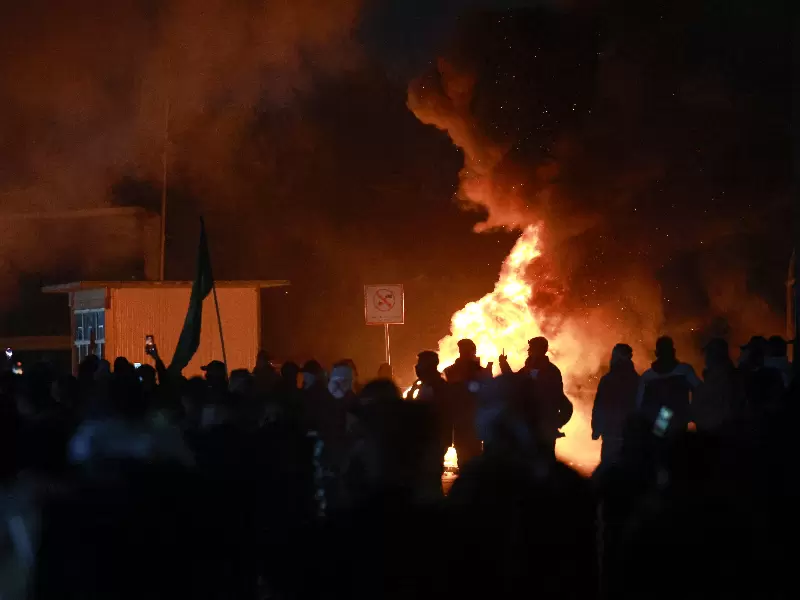 A smoke billows from a fire as supporters of Iraqi Shi'ite armed groups attempt to move toward the U.S. embassy located in Baghdad's Green Zone, while riot police deploy to block their advance, following the Israel and U.S. strikes on Iran and the killing of Iran’s Supreme Leader, in Baghdad, Iraq, March 1, 2026. / REUTERS/Ahmed Saad
The United States is known for democracy, freedom of expression, and technological leadership, yet current political conflicts affect both domestic stability and the global economy, especially through engagement in the Gulf region's Iran War.
My grandmother shared stories about India's partition, illustrating the violence and loss, and reading “Train to Pakistan” deepened my understanding of the ongoing tensions between India and Pakistan. These disputes, including the Kargil War and other confrontations, stem from unresolved issues passed down for generations.
Even after fighting stops, civilians and soldiers feel the impact, and reconstruction takes significant resources. Diplomatic solutions, when feasible, can and are essential to avoid the harsh consequences of war.
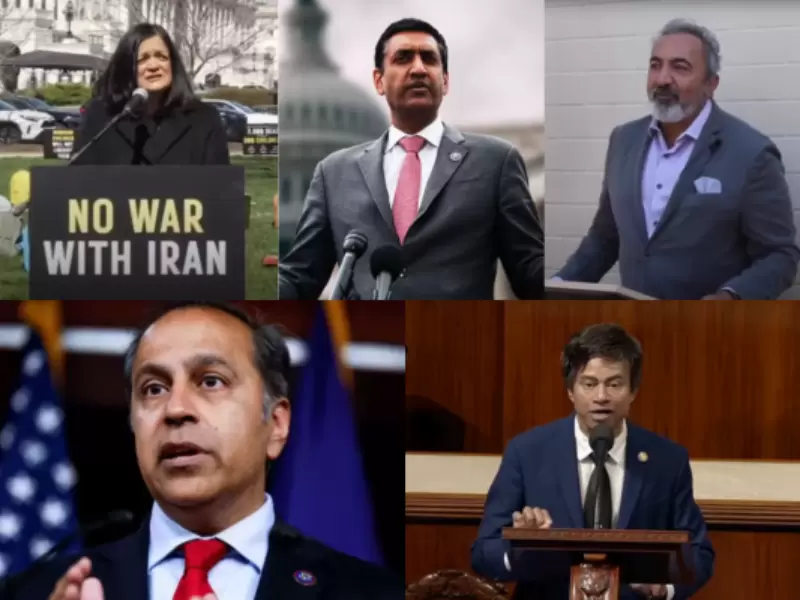
Also Read: Democrats call to rein in Trump over Iran threat
History shows that major twentieth-century wars caused severe economic destruction and widespread anxiety, lessons still relevant today as geopolitical tensions persist. The economic repercussions of war can extend over generations; throughout Europe and Asia, widespread destruction encompassed entire cities, industrial infrastructure, and agricultural systems.
The two world wars, World War I and World War II, did far more than redraw political borders. They shattered economies and deeply unsettled the emotional and psychological lives of ordinary people across continents.
Countries such as Germany, France, and the United Kingdom encountered substantial national debt after allocating significant resources to ongoing warfare.
In the wake of the First World War, economic instability contributed to the onset of the Great Depression, resulting in mass unemployment and distress for millions, with Americans particularly affected. Escalating inflation, depreciated currencies, and the transformation of basic needs into unaffordable commodities became prevalent.
Postwar Germany endured such extreme currency devaluation that its money became emblematic of economic turmoil. Presently, technological developments have furnished nations with advanced weaponry and cyber capabilities, amplifying potential for destruction.
Nevertheless, beyond quantifiable statistics and material losses exists the profound human cost of war dimension no financial account can adequately reflect.
The ongoing Russia-Ukraine War has not only devastated cities and infrastructure but also sent shockwaves through global energy and food markets. Present political conflicts began in late February 2026 when the U.S. and Israel launched coordinated strikes on Iran targeting military and nuclear infrastructure.
Iran retaliated with missile and drone attacks on Israel, U.S. bases, and Gulf countries. The conflict has spread across the Middle East—including Lebanon, Bahrain, and the Persian Gulf. A major flashpoint is the Strait of Hormuz, a critical oil route, which Iran has partially blocked. This is no longer a limited conflict—it’s a regional war with global consequences.
In Gaza, civilians endure a different but equally harrowing reality—one marked by destruction, displacement, and an ever-present fear of survival. Meanwhile, the prolonged humanitarian crisis in Yemen continues to push millions to the brink, and instability in Sudan has forced families to flee, echoing the mass displacements that once defined global wars.
What binds these conflicts across time is not only their scale, but their impact on ordinary lives. Today, whether in Kyiv, Gaza, or Khartoum, that same truth persists war collapses the boundary between battlefield and home.
Ordinary people, far removed from battlefields, live in constant fear. The home, once a sanctuary, becomes a site of vulnerability. Millions get displaced, forced to abandon their homes and identities. Families dissolve, communities scatter, and belonging fades.
The restoration of markets does not equate to the restoration of peace within individuals. The scars of war— economic insecurity, grief, and anxiety—have proven far more resistant to repair. As we navigate a world marked by conflict and uncertainty, the lessons of the past remain urgent. War is often justified by necessity or national interests.
Yet history reminds us that its actual cost is borne not Families break apart, communities fade away, and the crucial sense of belonging that supports human stability disappears. just in territory lost or gained, but in livelihoods destroyed and minds unsettled.
If we are to honor those who lived through previous global upheavals, we must remember that the greatest casualty of war is not only human life, but also the fragile sense of peace that sustains it.
Even in times of conflict, humanity continues to seek rebirth, peace, and meaning. Let us hope that peace ensues and lives and economies start to rebuild soon.
The writer is a collaborator and community organizer.
Discover more at New India Abroad.
Related








ADVERTISEMENT

ADVERTISEMENT
E Paper
Video

Comments
Start the conversation
Become a member of New India Abroad to start commenting.
Sign Up Now
Already have an account? Login