ADVERTISEMENT

ADVERTISEMENT



The eternal Madhubala
It would be a grave injustice to remember Madhubala solely for her beauty, though it was undeniably extraordinary.
-
 Bollywood Insider
 - Sat, 07, Mar 2026
- 21:59 EST
- 19
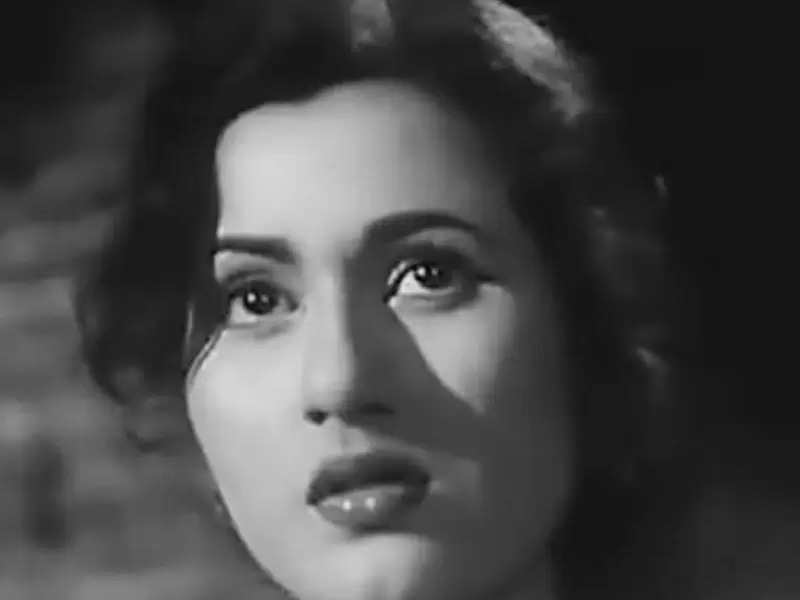 Madhubala from the film Kala Pani / picryl
In the golden age of Hindi cinema, when stars were crafted through celluloid dreams and theatrical magic, Madhubala emerged as an anomaly.
Decades after her untimely passing, her name still evokes a collective sigh among film lovers. She remains not merely a symbol of beauty, but an era unto herself-an actress whose screen presence continues to feel alive.
Madhubala, born Mumtaz Jehan Begum Dehlavi possessed the kind of beauty that could stop frames mid-motion, yet it was her emotional intelligence-her instinctive understanding of character-that gave her performances their enduring power. To remember Madhubala is to remember a time when cinema trusted silence, expressions, and restraint as much as dialogue and spectacle.
ALSO READ: Gaddar State Film Awards 2025: Naga Chaitanya, Rashmika win Best Actor, Actress
Star born early
Madhubala's relationship with cinema began early. She was barely nine years old when she appeared as a child artist in films like Basant (1942). Her talent was evident even then-an ease before the camera that many adult actors struggled to acquire. By the late 1940s, as Hindi cinema was redefining itself in the years following Independence, Madhubala stood poised at the cusp of stardom.
Her breakthrough arrived with Kamal Amrohi's Mahal (1949), a film that not only established her as a leading lady but also reshaped the romantic-thriller genre in Hindi cinema. Cloaked in mystery and melancholy, Madhubala's ethereal presence in the film became inseparable from Lata Mangeshkar's haunting rendition of "Aayega Aanewala." The song, floating through corridors and candlelit halls, turned her into a spectral vision-both romantic and unreachable. Mahal transformed Madhubala from a promising actress into a phenomenon.
More than a pretty face
It would be a grave injustice to remember Madhubala solely for her beauty, though it was undeniably extraordinary. What set her apart was her versatility. In an industry quick to typecast beautiful women as tragic heroines, she moved effortlessly between genres.
Her comic timing remains among the finest in Hindi cinema. Films like Mr. & Mrs. '55, Half Ticket, and especially Chalti Ka Naam Gaadi revealed a playful, mischievous performer with impeccable rhythm and spontaneity. Acting opposite Kishore Kumar, Madhubala matched his eccentric energy beat for beat-whether teasing, singing. or sparring in scenes that remain endlessly rewatchable. Few actresses could combine elegance with slapstick the way she did.
Trivia often shared by co-actors reveals that Madhubala approached comedy with the same seriousness she brought to tragedy. She rehearsed comic scenes meticulously, understanding that laughter, like tears, required precision.
Mughal-e-Azam
No discussion of Madhubala can be complete without Mughal-e-Azam (1960), the magnum opus that immortalised her as Anarkali. The role demanded emotional depth, physical endurance, and an ability to convey defiance and devotion simultaneously. Against the film's opulent sets and regal scale, Madhubala's performance remained its emotional core.
Her rendition of "Pyar Kiya To Darna Kya", filmed against the now-iconic Sheesh Mahal, is etched into cinematic history. The song was not merely a declaration of love but an assertion of dignity-a courtesan standing unafraid before an empire. By the time the film released, Madhubala was already battling serious health issues, yet her performance radiates strength rather than fragility. The long, often turbulent making of Mughal-e-Azam also coincided with the end of her personal relationship with Dilip Kumar, adding layers of poignancy that critics and audiences continue to interpret through hindsight. While such readings belong more to cultural memory than documented intent, they have undeniably contributed to the film's mythos.
Personal life
In 1960, Madhubala married Kishore Kumar-one of Hindi cinema's most mercurial talents. Their marriage has often been misunderstood, sometimes unfairly reduced to gossip. What is well documented, however, is Kishore Kumar's devotion during her years of illness. As her health declined due to a congenital heart condition, he remained protective and deeply private about her suffering, even withdrawing her from public life to preserve her dignity.
Despite medical advice that urged rest, Madhubala continued to work through much of the early 1960s. Films like Passport and Half Ticket stand as testimony to her determination. Colleagues later recalled that she rarely complained on set, choosing professionalism over pity.
Tragic farewell
Madhubala passed away on February 23, 1969, at just 36 years old. Her death marked one of the most profound losses in Hindi cinema-a career that still felt unfinished, a talent that seemed capable of endless reinvention. Yet, perhaps because her life was brief, her image has remained untouched by decline or overexposure.
She exists today in a kind of cinematic eternity-forever young, forever luminous.
Legacy beyond
Over the years, Madhubala has been honoured in numerous ways. A commemorative postage stamp released by India Post in 2008 reaffirmed her place as a cultural icon. Her films continue to be restored, screened, and studied, while her photographs-those luminous smiles frozen in black and white-circulate endlessly in exhibitions and retrospectives.
What truly sustains her legacy, however, is not nostalgia alone. It is the modern viewer's discovery of her work-the realisation that beneath the beauty lay a performer of remarkable emotional intelligence. In an age of constant reinvention, Madhubala's appeal endures because it is rooted in sincerity.
Still matters
Madhubala represents a cinema that trusted its audience-cinema that believed emotions did not need exaggeration to be felt. Her characters loved deeply, laughed freely, and suffered quietly. They felt human.
As we remember her, we are reminded that legends are not created by longevity alone but by impact. Madhubala's flame burned briefly, but it burned bright enough to illuminate generations.
She remains Hindi cinema's eternal muse-proof that true artistry, once captured on film, never really fades.
Related








ADVERTISEMENT

ADVERTISEMENT

ADVERTISEMENT
E Paper
Video

Comments
Start the conversation
Become a member of New India Abroad to start commenting.
Sign Up Now
Already have an account? Login