ADVERTISEMENT
ADVERTISEMENT



Over half of AAPIs are financially struggling, new study reveals
The initiative begins with nationwide and borough-level research on AAPI communities.
-
 Malvika Choudhary
 - Wed, 29, Jul 2026
- 18:25 EDT
- 29
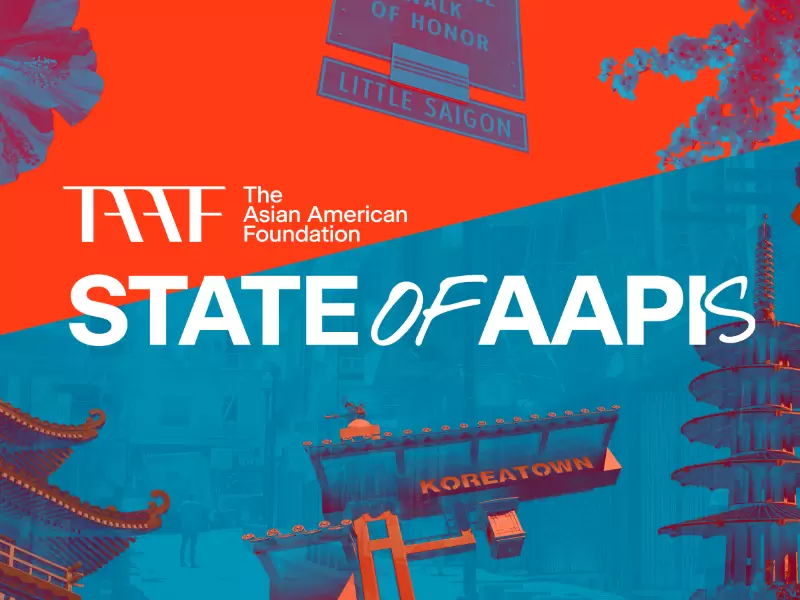 State of AAPIs, a new research series launched by TAAF / TAAF
More than half of Asian American and Pacific Islander (AAPI) adults struggled to save money or build financial security over the past year, according to a new national study by The Asian American Foundation (TAAF).
The study is part of State of AAPIs, a new research series launched by TAAF on July 29 to examine the lived experiences of AAPI communities across the United States.
Also Read: New digital series celebrates AAPI changemakers
The initiative begins with a national report and a first-of-its-kind borough-level study of New York City and is backed by more than $2 million in funding to expand research into major cities, including Los Angeles, San Francisco, and Seattle.
"AAPIs are too often treated as a monolith and a Model Minority. This research provides insight into the genuine hardships and real concerns for millions of people," said Norman Chen, CEO of TAAF.
"With our State of AAPIs research series, we're taking the critical step of understanding AAPIs' needs at a granular level and giving local and national decision-makers the data they need to address our community's biggest challenges," he added.
Economic struggles
While Asian Americans are often perceived as economically successful, the report found significant financial disparities across AAPI communities.
Overall, 51 percent of respondents said they struggled to save money or build financial security during the previous year, with the share rising to 62 percent among Native Hawaiians and Pacific Islanders, 61 percent among Vietnamese respondents, 60 percent among Koreans, and 58 percent among Filipinos.
Another 43 percent worried about paying for essentials such as food, housing, and utilities, 37 percent experienced a significant income disruption, and 31 percent struggled to access safe and stable housing. Nearly 30 percent received government or community assistance during the past year, while 28 percent reported difficulty accessing those benefits.
Safety, belonging
The report found that economic challenges were accompanied by continued concerns about discrimination and belonging.
More than 54 percent of respondents said they had experienced at least one form of discriminatory treatment during the previous year because of their race or ethnicity, including being assumed not to speak English, being treated with suspicion in public places, or facing unfair treatment by police.
Another 54 percent reported changing their daily behavior—such as avoiding certain neighborhoods, carrying identification, or avoiding places with police or immigration enforcement—because of concerns related to their race, ethnicity, immigration status, or appearance.
Looking ahead, 52 percent said they believed they were at least somewhat likely to experience discrimination or racial profiling within the next five years, while 37 percent feared becoming victims of a hate attack. Vietnamese, Korean, and Native Hawaiian and Pacific Islander respondents reported some of the highest levels of concern.
Despite those concerns, 65 percent of respondents said they were very or extremely proud to be American, while 76 percent said they were proud to be AAPI. At the same time, between one in five and one in four respondents reported difficulties accessing voting information, immigration services, or English-language support, with younger, lower-income, foreign-born, and less-educated respondents facing greater barriers.
TAAF said the findings will inform its TAAF Cities initiative, which will use city-level research to help governments, businesses, nonprofits, and community organizations develop policies aimed at improving economic opportunity, safety, and belonging for AAPI communities.
The report is based on a nationally representative survey of 1,500 AAPI adults conducted between April 17 and May 11, in five languages. Researchers said the study aims to provide more granular data on a population of more than 26 million people representing over 50 ethnic groups and more than 100 languages–communities that are often treated as a single demographic in research and policymaking.
Discover more at New India Abroad.
Leave A Comment
Related











ADVERTISEMENT

ADVERTISEMENT
E Paper
Video

Comments
Start the conversation
Become a member of New India Abroad to start commenting.
Sign Up Now
Already have an account? Login