ADVERTISEMENT
ADVERTISEMENT



Most Common Mistakes in Multi-Language Document Translation Projects
A persistent misconception in translation project management is that linguistic quality and regulatory compliance produce the same result.
-
 Response Feature
 - Tue, 14, Jul 2026
- 14:50 EDT
- 18
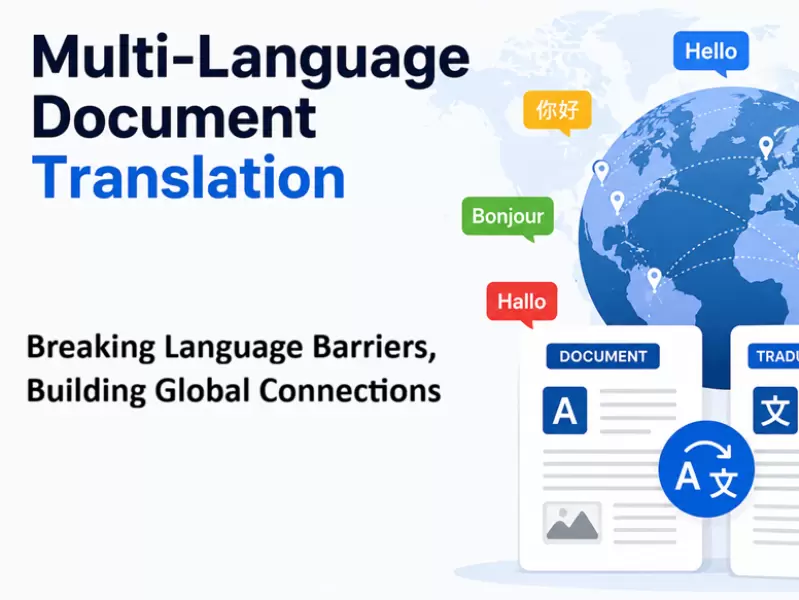 Google AI generated Image / Courtesy Photo
Multi-language translation projects look deceptively manageable from the outside. You divide source material, assign linguists, set deadlines, and expect coherent output across a dozen languages. What actually unfolds is usually something different - a familiar pattern of preventable errors accumulating quietly across versions: terminology rendered inconsistently, certification requirements missed for certain language pairs, legal clauses carrying entirely different weight depending on which jurisdiction receives the document. None of this is hypothetical. These are the kinds of mistakes that cost real money, delay critical submissions, and sometimes create regulatory complications that linger for months before anyone traces the problem back to the translation workflow itself.
Terminology Drift: The Silent Project Killer
Each linguist works in their own professional instincts and language-specific conventions when a document is translated into multiple languages simultaneously. That's normal and inevitable. The issue is that there is no common reference standard to compare the different decisions, no one to detect the differences in the same term or legal concept between different versions before it is delivered, and so on.
The Risks of Terminological Inconsistency
Consider what happens when a contract references an "indemnification obligation" in the source. One translator renders it as a "liability waiver." A second opts for "compensation requirement." A third uses a term that, in their target language, carries a narrower legal scope than the original. Individually, these choices may be defensible, but across a single document set submitted to multiple jurisdictions simultaneously, they generate real interpretive risk. For organizations that need to get any document translated in over 80 languages and manage cross-border compliance at scale, terminological drift of this kind can fuel contractual disputes that no one anticipated when the project was planned.
Building a Centralized Terminology Strategy. The solution requires early investment rather than reactive correction. Build a centralized glossary before any work is assigned, distribute it to every linguist on the project, and enforce it across the full workflow. Consistent terminology is the structural backbone that holds multi-language output together.
Why Human Review Matters for Terminology Control. Services that rely on human linguists with formal review stages catch this inconsistency more reliably than automated pipelines, because an experienced translator can recognize when a term choice conflicts with an established project standard in ways that automated tools typically don't.
Certification Gaps That Derail Official Submissions
A persistent misconception in translation project management is that linguistic quality and regulatory compliance produce the same result. They don't. A document can be accurate and polished and still be rejected by an immigration authority, court registry, or academic institution - not because of any translation error, but because the certification framework surrounding it is incomplete.
What Makes a Translation Officially Certified
Certified translation is not just a matter of providing a correct output. It requires a formal signed declaration from the translator, stating his/her professional competency in both languages, and that the translation accurately represents the source. Numerous official organizations, especially immigration authorities, require this statement as a submission requirement. Whether it's a poor or good translation, it can be rejected before the content is read.
The Challenge of Multi-Jurisdiction Translation Projects
The complication in multi-language projects is that certification requirements vary considerably across jurisdictions. A project team might handle the Spanish and French versions correctly while the Mandarin or Arabic counterparts - destined for a different regulatory body - go out without satisfying that authority's specific demands. By the time the oversight surfaces, a filing deadline may have passed, or an application may have been placed on hold, requiring resubmission with documentation that should have been compliant from day one.
The practical response is to map every destination jurisdiction's requirements before any translation work is assigned. Determine what each relevant authority specifically needs:
-
a sworn statement;
-
notarization;
-
a particular document format.
Treat those demands as non-negotiable project deliverables embedded in the brief from the start, not as finishing touches applied under deadline pressure.
What "Accurate Translation" Misses About Legal and Cultural Context
Word-level accuracy and meaningful translation are not synonymous, and the gap between them grows considerably when documents cross into jurisdictions with fundamentally different legal systems or where cultural conventions actively shape how language is interpreted.
Legal Systems Create Translation Challenges
Legal documentation is where this gap causes the most serious harm. A non-compete clause drafted under US employment law does not translate cleanly into French, where labor protections are substantially stronger and a restriction that reads as entirely routine in an American context may be unenforceable - or outright invalid - under French statute. Privacy disclosures, financial agreements, and corporate contracts carry the same kind of jurisdiction-specific weight that a purely word-for-word approach will miss. Translating the language without flagging these structural differences doesn't create ambiguity. It creates legal exposure that the client may not discover until it costs them significantly.
The Importance of Cultural and Professional Context
Cultural register adds a different but equally important dimension to business documentation. A corporate communication that strikes the right balance between authoritative and direct in English may read as dismissive in Japanese, where hierarchical language conventions are embedded in the grammar itself. A linguist with fluency in both cultures will flag this misalignment and recommend appropriate adjustment. One focused solely on lexical equivalence will produce something technically correct that lands poorly in its intended context, and clients frequently don't realize the problem until a professional relationship is already under strain.
Conclusion
Large translation projects frequently fail not because of poor linguistic quality but because of fragmented process management. Version files fall out of sync when source documents are revised mid-project without all language teams being notified. Quality reviews move too quickly to catch a formatting inconsistency buried in one output, or a reference number that differs between the original and a translated version. These failures tend to accumulate without announcement and become visible only as missed deadlines or rejected submissions, by which point the cost of addressing them is substantially higher than prevention would have been.
The solution is centralized accountability: one person or team owns the master document, controls version history, and is responsible for communicating source changes to every language team simultaneously. Without that structure in place, fragmentation is nearly guaranteed. No amount of individual translator skill compensates for a process that has people working from incomplete or outdated material. In multi-language translation, the quality of your systems ultimately determines the quality of your output, and building those systems before the first file is assigned is what separates consistently successful projects from avoidable, expensive failures.
(Disclaimer: The above is a sponsored post, the views expressed are those of the sponsor/author and do not represent the stand and views of New India Abroad or Indian Star LLC.)
Leave A Comment
Related








ADVERTISEMENT

ADVERTISEMENT
E Paper
Video

Comments
Start the conversation
Become a member of New India Abroad to start commenting.
Sign Up Now
Already have an account? Login