ADVERTISEMENT

ADVERTISEMENT



LG Sandhu marks closing ceremony for Jahan-e-Khusrau night in Delhi
Punjabi singers and Sufi artists with deep roots in Punjab’s folk traditions dominated the 2026 edition of the festival
-
 Ritu Marwah
 - Wed, 01, Apr 2026
- 05:06 EDT
- 29
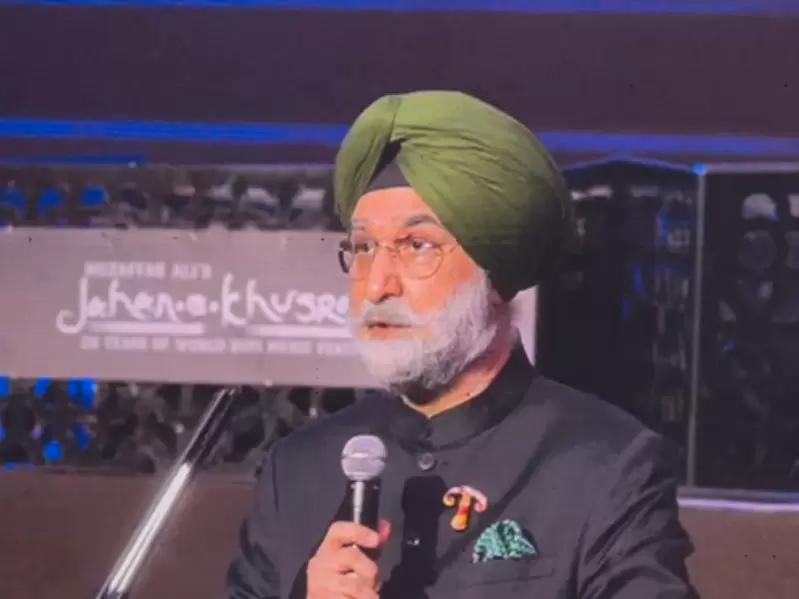 Lt. Gov Taranjit Singh Sandhu lights the lamp at the Jahaan e Khusro / Ritu Marwah
Lt. Gov. Taranjit Singh Sandhu strode into the 26th edition of Jahan-e-Khusrau 2026 on March 29 at Purana Qila, New Delhi. Wearing an olive-green turban and a warm demeanor, he felt at home among Sufi music lovers, much as he had in the corridors of power in Washington in his last role as ambassador to the United States. Sandhu watched as Sufi singer Satinder Sartaaj took the stage in a bright orange turban and attire.
Remarking on the festival LG Sandhu said: “Jashn-e-Khusro is not just a festival. It is a celebration of India’s shared culture, our sufi traditions, and our rich heritage. For more than 25 years, this festival has helped keep Delhi’s culture alive. This effort truly deserves appreciation.
Today’s gathering reflects Delhi’s spirit of togetherness—what we often call Ganga-Jamuni tehzeeb—a culture of harmony, respect, and love that goes beyond all differences.”
Punjabi singers and Sufi artists with deep roots in Punjab’s folk traditions dominated the 2026 edition of the festival, curated by Muzaffar Ali. Celebrating the movement of poetry across languages, music across borders, and hearts toward harmony, Sandhu and Ali lit the ceremonial lamp, setting the stage for an evening under the stars at the historic Purana Qila. The theme this year: “The Steed of Longing | Safar-e-Ishq Continues.”
Muzaffar Ali made a theatrical entrance, as swirling clouds and shifting lights bathed the filmmaker in vivid hues.
Ali, known for his 1981 period film ‘Umrao Jaan’, brought the elegance of Awadhi tehzeeb into public space through Jahan-e-Khusrau, the annual World Sufi Music Festival he founded 26 years ago. What began in Nizamuddin, where Amir Khusrau lived and is buried, now continues as a defining cultural event in Delhi.
Who was Khusrau?
Seven centuries ago, Amir Khusrau, often called “Tuti-e-Hind” or the Parrot of India, walked the streets of Delhi. Beloved by both elites and common people, he wrote in Persian, the court language, and Hindavi, the spoken language of the region.
Jahan-e-Khusrau celebrates Sufi traditions across Punjab, Sindh, and Central Asia, emphasizing spiritual syncretism between Sufi and Bhakti traditions. Poetry in Persian, Hindavi, and Urdu is performed alongside traditional instruments such as the rabab and harmonium.
The open-air setting at Purana Qila adds to the atmosphere. As the sun sets, the lighting of the ‘shama,’ or ceremonial lamp, marks the beginning, and music lifts the anticipation of the audience.
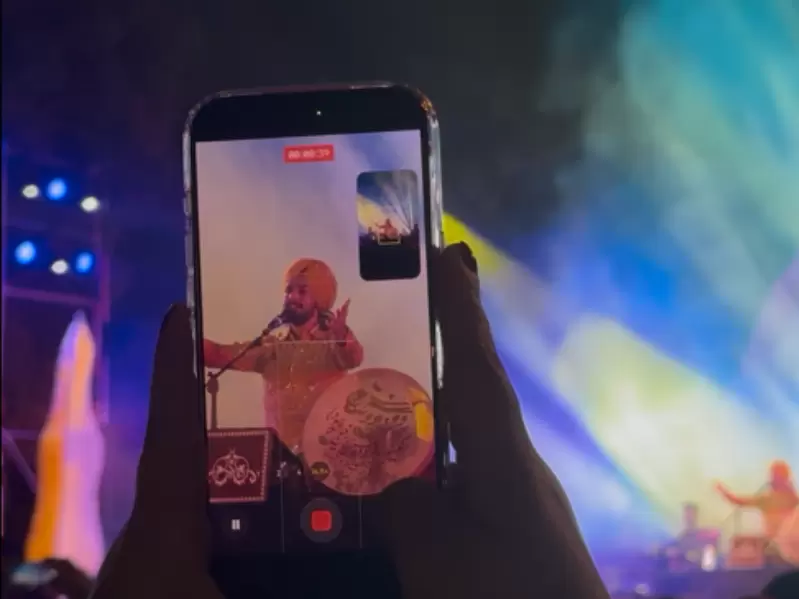 Satinder Sartaj at Jahaan-e-Khusro captured the audience / Ritu Marwah
Punjabi Sufis
The 2026 edition featured a strong Punjabi presence. Sukhwinder Singh delivered high-energy, qawwali-inspired Sufi music, while Padma Shri awardee Hans Raj Hans performed his signature Sufiana kalaam and Punjabi folk repertoire. Lakhwinder Wadali carried forward the Wadali tradition, blending folk with Sufi poetry.
The festival highlighted the confluence of Persian and Punjabi Sufi traditions, drawing packed audiences to the historic venue.
The closing evening featured Satinder Sartaaj, known for blending Punjabi folk with poetic Sufi mysticism. A scholar of the genre, Sartaaj holds an M.Phil. and Ph.D. in Sufi music and has studied Persian to engage deeply with the poetry.
Indo-Persian jugalbandi
Iranian musicians performed alongside Indian artists, accompanying recitations of Amir Khusrau’s poetry by Muzaffar Ali.
Iranian-Kurdish percussionist Sina Fakhroddin played the daf, while Meissam Alinaghiyan performed on the kamancheh. They were joined by Indian percussionists, including Tanjavur R. Kesavan on the mridangam, supported by Abhii Mohite and others, creating a rich Indo-Persian soundscape.
Audience takes wing
Sartaaj engaged the audience throughout his performance, drawing them into each song. They clapped, sang along, and responded in rhythm, often echoing “Sai” as he began his verses.
At 9:30 p.m., he promised to go 15 minutes beyond the scheduled 10 p.m. close.
“And the Punjabis will make sure of another 15 minutes on top,” he said with a smile.
“The Punjabis have a way of stretching time,” he added.
Discover more stories on New India Abroad
Related




ADVERTISEMENT

ADVERTISEMENT
E Paper
Video

Comments
Start the conversation
Become a member of New India Abroad to start commenting.
Sign Up Now
Already have an account? Login