ADVERTISEMENT

ADVERTISEMENT



Kerala launches international spice routes network
Tourism Minister P.A. Mohamed Riyas announced the initiative while inaugurating the three-day International Spice Routes Conference.
-
 IANS
IANS - Tue, 06, Jan 2026
- 10:44 EST
- 65
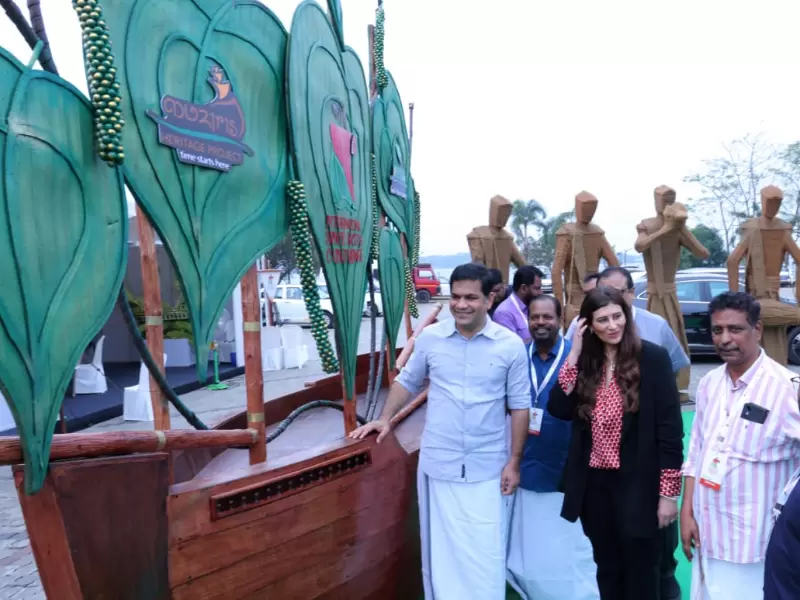 Kerala launches international spice routes network / Courtesy: Kerala government
Kerala has unveiled the International Spice Routes Heritage Network, a collaborative global platform aimed at leveraging the state’s historic role in maritime trade to drive cultural tourism, research partnerships, and creative economies.
The initiative signals a strategic push to reposition heritage as a contemporary economic and tourism resource rather than a static historical narrative.
Tourism Minister P.A. Mohamed Riyas announced the initiative while inaugurating the three-day International Spice Routes Conference, themed “Ancient Trails. New Journeys,” at Bolgatty Palace.
Also Read: India's services sector growth hits 11-month low in December, PMI shows
Organized by the Kerala Tourism Department in collaboration with the Muziris Heritage Project, the Jan. 6-8 event brings together historians, policymakers, and cultural practitioners from India and abroad.
Addressing the event via videoconference, Riyas said the Spice Routes Network would function as a platform for collaborative research, joint projects, and shared resources in heritage conservation, archaeology, documentation, and museum development.
"Kerala is interpreting heritage not as a relic of the past, but as a living resource that can inspire cultural dialogue, tourism, and inclusive development," he said, adding that the initiative seeks to reconnect routes, revive memories, and build partnerships across borders.
Beyond its academic thrust, the conference underlines Kerala’s intent to tap into the growing global demand for high-value, experiential, and culturally immersive travel.
Tourism officials see the Spice Routes narrative, rooted in centuries of global exchange, as a differentiator in an increasingly competitive tourism market.
Addressing the session, Kerala Tourism Director Sikha Surendran said that long before modern borders, the spice routes shaped global exchange.
Muziris, she noted, was not merely a port but a space where civilizations met, negotiated, and learned from one another.
"From this coast, spices carried the scent of Kerala to distant lands, while ideas returned, transforming societies, cultures, and ways of life," she said, arguing that heritage must be viewed as dynamic and community-rooted.
Historians at the conference highlighted Kerala’s centrality in global trade networks.
Kannu University's former Vice Chancellor, Prof. Michael Tharakan, traced Kochi’s rise as a major colonial port following the Interportal Trade Convention under British rule.
Former JNU professor Pius Malekandathil pointed out that Malabar pepper entered European and North African markets as early as the 8th century through Arab trade networks, with pepper even used as a common medicine in parts of Germany during the 14th and 15th centuries.
By combining historical scholarship with tourism strategy, the Spice Routes initiative seeks to convert Kerala’s past trading legacy into a forward-looking economic and cultural proposition.
Related











.jpg)
ADVERTISEMENT
ADVERTISEMENT
E Paper
Video

Comments
Start the conversation
Become a member of New India Abroad to start commenting.
Sign Up Now
Already have an account? Login