ADVERTISEMENT
ADVERTISEMENT



Indian American doctors body applauds court ruling blocking $100K H‑1B physician visa requirement
In an official statement, AAPI President Dr. Amit Chakrabarty emphasized the decision's importance for both physicians and patients nationwide.
-
1747754650.png) Ishani Duttagupta
Ishani Duttagupta - Thu, 11, Jun 2026
- 03:12 EDT
- 50
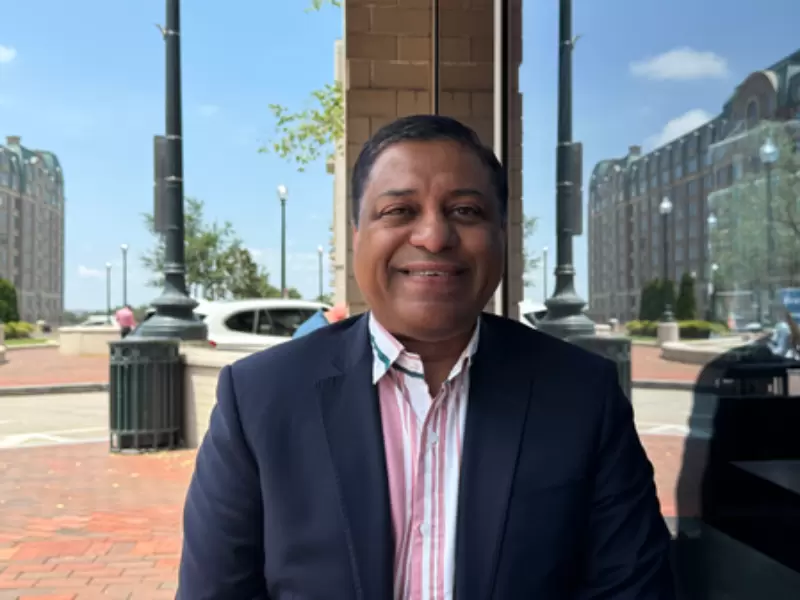
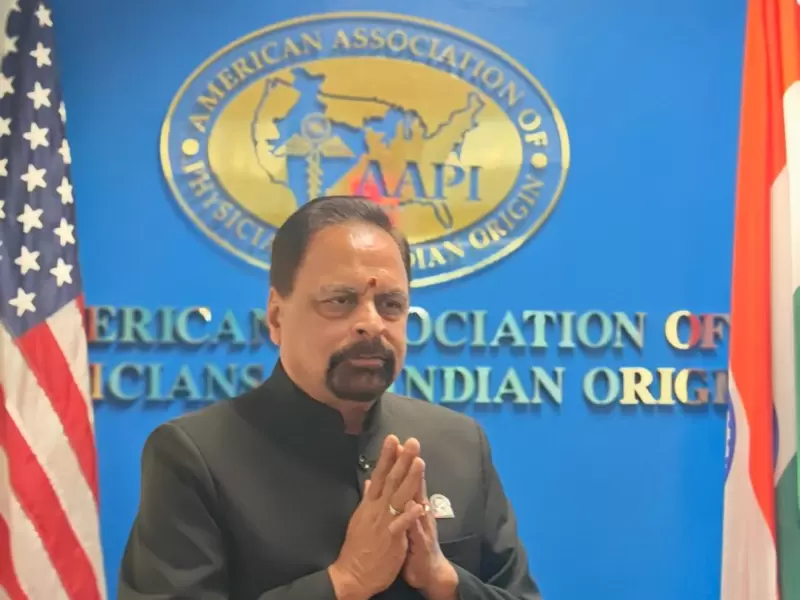 AAPI President Dr. Amit Chakrabarty / Courtesy photo
The American Association of Physicians of Indian Origin (AAPI), one of the largest and most influential ethnic medical organisations in the United States, has welcomed a federal court decision blocking a proposed $100,000 fee for H-1B physician visa applications, calling the ruling a critical victory for patient care and US healthcare stability.
Originally introduced in September 2025 by a proclamation signed by President Donald Trump, the rule would have required employers to pay a one-time $100,000 fee for new H-1B petitions for workers applying from outside the United States. AAPI leadership stressed that this financial burden would have disproportionately impacted rural hospitals, safety-net institutions, and underserved healthcare settings, where International Medical Graduates (IMGs) play an essential role.
ALSO READ: US States hail court win against H-1B fee
The court’s decision to block the proposed $100,000 H‑1B visa requirement, the AAPI leadership stresses, represents a crucial step in preserving healthcare access and workforce stability. By removing a significant barrier for IMGs, the ruling helps ensure continuity of care for millions of patients—particularly in underserved communities.
In an official statement, AAPI President Dr. Amit Chakrabarty emphasized the decision's importance for both physicians and patients nationwide.
“This ruling restores fairness and stability to a system that thousands of international physicians depend upon,” said Dr. Chakrabarty. “This is not a political victory—it is a healthcare victory. It ensures that patients are not placed at risk due to policy barriers unrelated to clinical need.”
AAPI has been committed to advocating for fair, transparent, and patient-centred immigration policies. The organization has now reaffirmed that it will continue working with federal agencies, medical organizations, and community partners to ensure a strong and sustainable physician workforce.
A $100,000 fee on fresh applications for doctors on H-1B visas could have led to hospitals withdrawing employment offers, leaving critical vacancies unfilled, and significantly reducing access to care in already vulnerable regions, AAPI had pointed out.
“Many hospitals would have struggled to absorb such a financial burden,” Dr. Chakrabarty explained. “The consequences would have been immediate—fewer physicians, longer wait times, and reduced access to care for communities that already face healthcare disparities.”
“This decision to withdraw it is vital for protecting access to care in medically underserved communities,” Dr. Chakrabarty said. “Healthcare policies must always prioritize patients and the physicians who serve them.”
According to AAPI, International Medical Graduates —physicians trained outside the United States and Canada—are a cornerstone of the American healthcare system. Making up approximately 25% of the US physician workforce, these doctors provide care to nearly one in six patients nationwide. Their impact is even more pronounced in rural and underserved areas, where IMGs constitute about 40% of the medical workforce.
Further, they account for more than half of all internal medicine trainees, serving as a vital lifeline for the future physician pipeline. These professionals are heavily concentrated in high-need specialties where workforce shortages are most acute, including internal medicine, geriatrics, nephrology, endocrinology, and infectious disease.
“International medical graduates are not just contributors—they are essential to the functioning of our healthcare system,” Dr. Chakrabarty stated. “They serve where the need is greatest and bring a deep commitment to patient care.”
AAPI highlighted the important role IMGs play in advancing health equity and culturally competent care. Many serve diverse and minority populations, improving communication and fostering trust between physicians and patients. Their multilingual skills and cultural awareness enhance patient engagement and satisfaction, while studies consistently show that IMGs deliver care comparable in quality to US-trained physicians.
“IMG physicians bring not only medical expertise but also empathy, cultural understanding, and a global perspective,” Dr. Chakrabarty pointed out. “They are essential to delivering equitable, patient-centred care in a diverse nation.”
In addition to clinical care, IMGs contribute to the healthcare system through research, teaching, and community service. Many serve in public hospitals, federally qualified health canters, and remote regions, helping address social determinants of health.
However, AAPI leaders noted that IMGs continue to face challenges, including complex visa processes, professional uncertainty, and workplace inequities. “Policies that create barriers for physicians ultimately become barriers for patients,” Dr. Chakrabarty emphasized. “We must ensure that healthcare policies reflect the realities of patient needs.”
Discover more at New India Abroad.
Related




ADVERTISEMENT

ADVERTISEMENT
E Paper
Video

Comments
Start the conversation
Become a member of New India Abroad to start commenting.
Sign Up Now
Already have an account? Login