ADVERTISEMENT

ADVERTISEMENT



India to keep some farm protections in U.S. trade deal, will buy U.S. aircraft, arms, energy
The agreement comes after months of tensions between Trump and Modi that began to ease in recent weeks, and follows a big trade agreement.
-
 Reuters
 - Tue, 03, Feb 2026
- 16:34 EST
- 10
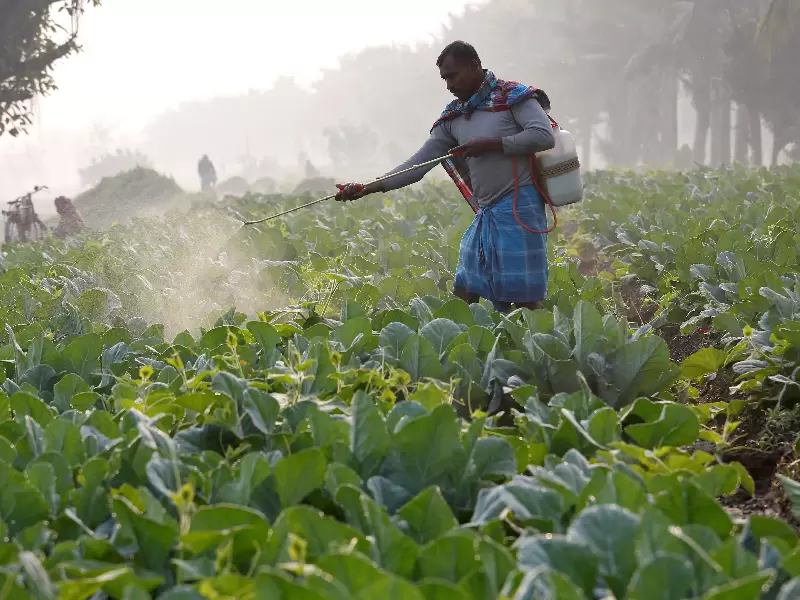 A farmer sprays insecticide on his cauliflower field in Kolkata, India, December 19, 2016. / REUTERS/Rupak De Chowdhuri
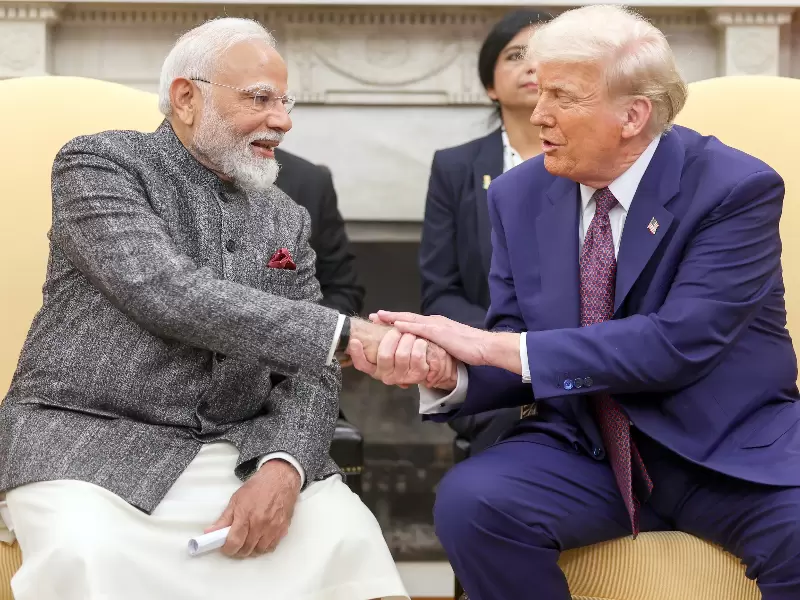
India will grant the United States some limited access to its market for agricultural products but maintain key protections, officials from the two countries said on Feb. 2 as the outlines of a tariff-reducing trade deal between U.S. President Donald Trump and Indian President Narendra Modi started to emerge.
U.S. Trade Representative Jamieson Greer told CNBC that the deal would reduce India's tariffs on American industrial goods to zero from about 13.5 percent and eliminate duties on U.S. tree nuts, fruits, vegetables, wine and spirits. In exchange, the United States will reduce its tariffs on Indian goods to 18 percent from 50 percent.
Also Read: Beyond tariffs: Why the India U.S. trade deal signals a strategic shift
The agreement comes after months of tensions between Trump and Modi that began to ease in recent weeks, and follows a big trade agreement signed by Modi with the European Union last month. It hands Trump a welcome economic and foreign policy win on the trade front amid domestic political turmoil after the killing of two U.S. citizens by federal agents during a crackdown on immigrants in Minneapolis.
An Indian government official told Reuters on Feb. 2 that India would gradually ramp up purchases of U.S. petroleum, aircraft, defense and telecom goods and pharmaceuticals as part of the deal, which includes a multi-year commitment to buy $500 billion in American goods.
"It will be done over the years," the official said, adding that a more comprehensive pact between the world's two largest democracies would be negotiated over the coming months.
The deal does include an immediate reduction in tariffs on American cars, the official added.
Neither side provided a start date for the trade deal. Greer said that U.S. and Indian officials were still putting terms on paper. A U.S. official said the goal was to complete that work this week or soon thereafter.
The deal also calls for India to halt its purchases of Russian oil in exchange for lowering U.S. tariffs on Indian goods and eliminating a 25 percent punitive duty related to Russian oil that Trump imposed last August.
That move was aided by U.S. moves to ease sanctions on the sale of Venezuelan oil and an explicit offer by the United States to India to resume its purchases, the U.S. official said.
"It's objectively a big deal that we locked down a trade deal with India and resolved this longstanding oil issue that the former Biden administration had also raised," the official said. "There's two historic outcomes that came out of this."
PARTIAL WIN ON AGRICULTURE
The two countries will finish getting the deal on paper, Greer said, "but we know the specifics, we know the details."
Greer said India would keep in place some protections on "key areas" of its politically important farm sector, but the United States would continue to work for access.
Overall, Greer said India's tariff reduction for nuts, fruits and vegetables, wine and spirits access amounted to a "big win" for U.S. farmers, opening a market of more than a billion people to more U.S. goods.
Greer did not mention any new U.S. access to India's markets for rice, beef, soybeans, sugar or dairy, which are highly guarded commodities that India excluded from its recent trade deal with the European Union.
The United States, Greer said, will maintain an 18 percent tariff on Indian goods because of the size and growth of India's trade surplus with the U.S. That reached $53.5 billion during the first 11 months of 2025, up from $45.8 billion for all of 2024, according to U.S. Census Bureau data.
The U.S. tariff on Indian goods is slightly below Trump's 19-20% rate for India's key Asian competitors Vietnam, Thailand, Indonesia and Bangladesh, but higher than the 15% rate for Japan, South Korea and the EU.
MODI'S MOMENT
Negotiations for the deal had dragged on for months, but came together quickly as a byproduct of a call from Modi to Trump this week in which the Indian leader thanked the U.S. leader for helping India avert conflict with Pakistan, according to a former U.S. official who is close to the Trump administration.
The former official said the deal's terms were less attractive for India than if a deal had been reached last summer. India could have negotiated for a lower tariff rate of 15 percent and other provisions touching on micro-electronics and generic drugs, the former official added.
The U.S. official familiar with the trade deal cautioned that no target tariff rate had been determined last summer, saying the two sides had agreed to lower the 25 percent country-specific rate, but a replacement rate "was never set in stone."
"There wasn't a deal on the table that had X, Y and Z provision that they'd squared up on," the official said. "Those are things that we could have had more discussions on."
NON-TARIFF BARRIERS
Greer said that the Trump administration reached an "understanding and an agreement with the Indians as well on a variety of technical barriers to trade, areas where they have not accepted U.S. standards. We know American goods are safe."
There will be "a process for recognizing U.S. standards," Greer said, but India will have to go through its own political processes for accepting these standards.
Regarding India's agreement to wind down Russian crude oil imports, Greer said that prior to 2022 and 2023, India did not import Russian oil and has been working since late last year to wind down imports. India was "making the right choice" to diversify its energy purchases away from Russia and to the United States and Venezuela, Greer said.
Discover more at New India Abroad.
Related







ADVERTISEMENT

ADVERTISEMENT
E Paper
Video

Comments
Start the conversation
Become a member of New India Abroad to start commenting.
Sign Up Now
Already have an account? Login