ADVERTISEMENT
ADVERTISEMENT



India rupee falls to record low below 90, risks steeper slide without central bank help
The slide underscores a divergence in India's domestic and external macroeconomic position.
-
 Reuters
 - Wed, 03, Dec 2025
- 09:49 EST
- 24
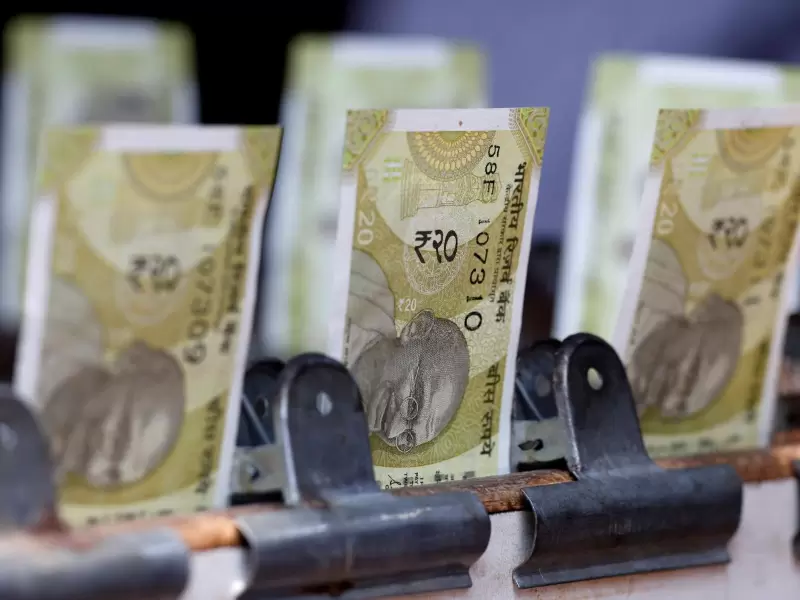 Indian twenty rupee currency notes are displayed at a roadside currency exchange stall in New Delhi, India, May 24, 2024. / REUTERS/Priyanshu Singh
The Indian rupee slid past 90 per U.S. dollar to a record low on Dec. 3, declining for the sixth consecutive session as traders bet subdued trade and portfolio flows will keep Asia's worst performer under pressure without central bank intervention.
The rupee fell to a record low of 90.29 per U.S. dollar, eclipsing its previous low hit a day earlier. It ended the day's session at 90.19, down nearly 0.4 percent on the day.
The slide underscores a divergence in India's domestic and external macroeconomic position. While GDP growth has been stronger than expected, punitive U.S. tariffs and weak capital flows have piled pressure on the rupee.
The rupee has fallen 5.3 percent year-to-date, putting it on track for its steepest annual decline since 2022, and making it the worst-performing Asian currency.
"I'm not losing sleep over it," V. Anantha Nageswaran, the country's chief economic adviser, said at an event on Dec. 3. The weakness has had no impact on inflation, he added, and said he expects the currency to recover in 2026.
Foreign flows slow
"Every day that we do not have a trade deal, the FX demand from trade deficit and outflows keeps pushing USD/INR higher, while FX supply is relatively thin and inconsistent," said Joey Chew, head of Asia FX research at HSBC in Singapore.
"Foreign investors are also losing patience. We had one month of net inflows in October, but without any more trade deal headlines since then, net flows have become flat," she said.
Overseas investors have pulled about $17 billion from Indian equities this year, while net foreign direct investment and overseas commercial borrowings have been soft, worsening the strain on the rupee.
On Dec. 3, India's benchmark equity index, the Nifty 50, closed down 0.2 percent, while the yield on the benchmark 10-year bond nudged up to 6.53 percent.
India's trade deficit has been widening and hit a record $40-plus billion in Oct. 2025. HDFC Bank expects India's current account deficit to rise close to 1.1 percent of GDP this financial year and the balance of payments to stay in a deficit.
"The weak macro picture in India makes weak currency performance inevitable; there has been a slide in so many data points recently – rising trade deficits, weakening nominal GDP growth, weak FDI and foreigner selling down domestic equities, etc.," said Sat Duhra, portfolio manager at Janus Henderson Investors in Singapore.
Investors and bankers say any relief for the rupee depends on a breakthrough in U.S.-India trade negotiations, which have been stalled for months.
"The longer it takes for a trade deal to come, the longer the pressure on the rupee is likely to persist," said Sakshi Gupta, principal economist at HDFC Bank.
Gupta expects the rupee to hover in the 92 to 93 range next quarter.
Limited RBI intervention, speculative buildup
The impact of the macroeconomic headwinds has been compounded by signs of speculative activity, as seen in the rise in dollar/rupee non-deliverable forward points and a further build-up in importer-driven dollar demand.
The 1-month dollar/rupee non-deliverable forward points jumped to a seven-month high of 23.25 paisa on Dec. 3, a near 50 percent surge in three days.
"The way the points have moved tells you speculators are simply trading what the price action is signalling—the upside momentum (on dollar/rupee) is picking up," a Singapore-based banker said.
The relatively light-touch intervention—and the central bank's reluctance to force the dollar/rupee back down—is making speculators more confident, said the banker, who did not want to be named.
Onshore far-forward points have also jumped, as importer hedging demand has surged, with expectations tilted toward a further weakening of the rupee. The implied 1-year dollar/rupee forward yields jumped 12 basis points to the highest since January.
Related
.jpg)










ADVERTISEMENT
ADVERTISEMENT
E Paper
Video

Comments
Start the conversation
Become a member of New India Abroad to start commenting.
Sign Up Now
Already have an account? Login