ADVERTISEMENT

ADVERTISEMENT



India deeptech push needs capital, clients: Indian American CEOs
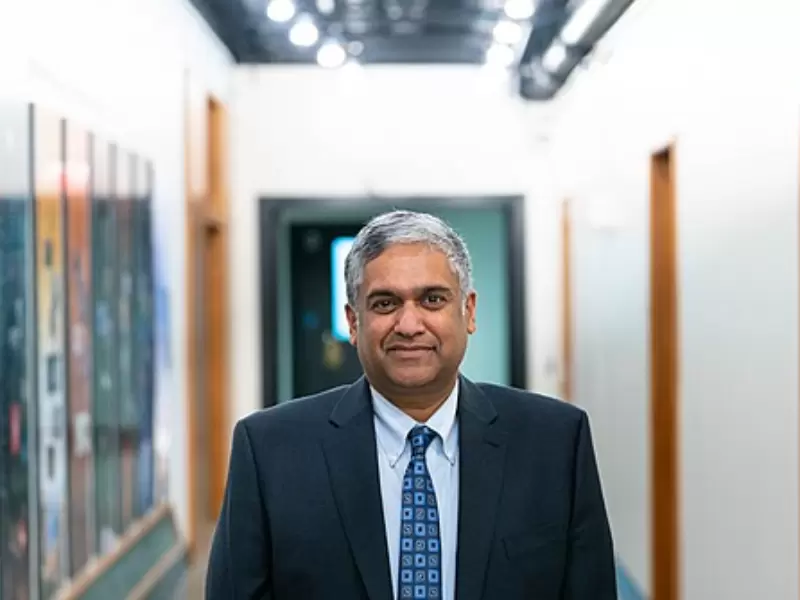
Girish Rishi, CEO and chairman of Cognite, said India has clear structural advantages, but weak enterprise adoption remains a key constraint.
-
 IANS
IANS - Thu, 02, Apr 2026
- 01:22 EDT
- 16
 Discussion at the annual Hopkins India Conference 2026 / IANS
India’s push to build a globally competitive deep tech ecosystem will depend on patient capital, stronger domestic demand, and tighter integration between industry, government and research, some of the top Indian American CEOs from the sector have said.
The discussion on “Building India’s DeepTech Engine: Startups, Venture Capital and Innovation Pathways” at the annual Hopkins India Conference 2026 on April 1 (local time) brought together industry leaders and investors to assess the gaps holding back India’s innovation ambitions.
Vivek Lall, Chief Executive of General Atomics Global Corporation, said India’s biggest strength lies in its human capital.
“It boils down to talent… this is where India beats out almost every country,” Lall said, describing the country’s demographic and skills base as a “strategic advantage.”
He added that startups are becoming central to innovation in sectors such as defence and aerospace.
“They are the engine of growth… it infuses new energy, it infuses new ideas,” he said, noting that global conflicts are reshaping how countries approach defence innovation.
Girish Rishi, CEO and chairman of Cognite, said India has clear structural advantages, but weak enterprise adoption remains a key constraint.
“The Indian market has been underwhelming in that adoption of technology,” Rishi said, noting that many businesses still “see technology as a cost” rather than a driver of revenue and competitive edge.
ALSO READ: PM Modi inaugurates Micron's facility in Gujarat's Sanand
He stressed that domestic demand is critical for scaling startups.
“Domestic customers have to scale domestic venture startups,” he said, arguing that large Indian companies must act as anchor clients, as seen in the United States and China.
Raj Iyer, president of Global Public Sector Markets at T-Second, said deep tech faces even steeper barriers than software.
“If you thought it was hard to scale SaaS software in India, just think about it in terms of deep tech and hardware,” Iyer said, pointing to challenges in research talent, infrastructure and long investment cycles.
He highlighted the role of the state not just as a funder but as an early adopter.
“Governments are in a unique position where not only can they fund innovation, but they can become the early adopters,” he said, citing policy support such as “Make in India” that has encouraged domestic production and procurement.
Iyer also underscored India’s data advantage.
“There’s certain… massive amounts of data that I think no other country in the world has,” he said, adding that leveraging this with artificial intelligence could unlock major gains.
On funding, Seema Chaturvedi, Founder and Managing Partner of Achieving Women Equity Funds, said traditional venture capital models are not suited to deep tech.
“This space does not need venture velocity. It needs infrastructure patience,” she said, calling for a broader capital stack that includes government and philanthropic funding.
She said India is beginning to respond, pointing to a government-backed “fund of funds” and research-driven financing mechanisms to support innovation.
Chaturvedi also flagged execution risks.
“It’s not just the risk of technology… there’s actually… risk of execution and scale,” she said, urging investors to better price these risks.
Panellists also pointed to India’s cost advantage and frugal innovation model, with companies able to build products at a fraction of global costs. However, they said scaling those innovations requires stronger partnerships between startups and large industrial groups.
Rishi said established businesses must step up to support emerging firms.
“For India to take off… they have to… give a shoulder to these frugal startups,” he said, urging large companies to adopt and invest in new technologies.
India’s startup ecosystem has expanded rapidly over the past decade, driven by digital infrastructure, policy reforms and rising investment flows.
Experts say the next phase will depend on converting innovation into globally competitive businesses, particularly in strategic sectors such as artificial intelligence, semiconductors and defence technologies, where India is seeking a larger role in global value chains.
Discover more at New India Abroad
Related









ADVERTISEMENT

ADVERTISEMENT
E Paper
Video

Comments
Start the conversation
Become a member of New India Abroad to start commenting.
Sign Up Now
Already have an account? Login