ADVERTISEMENT
ADVERTISEMENT


From rangoli powder to postage stamp: Sangita Bhutada’s art goes nationwide
Meet Sangita Bhutada, Houston’s go-to rangoli expert. She will be recognized for her exemplary contributions at Hindus of Greater Houston’s annual gala on Aug. 22, 2026, in Houston.
-
1749580004.png) Juhi Varma
Juhi Varma - Sat, 22, Aug 2026
- 01:54 EDT
- 94
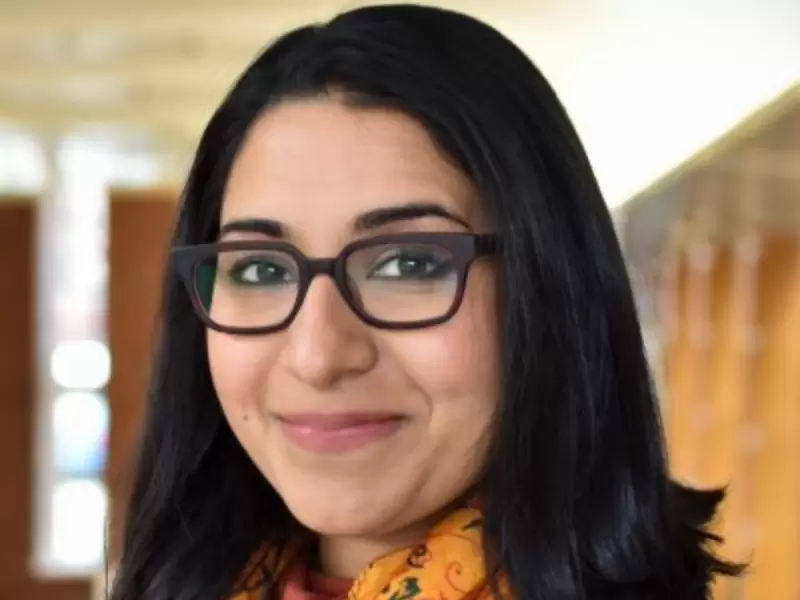
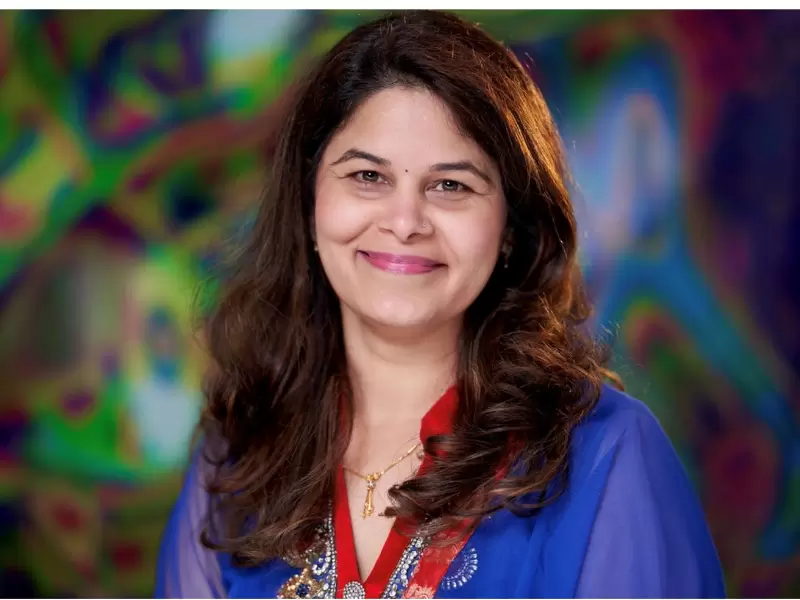 Sangita Bhutada / Courtesy photo
For nearly three decades, Sangita Bhagwan Bhutada has used the traditional Indian art of rangoli to connect generations, preserve culture and introduce young people to an art form that has been passed down for centuries.
This fall, her work will reach an audience across the United States.
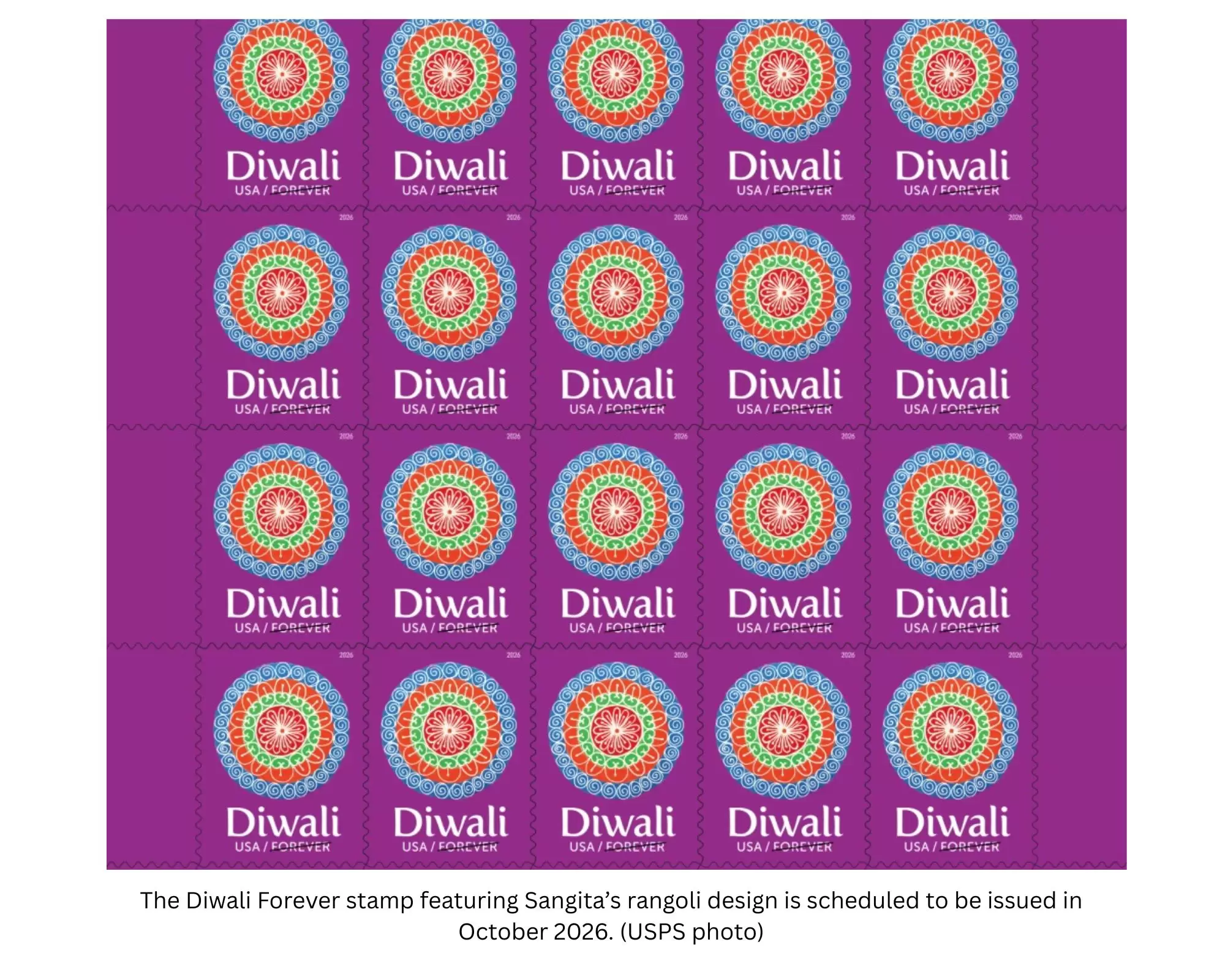
Sangita’s rangoli design has been selected for the U.S. Postal Service’s 2026 Diwali Forever stamp, scheduled for release in October.
“I was, of course, very jubilant and proud to see my rangoli featured as a USPS stamp,” the mother of two and Montessori educator said. “It is a very meaningful recognition of both my skills and this traditional Indian art form.”
“We have enjoyed Sangita’s beautiful art annually for over a decade every Diwali season, as she created a different rangoli each year to greet our friends and family,” said Sameera Kapasi Mahendru. “There is something incredibly special about the ephemeral nature of rangoli, painstakingly created with grains of fine powder. To now create a permanent and lasting impression of it on a U.S. stamp is an incredible treat and symbolic of all that is possible even as things constantly change.”
From Maharashtra to Houston
Sangita was born in Jalgaon (Jamod), Maharashtra, India, and holds a master’s degree in arts. She began expressing herself through art in 1997 and soon found an opportunity to combine two interests that would come to define her life: art and education.
“Rangoli has survived through generations because people have continued to teach and practice it,” she said.
Sangita is the daughter of Radhesham and Vimladevi Chandak. She married Bhagwan Bhutada in 1998, and the couple went on to have two sons, Mayuresh and Hriday. Sangita credits much of her success to the unwavering support of her family.
A major turning point came in 2002, when Sangita attended a monthlong rangoli camp in Nagpur organized by Navbharat Times. There, she taught the art form to approximately 500 young people.
It was Sangita’s mother-in-law, Kamalabai Manikchand Bhutada, who strongly encouraged her to seize the opportunity.
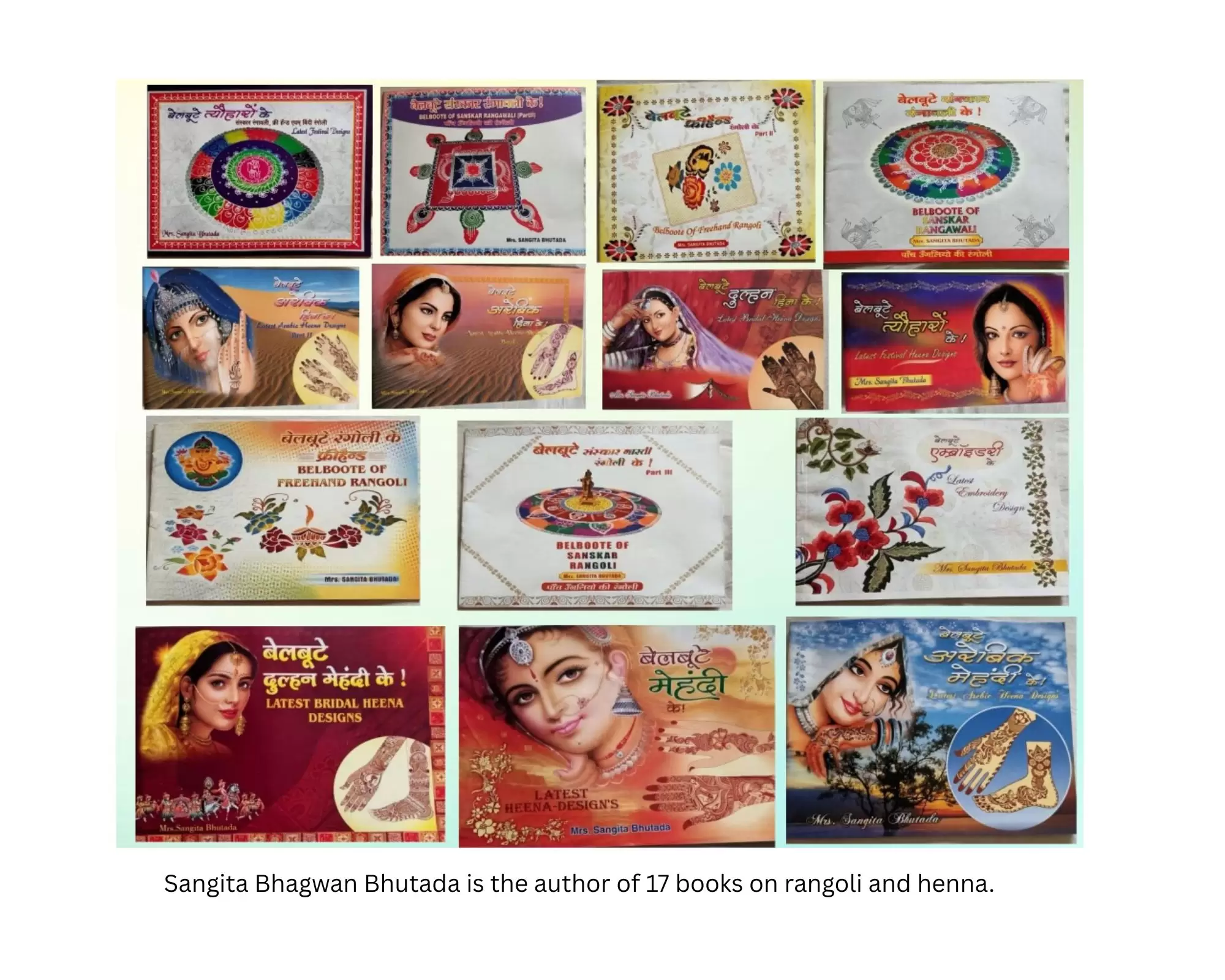
The experience eventually led to the publication of Sangita’s first book of rangoli and henna designs. She would go on to publish 17 books showcasing her work.
Sangita moved to the U.S. in 2005 for her husband’s work. She began creating rangoli designs for Hindus of Greater Houston’s annual Janmashtami celebration, where her work helped establish her reputation as Houston’s go-to rangoli expert.
She has taught Montessori in the Houston area since 2006. In 2019, she opened Harvest Green Montessori School in Richmond and is now working to open a second school, Oyster Creek Montessori School, also in Richmond.
Throughout that journey, rangoli remained a constant.
“Teaching has been an important part of my artistic journey,” she said. “It began with the rangoli camp in India. I also used to teach classes in Houston, and currently, I conduct rangoli and henna workshops.”
Creating rangoli on a massive scale
In May 2004, Sangita was featured in the Limca Book of Records after creating a rangoli approximately 70 feet in diameter in Nagpur. She worked continuously for 14 hours to complete it.
The following year, she attempted a Guinness World Records achievement in Hyderabad, creating an approximately 100-foot-diameter rangoli at Shilparamam over 24 continuous hours.
“These experiences were challenging but also very meaningful,” she said. “They allowed me to demonstrate the scale, dedication, patience and creativity that can go into rangoli.”
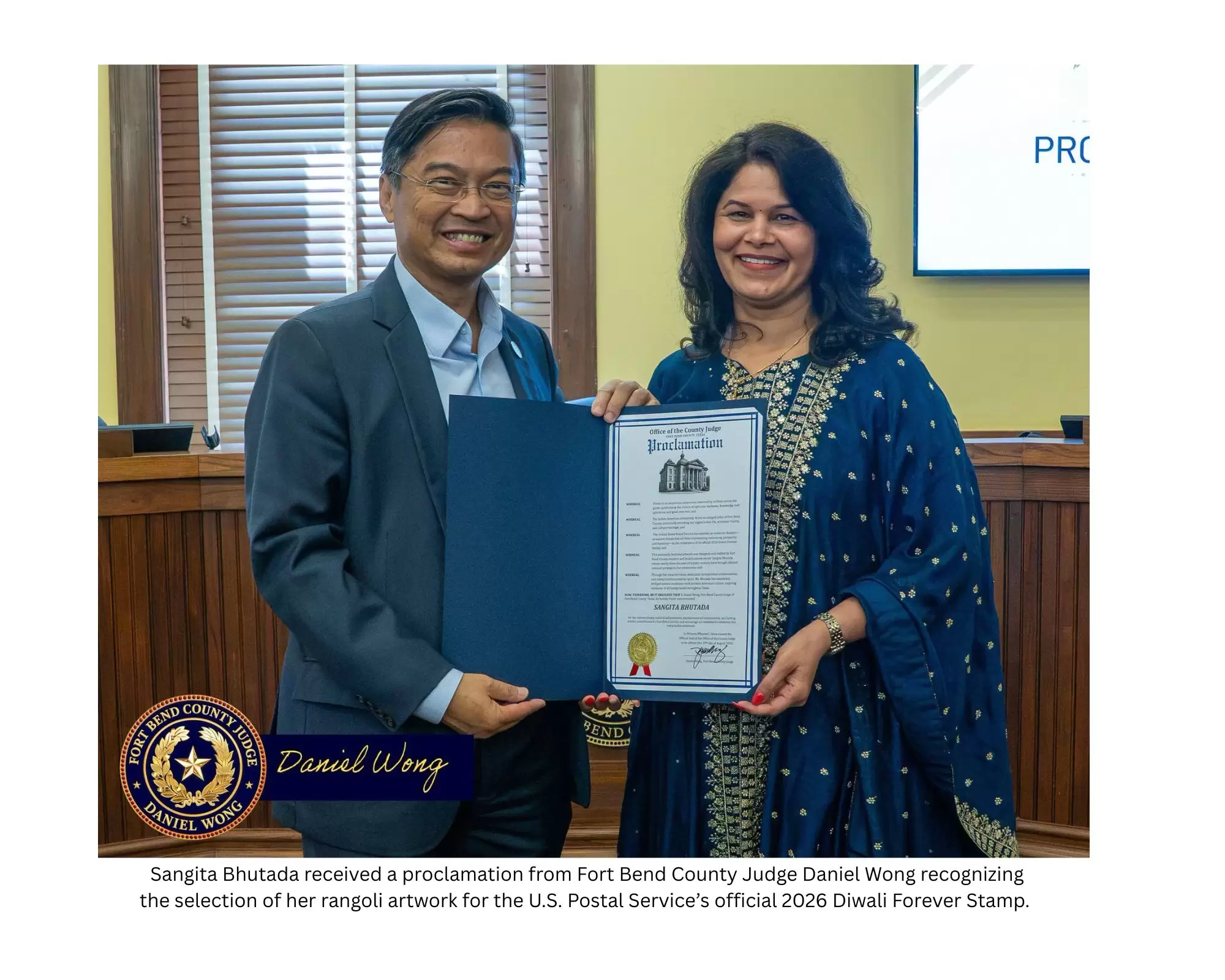
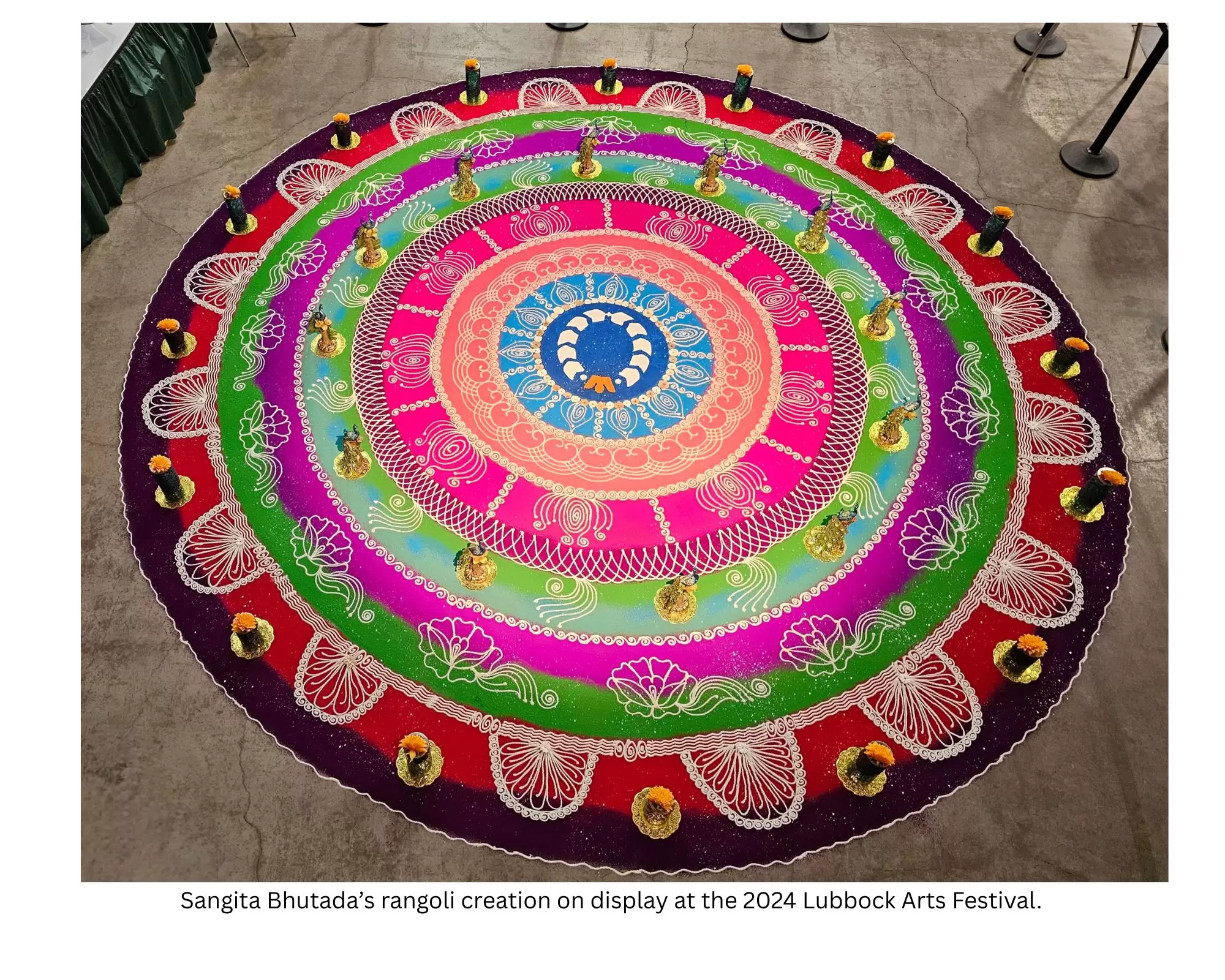
From rangoli powder to a postage stamp
Years later, Sangita Bhutada’s work attracted the attention of a research team working with the USPS.
She learned that her rangoli had been noticed on social media and that the USPS was interested in using her work as part of a stamp celebrating Diwali.
After an agreement was signed, she began submitting sketches for consideration.
Her designs drew upon traditional Sanskar Bharti patterns. Once the possibilities had been narrowed down, she spent eight to 10 days creating several rangolis using colorful powder and sand.
Professional photographs of the finished pieces were needed, so the Bhutadas asked photographer and longtime friend Bijay Dixit, who photographed the rangolis for submission.
One was ultimately selected to become the artwork for the 2026 Diwali Forever stamp.
For Sangita, the selection provides an opportunity to introduce millions of Americans not only to her work, but also to the tradition behind it.
“The stamp provides an opportunity to share rangoli and the cultural significance of Diwali with a much wider audience in the United States,” she said. “It also reflects the growing visibility and influence of Indian American culture and traditions.”
Rangoli takes on particular significance during Diwali, when colorful designs are traditionally created in homes and other spaces as decorative and sacred art.
Sangita hopes people encountering the stamp will become curious about the tradition behind the image.
“I hope people see the beauty, creativity and cultural significance of rangoli,” she said.
The USPS first issued a Diwali Forever stamp on Oct. 5, 2016, featuring a photograph of a lit diya. This would be its second Diwali Forever stamp.
Passing the tradition forward
Preserving that connection between generations remains central to Sangita’s work.
“I worked with Sangita on a Toyota bZ4X project featuring her rangoli art, and she’s a true professional — detail-oriented, dependable, and someone who holds herself to her word,” said Peter Longno, an Austin-based director and cinematographer. “I’m so proud of how she carries forward this tradition for the Indian American community.”
Sangita encourages young artists, particularly girls, to learn traditional techniques while also giving themselves the freedom to experiment.
Rangoli, she said, need not be restricted to colored powder and sand. Artists can work with grains, flowers, stones, mirrors and other materials, and designs can be temporary or permanent and created on a variety of surfaces.
“My advice would be to learn the ancient traditions, practice consistently, and not be afraid to experiment and develop your own artistic style,” she said.
Her experience teaching hundreds of children in India and later students in Houston convinced her that traditions survive when people actively pass them along.
“Rangoli has survived through generations because people have continued to teach and practice it,” she said. “I believe that encouraging children to learn these traditions is one of the best ways to keep them alive while allowing them to evolve for future generations.”
The Diwali Forever stamp featuring Sangita’s rangoli design is scheduled to be issued in October 2026, with details about the first-day-of-issue ceremony expected to be announced closer to its release.
Discover more at New India Abroad.
Leave A Comment
Related


ADVERTISEMENT

ADVERTISEMENT
E Paper
Video

Comments
Start the conversation
Become a member of New India Abroad to start commenting.
Sign Up Now
Already have an account? Login