ADVERTISEMENT

ADVERTISEMENT


Bharat’s book traces evolution of Hindutva
The book focuses on what the author describes as the “Hindu Hurt,” tracing its origins to medieval and early modern periods.
-
1759953093.png) Staff Reporter
Staff Reporter - Mon, 06, Apr 2026
- 01:48 EDT
- 9
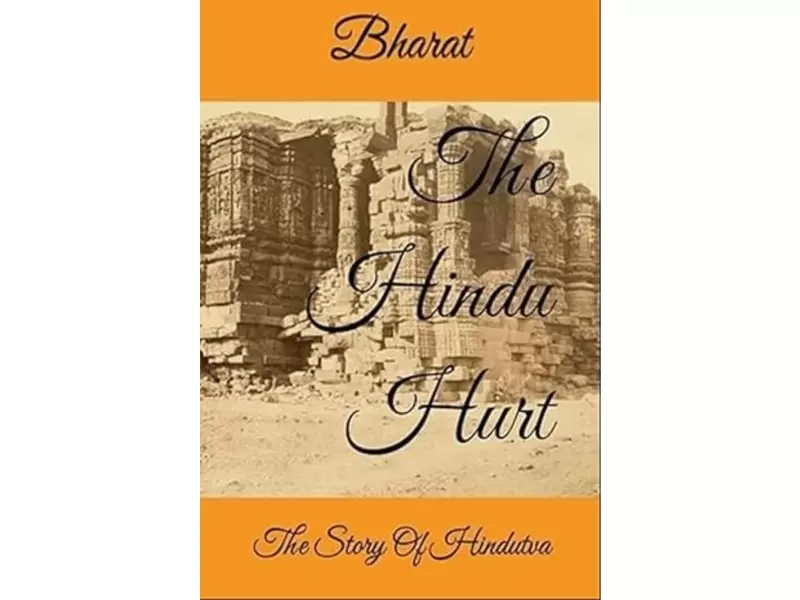 The Hindu Hurt: The Story of Hindutva / Courtesy photo
Bharat’s book The Hindu Hurt: The Story of Hindutva, published by 1947 Publications, presents a detailed examination of Hindu nationalism through historical records, ideological analysis and engagement with contemporary criticism. The 240-page book, written under a pen name, spans 22 chapters and cites more than 150 references. It was published in 2025.
The book opens with a focus on what the author describes as the “Hindu Hurt,” tracing its origins to medieval and early modern periods. Drawing on primary sources, including accounts from texts such as Tarikh Yamini, Taju-l Ma-Asir and Malfuzat-i-Timuri, Bharat documents episodes of violence, temple destruction, taxation policies such as jizya, religious conversions and slavery. The narrative extends to more recent history, including the 1990 displacement of Kashmiri Pandits, linking past events with contemporary concerns.
ALSO READ: Framing Hindutva and Hindu Identity
The second section shifts to the evolution of Hindutva as a political and ideological framework. It traces a line from Shivaji’s concept of Hindavi Swarajya to V.D. Savarkar’s 1923 articulation of Hindutva. Bharat examines Savarkar’s views on social reform, including his position on caste and political representation, and analyzes M.S. Golwalkar’s Bunch of Thoughts, addressing both supportive readings and criticisms. The section concludes with Deendayal Upadhyaya’s “Integral Humanism,” presented as an alternative to Western political models.
The final section engages directly with critics of Hindu nationalism, including Ramachandra Guha, Pankaj Mishra and Shashi Tharoor. Bharat reviews their published work and offers counterarguments through close textual analysis. The book also discusses contemporary issues such as incidents described as “cow vigilantism” and “anti-Christian acts,” presenting interpretations that question commonly cited narratives.
Personal reflections are interwoven throughout the text, with the author describing visits to historical sites and experiences with publishing. These elements accompany a structured presentation supported by references.
The book adopts a clearly defined standpoint in support of Hindu nationalism and does not present itself as neutral. Its documentation allows readers to examine cited sources independently.
As a nonfiction work, The Hindu Hurt brings together historical material, ideological arguments and contemporary debate in a single volume, contributing to ongoing discussions on Indian politics and identity.
Discover more stories on New India Abroad
Related







ADVERTISEMENT

ADVERTISEMENT
E Paper
Video

Comments
Start the conversation
Become a member of New India Abroad to start commenting.
Sign Up Now
Already have an account? Login