ADVERTISEMENT

ADVERTISEMENT



Whistleblower lauds passage of Georgia’s clergy abuse bill
The bill would allow prosecutors to charge clergy for sexual relationships formed through pastoral authority, removing consent as a legal defense in such cases.
-
 Malvika Choudhary
 - Tue, 24, Mar 2026
- 17:48 EDT
- 39
 Ruth Malhotra / Instagram/ Ruth Malhotra
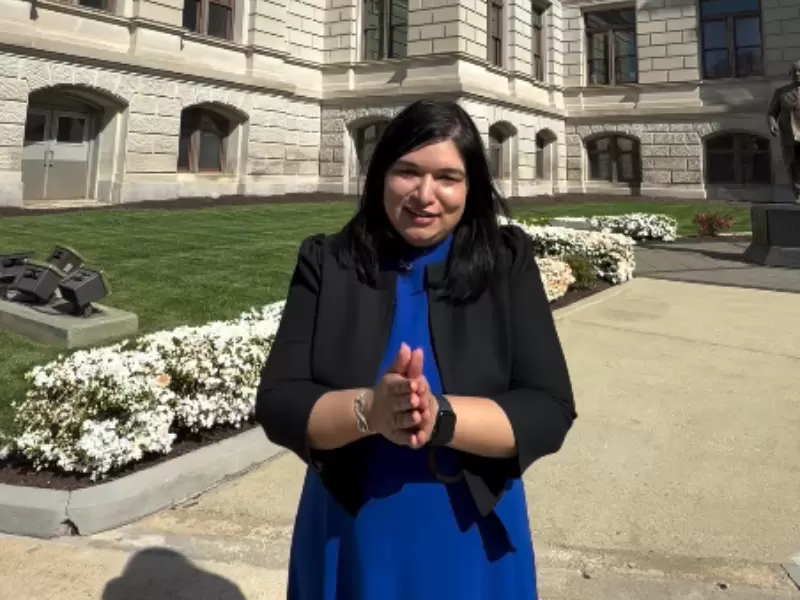
Indian American communications professional Ruth Malhotra welcomed the unanimous passage of a Georgia clergy abuse bill by the state House of Representatives, calling it “long overdue.”
Senate Bill 542 passed on March 24 would allow clergy to be charged with certain sexual offenses if they engage in sexual conduct with individuals receiving pastoral counseling or spiritual guidance, and would remove consent as a legal defense in such cases.
Also Read: Jayapal leads 5-step push for full Epstein file access
In an instagram video posted from the Georgia Capitol minutes after the vote, Malhotra said lawmakers “spoke in favor of it actually even reading quotes from our testimony and the judiciary hearings,” adding, “there was so much affirmation, support, applause. We are filled with gratitude.”
As the bill heads to Governor Brian Kemp, She said that the legislation “will create a path to justice for survivors of abuse” and create accountability for those in power and for the institutions who have tried to protect them.”
Despite the positive outcome, Malhotra said the moment was “tinged with sadness.”
“We never should have gotten to this point. There's been many people who have been abused along the way without that justice so this is a huge step in the right direction,” she said, adding, “the work is not over yet.”
The legislation addresses what lawmakers and advocates describe as a gap in Georgia law, where cases involving adult victims in religious settings have often not been prosecutable, particularly when abuse stems from spiritual authority rather than force.
Malhotra, the former spokesperson for Ravi Zacharias International Ministries (RZIM) and a whistleblower in the Ravi Zacharias abuse scandal, testified before the Georgia House Judiciary Committee on March 19, in support of the bill.
Recounting her experience as an integral part of RZIM when the abuse allegations first surfaced, Malhotra told lawmakers that standing for the truth in the face of power had severe consequences for the victims.
“In 2017, when a woman named Lori Anne Thompson came forward alleging abuse, the response was not a formal investigation, but containment and coverup,” Malhotra said.. “A financial settlement was reached and a nondisclosure agreement prevented the victim from speaking. I was asked to publicly defend that outcome.”
She recalled facing retaliation after raising concerns internally, while Thompson and her husband were subjected to legal action and public attacks.
“This is the reality many victims face,” she said. “When they come forward or try to come forward, the consequences are often immediate, public and severe.”
Malhotra said she later became a key witness in a third-party investigation that substantiated a long-term pattern of abuse involving multiple victims.
“What is relevant for this body is not only what occurred, but why it was able to occur without meaningful legal consequence,” Malhotra said. “These cases involved adult women. And that is precisely where the legal gap exists under current law.”
The central case for the 2026 legislative push is the testimony of Hayle Swinson, a former student at Truett McConnell University (in Cleveland, Georgia), who described being groomed and sexually abused by a top university official who was also her spiritual mentor.
The bill aims to align clergy with other professional roles in Georgia law, such as teachers and therapists, where a power imbalance is recognized as invalidating consent.
Discover more at New India Abroad.
Related






.JPG)
ADVERTISEMENT

ADVERTISEMENT
E Paper
Video

Comments
Start the conversation
Become a member of New India Abroad to start commenting.
Sign Up Now
Already have an account? Login