ADVERTISEMENT
ADVERTISEMENT



The Hand That Funds the Cradle of Education Rules the World
Influence rarely announces itself. It can arrive as a grant, an endowed chair, a research institute, a consultancy agreement, or a "strategic partnership."
-
 Mandar Pattekar
 - Mon, 10, Aug 2026
- 12:09 EDT
- 35
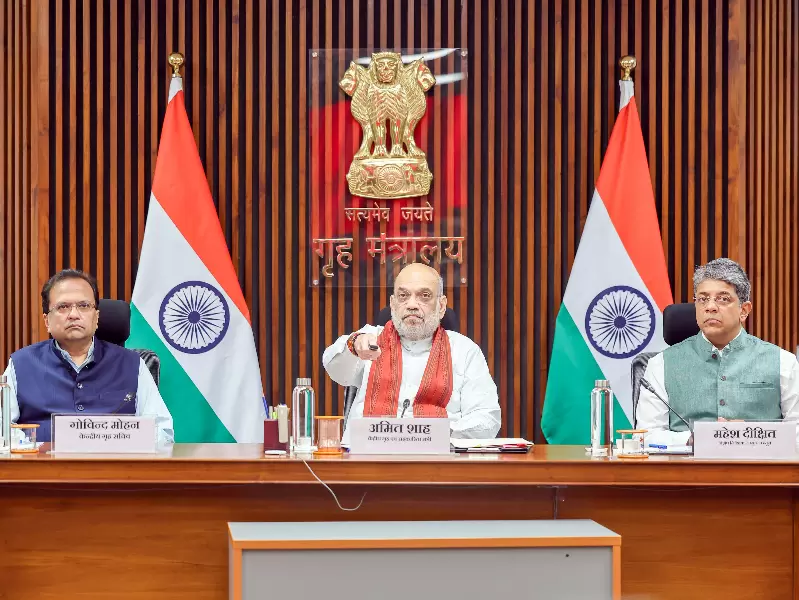 India's Home Ministry / IANS
I remember reading the first wave of American commentary on India's Foreign Contribution (Regulation) Act (FCRA) and thinking: they're missing the point entirely. For years, FCRA was treated in Washington policy circles as a heavy-handed instrument an anxious, immature democracy used to squeeze civil society.
Now, Washington is also ironically asking many of the same questions: How much foreign money is entering institutions that shape public opinion? Who is supplying it? And when does philanthropy, research collaboration, or academic partnership cross the subtle line into strategic influence?
Also Read: Viksit Bharat 2047: A Roadmap to Become a Developed Nation
India began wrestling with that problem long before 2010. Its first foreign-contribution law dates to 1976; the current FCRA was enacted in 2010 and substantially tightened in 2020. The government says its purpose is to ensure foreign contributions are received and used consistently with India's sovereignty, security, democratic institutions, and public order.
The numbers explain why this isn't theoretical. As of July 15, 2026, India had 14,449 active FCRA certificates, while 22,498 registrations had been canceled and 15,212 deemed expired. Between 2019 and 2022, 13,520 organizations received roughly ₹55,741 crore (about $5.85 billion) in foreign contributions. Supporters call this regulatory due diligence; critics call it a chokehold on civil society. Both concerns can coexist.
America is now confronting its own version of the problem. In February, the U.S. Department of Education reported that American colleges and universities disclosed more than $5.2 billion across over 8,300 foreign gifts and contracts during 2025. Qatar accounted for more than $1.1 billion, followed by Britain and China.
None of this proves misconduct. But scale matters, because universities do more than award degrees. They train future scientists, diplomats, journalists, entrepreneurs, and political leaders. They help determine which questions receive attention and which ideas gain institutional legitimacy.
Washington increasingly recognizes that distinction. Section 117 of the Higher Education Act requires federally assisted universities to disclose qualifying foreign gifts and contracts. A new reporting portal launched in January, and federal investigations have examined compliance at institutions including Harvard, Penn, UC Berkeley, and the University of Michigan. Congress has also weighed stronger disclosure and enforcement measures.
Also Read: Ambassador Kwatra rejects claims FCRA bill targets religious groups
The United States hasn't adopted the Indian model outright. FCRA directly regulates foreign contributions. The Foreign Agents Registration Act (FARA) addresses activities undertaken on behalf of foreign principals. The Committee on Foreign Investment in the United States (CFIUS) reviews specific foreign investments for national-security risks. Section 117 focuses narrowly on university disclosures. But all of these reflect the same underlying realization: undisclosed or strategically concealed influence is the real problem.
Influence rarely announces itself. It can arrive as a grant, an endowed chair, a research institute, a consultancy agreement, or a "strategic partnership." A single transaction may mean little. A twenty-year institutional relationship can mean considerably more. Foreign governments understand that ties to institutions training future elites can pay dividends long after a check clears.
India's newest FCRA controversy pushes this debate further. The Foreign Contribution (Regulation) Amendment Bill, 2026, introduced in March, would create a Designated Authority to supervise and potentially dispose of foreign-funded assets when an organization loses, surrenders, or fails to renew its FCRA registration.
The government argues that the current law lets foreign-funded assets vest with an authority after cancellation or surrender, but lacks the machinery to manage them properly. Critics fear the new powers could threaten schools, hospitals, churches, and charities whose registrations lapse through regulatory disputes rather than genuine wrongdoing.
On August 4, U.S. Congressman Riley Moore criticized the proposed amendments, arguing they could target Christian institutions. He pointed to Compassion International, which shut down its 48-year-old humanitarian operations in India after the government blocked its foreign funding.
India's Home Ministry accused the U.S.-based Christian NGO of routing money to local churches for conversions and proselytization, a claim the charity has consistently denied. Ambassador Vinay Mohan Kwatra countered that legitimate foreign funding remains permissible, framing the law as a matter of transparency, governance, and national security.
Is this irony or hypocrisy? An American lawmaker is criticizing India's controls at precisely the moment Washington is intensifying scrutiny of foreign money flowing into its own universities. Still, regardless of the double standard, India's critics deserve to be taken seriously. Regulatory power can be abused. Legitimate NGOs can become collateral damage. Any democracy confronting foreign influence must preserve due process, freedom of association, academic independence, and an independent civil society.
The lesson for America, then, isn't "copy FCRA." It's simpler: follow the money far enough to understand the relationship, not just the transaction.
Where India is grappling with monetarily influenced religious conversion, the U.S. is grappling with the shaping of its next generation's worldview. This century's strategic contest won't be fought only over drones, semiconductors, and naval bases; it will also be fought over the institutions that produce ideas and train future leaders.
The hand that funds the cradle of education doesn't automatically control it. But a democracy that never asks whose hand it is, and what that hand expects in return, is choosing blindness over independence. Sovereignty isn't always challenged at the border. Sometimes it's negotiated quietly in a classroom, laboratory, newsroom, think tank, or boardroom - one grant and one institutional relationship at a time.
(The views and opinions expressed in this article are those of the author and do not necessarily reflect the official policy or position of New India Abroad.)
Discover more at New India Abroad.
Leave A Comment
Related





ADVERTISEMENT

ADVERTISEMENT
E Paper
Video

Comments
Start the conversation
Become a member of New India Abroad to start commenting.
Sign Up Now
Already have an account? Login