ADVERTISEMENT
ADVERTISEMENT



Ambassador Kwatra rejects claims FCRA bill targets religious groups
The ambassador's remarks came after sharp comments from U.S. Rep. Riley Moore, who claimed that the FCRA bill is a "clear attack against Christians"
-
1759953093.png) Staff Reporter
Staff Reporter - Mon, 10, Aug 2026
- 03:17 EDT
- 45
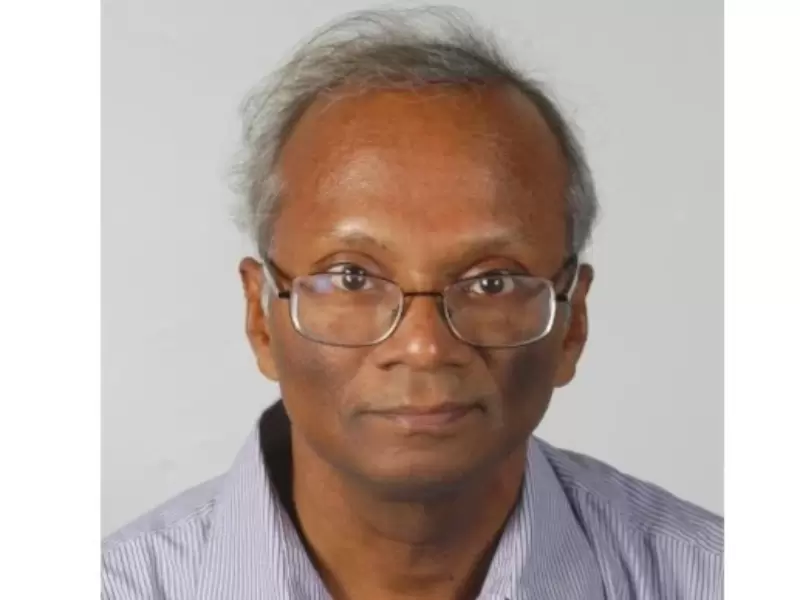
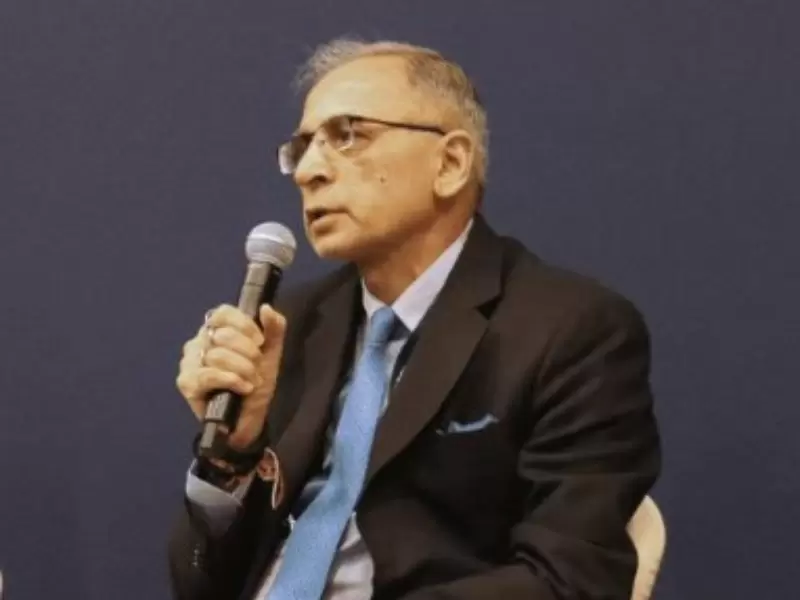 Amb. Vinay Mohan Kwatra / IANS
India's Ambassador to the U.S., Vinay Kwatra, has rejected as "misunderstandings" the criticism of the proposed Foreign Contribution (Regulation) Amendment Bill 2026, releasing a "Myth vs. Reality" breakdown to counter claims that the proposed law targets religious groups or enables government takeovers of civil society assets.
The ambassador's remarks came after sharp comments from U.S. Rep. Riley Moore, who claimed that the FCRA bill is a "clear attack against Christians" and will permit the Indian government to take over churches and religious charities.
In a thread on X, Kwatra outlined a detailed "Myth vs. Reality" breakdown to address "misconceptions" surrounding the legislation's impact on civil society, religious organizations and NGO assets.
"There are many misunderstandings in the media and in civil society about the proposed Foreign Contribution (Regulation) Amendment Bill (FCRA), 2026. Here is the Myth vs. Reality check," Kwatra wrote.
Addressing concerns that the new law would cut off foreign aid to civil society, Kwatra said regulation of foreign financial flows in public and political spaces is a sovereign step driven by national security concerns.
"It is an accepted feature of modern governance in many democracies around the world," he said.
The first FCRA in India came in 1976, Kwatra said. "It was replaced in 2010 with a more modern framework, and strengthened by amendments in 2016, 2018 and 2020."
He said the 2026 Bill and Rules are "the next step in the same direction: more transparency, better governance, clearer rules."
"The fact is that the law does not forbid Indians from receiving foreign donations or shut down law-abiding civil society," he said.
"Tens of thousands of associations are registered under FCRA and routinely receive foreign funds for health, education, disaster relief, research and humanitarian work," he added.
There are many misunderstandings in the media and in civil society about the proposed Foreign Contribution (Regulation) Amendment Bill(FCRA), 2026.
— Amb Vinay Mohan Kwatra (@AmbVMKwatra) August 10, 2026
Here is the Myth vs. Reality check.
Responding to claims that FCRA has adversely impacted the working of NGOs and charitable organizations and the new amendment would further restrict their ability to operate in India, he said in reality, foreign money inflows into India have been rising, not falling.
"Foreign contributions to registered organizations grew from roughly $1.2 billion in 2010-11 to $2.67 billion in 2024-25," Kwatra said.
"India has over 3 million NGOs. A bare fraction of these, only 14,450, hold FCRA registration. Thus, the overwhelming majority of the civil society organizations are entirely outside the Act."
He said the FCRA does not stop anyone from accepting foreign charity, research grants or humanitarian aid.
"It asks three things — register, receive the money through laid-down process, report what you did with it," he said.
On allegations that law will lead to seizure of assets of NGOs, including religious charities, places of worship, hospitals, schools and charitable organizations that rely on foreign donations, he clarified that India welcomes genuine international partnerships and has always provided a legal framework within which such contributions can be received and utilized.
"When a registration is canceled or surrendered, foreign contributions and the assets created from them already vest in a state government authority," Kwatra said.
"This has been in force since 2010. It is not new."
He said the 2026 Bill adds "a designated authority to safeguard those assets — and a way back."
"If the organization restores its registration, all assets and unused funds are returned in full," he said.
"Places of worship carry their own protection," Kwatra added. "Where a canceled association has created property connected to a place of worship, that property goes to another FCRA-registered association of the same faith to ensure continuity of worship."
Debunking "myth" that FCRA specifically targets a particular religion or community, he said, "Nothing could be farther from it."
"The Act applies uniformly to all organizations regardless of religion, community or ideology," he said.
"Faith-based welfare activities, including religious education, maintenance of places of worship, and charitable work by organizations of every faith, continue to be eligible for foreign funding," he added.
Clearing "myth" that "India is an outlier in doing this," he said, "The U.S. has had FARA since 1938 and FATCA since 2010."
"Australia legislated in 2018, Canada in 2024. The UK's scheme came into force in July 2025. The EU is legislating now," he said.
Also Read: India's FCRA bill targets Christians, alleges US Congressman Moore
U.S. Rep. Moore last week in a post on X alleged that despite India's long Christian history, its Parliament is considering amending the law, which is a "clear attack against Christians."
"Christians have been in India since St. Thomas the Apostle traveled to the Malabar Coast just decades after the resurrection of our Lord Jesus Christ," Moore wrote.
"But despite this long Christian history, India's Parliament is considering amending Foreign Contribution Regulation Amendment (FCRA) rules to permit government takeovers of churches and religious charities."
"This is a clear attack against Christians," Moore wrote. "If this bill proceeds in this way, it would be a point of major concern in our bilateral relationship with India."
The Foreign Contribution (Regulation) Amendment Bill, 2026, seeks to amend the Foreign Contribution (Regulation) Act, 2010, which governs how nongovernmental organizations, charitable trusts, educational institutions, religious bodies and associations receive and use foreign donations. Under existing rules, organizations must obtain registration from the Ministry of Home Affairs before accepting foreign contributions. That registration has to be renewed every five years.
Discover more at New India Abroad.
Leave A Comment
Related







ADVERTISEMENT

ADVERTISEMENT
E Paper
Video

Comments
Start the conversation
Become a member of New India Abroad to start commenting.
Sign Up Now
Already have an account? Login