ADVERTISEMENT
ADVERTISEMENT



The Double-Track State: Narrative Management and Strategic Pragmatism in the Islamic World
Khamenei's death highlights whether ideology shapes foreign policy or merely masks governments' pragmatic strategic interests.
-
1744362597.jpeg) Arun Anand
Arun Anand - Thu, 09, Jul 2026
- 01:14 EDT
- 25
 File photo / Reuters
Many states project ideology in public but pursue national interests in practice. This growing gap between rhetoric and state behavior raises a fundamental question: Is ideology driving foreign policy, or has it become a tool for managing public perception while governments pursue pragmatic strategic objectives?
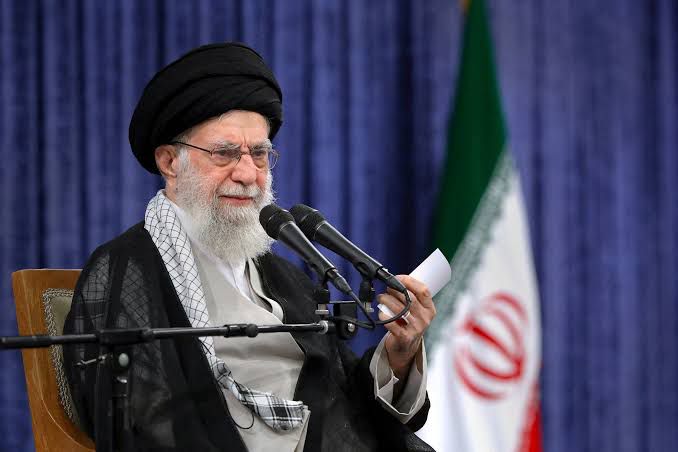
The events surrounding the death of Iran’s Supreme Leader, Ayatollah Ali Khamenei, provide a recent illustration of this dilemma. Several Muslim-majority states publicly expressed solidarity with Tehran, issued official condolences and participated in mourning ceremonies. Yet shortly afterward, many of these same governments continued diplomatic engagement with the United States, the very country supporting military operations against Iran, and other strategic partners, reaffirming existing political, economic and security relationships.
The sequence highlights a broader pattern: Governments increasingly manage different narratives for different audiences while maintaining consistent strategic priorities. Across much of the Islamic world, ideological messaging and foreign policy decision-making are increasingly operating on separate tracks. Public narratives often focus on religious solidarity, historical identity or political causes, while actual state behavior remains shaped by economic requirements, security concerns and geopolitical realities.
The result is a foreign policy environment where speeches increasingly reveal the message governments want different audiences to hear, while diplomatic, military and economic decisions consistently reveal the interests the states are actually pursuing.
A Broader Pattern Across the Islamic World
The emergence of a more multipolar international order has enabled many states to maximize strategic autonomy by engaging competing powers simultaneously. However, when ideological narratives begin to outweigh strategic considerations, they risk constraining policy flexibility, distorting national priorities and complicating long-term foreign and security decision-making.
Egypt, despite presenting itself as a leading Arab and Islamic power, has maintained a strategic partnership with Washington for decades and remains one of the largest recipients of American military assistance. Similarly, Malaysia and Indonesia frequently advocate issues affecting Muslim communities globally while maintaining extensive economic relations with China, the United States and other major powers.
Qatar similarly balances ideological messaging with strategic pragmatism. While positioning itself as a prominent advocate for Palestinian issues and broader Islamist causes, Doha hosts Al Udeid Air Base, the largest U.S. military base in the region, and remains a key American security partner, demonstrating how ideological influence and strategic interests can coexist.
Türkiye has adopted a comparable approach. Under Recep Tayyip Erdoğan, Ankara has consistently championed Muslim causes and criticized Israeli policies while remaining a member of the North Atlantic Treaty Organization, sustaining defense cooperation with the West and simultaneously expanding ties with Russia, China and Gulf states. The result is a foreign policy that combines ideological signaling with strategic balancing across competing power centers.
These cases demonstrate that religious identity and national interest frequently operate on separate tracks. For many states, ideology functions primarily as a diplomatic and political language, useful for maintaining domestic legitimacy, mobilizing public opinion and reinforcing regional influence, while strategic calculations continue to determine actual policy choices. In practice, ideology often explains the rhetoric, while national interest explains the policy.
Among these states, Pakistan represents the clearest and most institutionalized example of ideology serving political messaging while national interests continue to shape strategic behavior.
Pakistan: The Benchmark of Narrative Management
Pakistan represents the most established example of separating ideological messaging from strategic necessity. The diplomatic sequence following the death of Iran’s Supreme Leader Ayatollah Ali Khamenei illustrates this pattern clearly. Pakistani leaders expressed solidarity with Tehran, participated in mourning ceremonies and criticized external military pressure against Iran. Prime Minister Shehbaz Sharif led a high-level delegation to Tehran, where he paid tribute to Khamenei’s "wisdom, leadership and profound influence" and declared that "Pakistan stands with Iran" during its time of grief, while expressing solidarity with the Iranian leadership and people. However, shortly afterward, Pakistani officials also engaged with the United States, including participation in Independence Day diplomatic events and expressions of continued interest in strengthening bilateral relations.
These instances demonstrate Pakistan’s long-standing ability to communicate different messages to different audiences while maintaining its broader strategic objectives.
Islamic solidarity serves Pakistan’s domestic and regional politics, while ties with Washington support security and diplomacy. China underpins defense modernization through CPEC, Gulf states provide financial backing and Iran preserves regional flexibility. This strategy is longstanding. During the Cold War, Pakistan aligned with the United States while projecting an Islamic identity, and after 9/11 became a key U.S. counterterrorism partner while continuing to champion Muslim causes and strategic autonomy.
Pakistan’s distinctiveness is therefore not simply that it balances multiple powers, many middle powers do the same. Its uniqueness lies in how deeply ideological narratives are embedded within domestic politics while the state simultaneously conducts a highly transactional foreign policy driven by security, economic and geopolitical interests. Ideology shapes public messaging; strategic necessity shapes state behavior.
As such, Pakistan has gained diplomatic flexibility by avoiding dependence on a single external partner. Whether described as pragmatic diplomacy or political hypocrisy, Pakistan has transformed narrative management into a routine feature of statecraft.
Bangladesh: An Emerging Test Case
For Bangladesh, the concern is not the existence of religious politics itself, but whether ideological narratives could begin influencing foreign policy and national security decisions. Traditionally, Dhaka has followed a pragmatic approach, balancing ties with India, China, the United States and other partners based on economic and strategic interests.
However, the changing political environment has created greater space for ideological narratives. Jamaat-e-Islami, under the leadership of Dr. Shafiqur Rahman, has emerged as one of the key actors bringing religious identity and broader Muslim causes into political discourse. This was evident when Jamaat sent its own independent delegation to attend Ayatollah Ali Khamenei’s funeral in Tehran. Days later, while addressing the U.S. Embassy’s America Week 2026 event marking the 250th anniversary of American independence, Shafiqur Rahman described the United States as "our tested friend" and reaffirmed the importance of Bangladesh-U.S. relations.
The issue is not Bangladesh engaging different partners, such engagement is both normal and necessary, but the growing divergence between ideological messaging and strategic positioning. The emerging question is whether ideological narratives will remain instruments of domestic political mobilization or gradually begin influencing Bangladesh’s foreign policy and national security decision-making.
Pakistan’s experience illustrates how ideological narratives can gradually become institutionalized within foreign policy discourse. Once ideology becomes closely linked with national identity, security policy and external relations, policy adjustments become politically more difficult even when strategic interests require greater flexibility.
For Bangladesh, the challenge will be maintaining a balance between political identity and national interest. The future direction will depend on whether ideology remains a tool of political messaging or becomes a defining element of long-term strategic decision-making.
Ideology as a Tool, Not a Compass
The contemporary international system increasingly demonstrates that ideology and national interest often operate on separate but complementary tracks. Across much of the Islamist world, religious and ideological narratives have long remained important tools of statecraft, but they often function alongside a pragmatic pursuit of national interests. Governments may project solidarity with ideological causes, participate in symbolic acts of religious or political alignment and appeal to shared identities, while simultaneously maintaining economic, security and diplomatic engagement with competing powers.
The pattern reflects an increasingly familiar model of statecraft: using ideology to build legitimacy, influence public opinion and reinforce political identity while preserving maximum strategic flexibility through policies driven by national interest. States may publicly align themselves with one ideological camp while simultaneously cooperating with another whenever economic, military, diplomatic or geopolitical interests require it.
For intelligence analysts and policymakers, the key assessment challenge is separating symbolic positioning from actual strategic alignment. Public statements, ceremonies and ideological rhetoric provide insight into political narratives, but long-term intent is better revealed through defense cooperation, military exchanges, economic dependencies, infrastructure investments, diplomatic behavior and sustained policy choices.
The image of attending a funeral with one hand while offering Independence Day greetings with the other captures the paradox of contemporary statecraft. It illustrates a growing separation between political narratives and strategic behavior. Ideology has not disappeared from international politics, but it is increasingly being used as an instrument of legitimacy, mobilization and diplomatic signaling rather than as the principal guide to state policy. For intelligence analysts and policymakers, the critical task is therefore not to judge what governments say, but to assess what they consistently do. Speeches reveal the audience a government seeks to influence; sustained diplomatic, military and economic choices reveal the interests it ultimately serves.
(The views and opinions expressed in this article are those of the author and do not necessarily reflect the official policy or position of New India Abroad.)
Discover more at New India Abroad.
Leave A Comment
Related









ADVERTISEMENT

ADVERTISEMENT
E Paper
Video

Comments
Start the conversation
Become a member of New India Abroad to start commenting.
Sign Up Now
Already have an account? Login