ADVERTISEMENT

ADVERTISEMENT



Ready to launch BlueBird Block-2 satellite on Dec. 24: ISRO
The BlueBird communications satellite, developed by the U.S.-based AST SpaceMobile, will be launched aboard India’s most powerful rocket, LVM3.
-
 IANS
IANS - Mon, 22, Dec 2025
- 02:27 EST
- 13
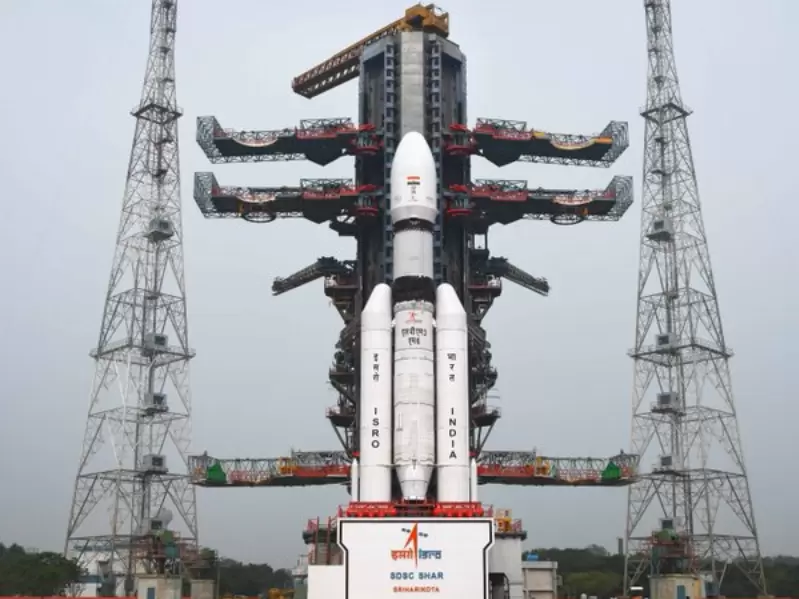 The launch from the Satish Dhawan Space Centre will place the BlueBird Block-2 satellite, also referred to as BlueBird-6, in low Earth orbit. / ISRO
The Indian Space Research Organisation (ISRO) on Dec. 22 said it is ready to launch the BlueBird Block-2 satellite on Dec. 24.
The launch from the Satish Dhawan Space Centre will place the BlueBird Block-2 satellite, also referred to as BlueBird-6, in low Earth orbit.
The BlueBird communications satellite, developed by the U.S.-based AST SpaceMobile, will be launched aboard India’s most powerful rocket, LVM3.
It is one of the heaviest commercial satellites, weighing 6.5 tonnes. The low Earth orbit (LEO) satellite arrived in India from the U.S. on Oct. 19.
“Meet #LVM3M6, ISRO’s operational heavy-lift launch vehicle with a proven record of reliable missions. Ready to deliver BlueBird Block-2 to low Earth orbit,” ISRO said in a post on the social media platform X.
Earlier, AST SpaceMobile said in a statement that “when launched, it will feature the largest commercial phased array in low Earth orbit at nearly 2,400 square feet. This represents a 3.5 times increase in size over BlueBirds 1–5 and supports 10 times the data capacity.”
This is the second collaboration between the U.S. and ISRO. In July, ISRO successfully launched the $1.5 billion NASA-ISRO Synthetic Aperture Radar mission (NISAR), aimed at taking high-resolution Earth scans with the capacity to penetrate fog, dense clouds and ice layers.
AST SpaceMobile has already launched five satellites — BlueBird 1 to 5 — in September 2024. With an aim to expand this network further, the company has partnered with more than 50 mobile operators worldwide.
Meanwhile, ISRO said BlueBird-6’s liftoff is being handled by its commercial arm, New Space India Limited (NSIL).
LVM3, developed by ISRO, is a three-stage launch vehicle comprising two solid strap-on motors (S200), a liquid core stage (L110) and a cryogenic upper stage (C25).
“It has a lift-off mass of 640 tonnes, a height of 43.5 m, and a payload capability of 4,200 kg to geosynchronous transfer orbit (GTO),” ISRO said.
LVM3 recently placed India’s heaviest CMS-3 satellite, weighing 4.4 tonnes, into orbit on Nov. 2.
In earlier missions, LVM3 successfully launched Chandrayaan-2, Chandrayaan-3 and two OneWeb missions carrying 72 satellites.
Related









ADVERTISEMENT
ADVERTISEMENT
E Paper
Video

Comments
Start the conversation
Become a member of New India Abroad to start commenting.
Sign Up Now
Already have an account? Login