ADVERTISEMENT
ADVERTISEMENT



Ro Khanna pushes tougher ethics rules for Congress members
California congressman says lawmakers should divest individual stocks and place assets into blind trusts.
-
 Pranavi Sharma
 - Sat, 09, May 2026
- 02:13 EDT
- 56
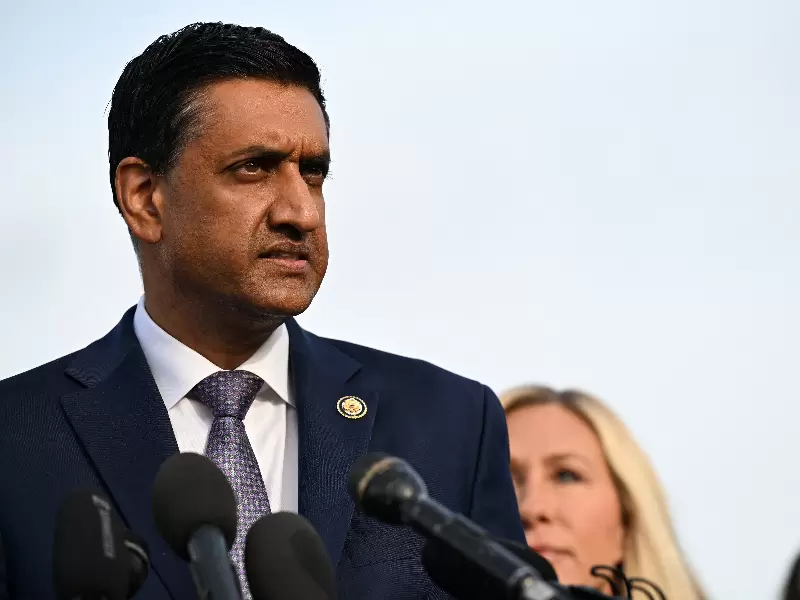 U.S. Representative Ro Khanna (D-CA) speaks during a press conference on the Epstein Files Transparency Act ahead of a House vote on the release of files related to the late convicted sex offender Jeffrey Epstein, on Capitol Hill in Washington, D.C., U.S., November 18, 2025. / REUTERS/Annabelle Gordon
Rep. Ro Khanna renewed his push to ban members of Congress from trading individual stocks, outlining a broader anti-corruption agenda that would also restrict lobbying and political contributions while imposing new ethics standards on the Supreme Court.
Khanna said he does not personally own or trade individual stocks and argued that lawmakers should not trade shares in industries they regulate. He said his household’s investments are limited to a diversified trust established by his in-laws before his marriage and managed independently by a third-party trustee in compliance with Office of Government Ethics rules and House ethics requirements.
ALSO READ: Draft ethics complaint targets Ro Khanna over trades
“Few things have eroded public trust in Congress as visibly as headlines about members trading stocks in the industries they’re paid to regulate,” Khanna said. “I have worked to change that and have held myself to the same standard I am asking other members to accept.”
Khanna is a co-sponsor of the ‘TRUST in Congress Act,’ which would prohibit members of Congress, their spouses and dependent children from trading individual stocks while in office. Under the proposal, covered assets would have to be sold or placed in a qualified blind trust.
He described the proposal as stricter than the current STOCK Act and comparable to standards applied to executive branch appointees.
Khanna also highlighted a wider reform platform that includes the ‘5-Point Political Reform Resolution.’ The measure would ban congressional stock trading, prohibit lobbyist and political action committee contributions, impose lifetime lobbying bans on former lawmakers, establish 18-year Supreme Court term limits and require a binding Supreme Court ethics code.
He also pointed to the ‘Drain the Swamp Act,’ introduced with Reps. Summer Lee and Rashida Tlaib. Khanna said the legislation would make White House ethics rules permanent and limit movement between industry and federal government positions.
Khanna said he also supports legislation extending blind-trust and divestment requirements to cryptocurrency holdings by elected officials.
Discussing his own financial disclosures, Khanna said records filed since 2017 show “no personal stock trading, no crypto speculation, no PAC contributions.” He said neither he nor his wife directs trades in the family trust account.
“For 10 years, I have filed monthly and annual disclosures both accurately and on-time on the Trust in full compliance with the law and with zero violations,” Khanna said.
Khanna cited outside analysts and congressional trading watchdogs as having reviewed his disclosures and confirmed that he does not personally trade stocks.
He also pointed to reported trust performance figures from Unusual Whales, saying the trust underperformed the broader stock market over the last three years. According to the figures he cited, the trust returned 12.6 percent in 2025 compared with 16.8 percent for the S&P 500, 19.1 percent in 2024 compared with 24.9 percent, and 12.7 percent in 2023 compared with 24.8 percent.
Discover more at New India Abroad.
Related








ADVERTISEMENT

ADVERTISEMENT
E Paper
Video

Comments
Start the conversation
Become a member of New India Abroad to start commenting.
Sign Up Now
Already have an account? Login