ADVERTISEMENT

ADVERTISEMENT



Immigration enforcement compromising national security: Krishnamoorthi
The congressman cited reporting indicating that beginning early in 2025, DOJ leadership directed FBI Joint Terrorism Task Forces to assist with immigration initiatives.
-
 Malvika Choudhary
 - Tue, 23, Dec 2025
- 14:58 EST
- 12
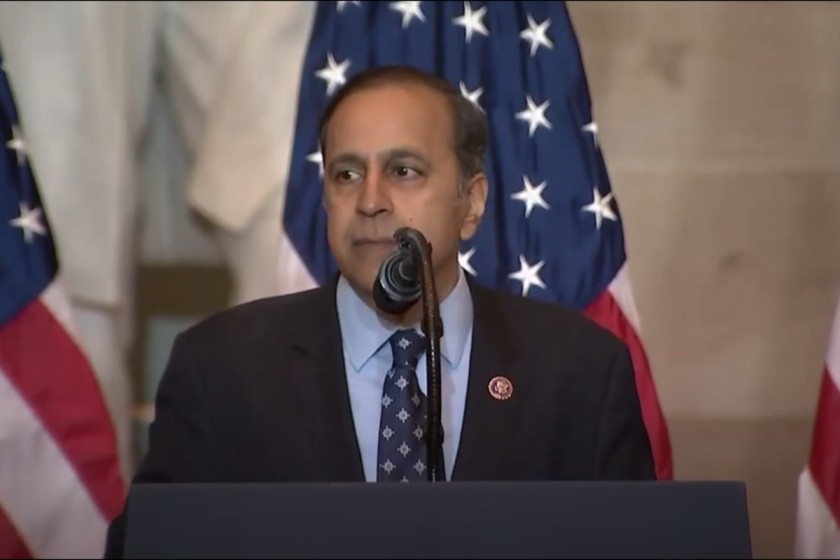 Congressman Raja Krishnamoorthi / File Photo
Indian American congressman Raja Krishnamoorthi warned that the Department of Justice’s move to divert FBI counterterrorism and counterintelligence personnel to mass immigration enforcement threatens U.S. national security.
In a letter addressed to Kash Patel, Krishnamoorthi said senior Justice Department officials have reassigned agents and resources away from the Federal Bureau of Investigation’s core national security missions, despite the Bureau’s own assessment that terrorism and hostile nation-state activity pose the most immediate threats to the homeland.
Also Read: U.S. lawmakers raise alarm over Bangladesh violence
“Over the last year, senior officials have reassigned personnel and assets from the Federal Bureau of Investigation’s (FBI) core national security mission to immigration enforcement, leaving counterterrorism and counterintelligence work compromised and putting our national security at risk,” Krishnamoorthi wrote.
The congressman cited reports indicating that beginning early in 2025, DOJ leadership directed FBI Joint Terrorism Task Forces to assist with immigration initiatives.
“Agents responsible for espionage detection cyber threat monitoring, and terrorism investigation, therefore, were required to prioritize immigration enforcement, giving less attention to crucial national security threats,” the letter said.
According to the letter, nearly a quarter of the FBI’s roughly 13,000 agents nationwide, and up to 40 percent in the largest field offices, remain assigned to immigration enforcement duties. Krishnamoorthi noted that the diversion has remained significant even as the United States continues to face threats from terrorist networks and foreign adversaries.
“Internal sources further indicate that these core national security investigations, including into the black market for Iranian oil sold to finance terrorism, have been delayed by months,” Krishnamoorthi further explained.
He also warned that the reassignment of counterintelligence specialists with deep expertise on China, Russia and Iran has limited enforcement of the Foreign Agents Registration Act and allowed foreign intelligence operatives greater freedom to operate inside the United States.
“These shifts have limited investigations into violations of the Foreign Agents Registration Act and have allowed foreign intelligence operatives greater room to maneuver within the United States,” the letter said.
Emphasizing the FBI’s statutory mandate, Krishnamoorthi wrote that the Bureau’s counterterrorism and counterintelligence components “exist to detect and disrupt the activities of hostile foreign actors, not to conduct civil immigration enforcement or unrelated administrative duties.”
He asked the FBI to provide detailed information on the extent of the reassignments, their impact on investigations into espionage, terrorism and cyber intrusions, whether operational risk assessments were conducted before agents were redirected, and what steps are being taken to restore full operational readiness and prevent similar diversions in the future.
The concerns outlined in the letter come amid a broader national debate over the federal government’s expanded use of law-enforcement agencies to support stepped-up immigration enforcement.
Krishnamoorthi said the issue is not immigration policy itself, but the prolonged use of counterterrorism and counterintelligence resources for duties unrelated to national security, warning that such diversions could leave critical threats undetected.
Related











ADVERTISEMENT
ADVERTISEMENT
E Paper
Video

Comments
Start the conversation
Become a member of New India Abroad to start commenting.
Sign Up Now
Already have an account? Login