ADVERTISEMENT

ADVERTISEMENT


Diaspora politics in the era of Trump
The escalation of war has created deep anxiety within the diaspora, with many torn between opposing the current regime and fearing the consequences of conflict.
-
 Ritu Marwah
 - Wed, 01, Apr 2026
- 01:26 EDT
- 13
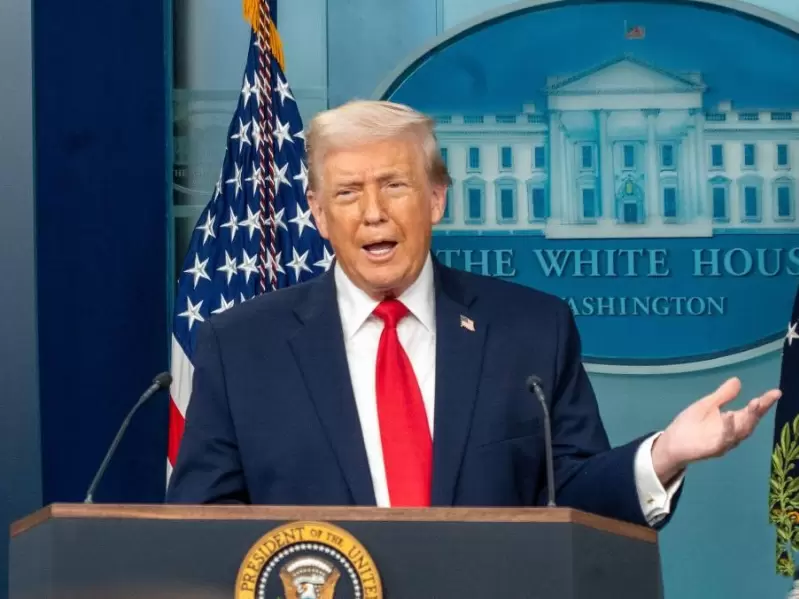
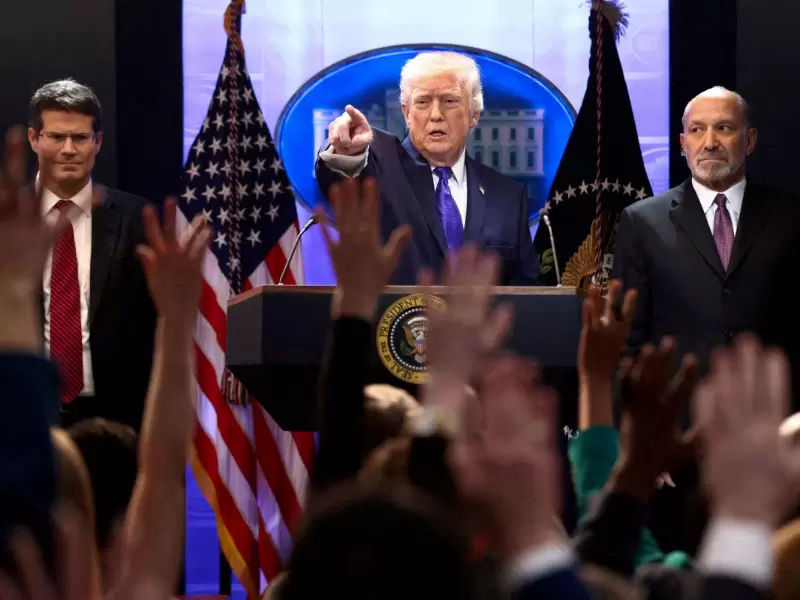 FILE PHOTO: U.S. President Donald Trump, flanked by Secretary of Commerce Howard Lutnick and Solicitor General D. John Sauer, holds a press briefing at the White House, following the Supreme Court's ruling that Trump had exceeded his authority when he imposed tariffs, in Washington, D.C., U.S., February 20, 2026. / REUTERS/Kevin Lamarque/File Photo
Over 1,000 Iranian expatriates rallied in Washington, D.C., in March 2026, supporting U.S.-Israel strikes on Iran and advocating for the return of exiled crown prince Reza Pahlavi. Many participants, often wearing “Make Iran Great Again” hats, cheered for a “hard line” against Tehran and aimed for regime change.
Miles away in Los Angeles, home to the largest Iranian diaspora community, a different group gathered outside City Hall to protest the war, chanting, “Hands off Iran.” They denounced President Donald Trump and warned that U.S. and Israeli military intervention could devastate the Middle East.
William O. Beeman, professor emeritus of anthropology at the University of Minnesota, at a recent American Community Media briefing, said there is a schism in the Iranian diaspora between those supporting a return to the monarchy and others advocating broader democratic reforms. He warned that a top-down change could lead to further instability.
ALSO READ: PM Modi and President Trump discuss West Asia
Fractured vote
A Zogby Analytics survey for the National Iranian American Council highlights a deeply divided Iranian American community. While a near majority opposes the strikes, the community is split almost evenly on military action itself.
This division has manifested in physical clashes at diaspora rallies in cities such as London and Washington between pro-war and anti-war factions.
Historical context
Beeman traced the political fault lines shaping the Iranian diaspora in the United States to the Iranian Revolution more than four decades ago, when the Shah of Iran was deposed.
To understand the diaspora today, he said, one must return to the upheaval of 1978–79. As the monarchy of Mohammad Reza Shah Pahlavi collapsed, three distinct factions emerged, each envisioning a different future for Iran. Secular nationalists briefly held power before the U.S. Embassy hostage crisis reshaped the political landscape. Religious forces led by Ruhollah Khomeini consolidated control soon after, establishing an Islamic constitutional order that endures today.
A third faction, often described as Islamic Marxists, drew inspiration from thinkers such as Frantz Fanon. Their most prominent organization, the Mujahedin-e Khalq, became a long-standing opposition force. Once based in Iraq, the group later relocated to Albania, maintaining networks across Europe and some support in the United States.
During Trump’s first administration, the Mujahedin-e Khalq reportedly received financial backing from the U.S. government, reflecting alignment between some diaspora factions and Washington’s hardline stance toward Tehran.
Beeman also pointed to American political support for the group from figures including Sam Brownback and John Bolton.
Parallel to these groups are secular nationalists and royalists, many of whom left Iran during the revolution and settled in the United States, particularly in California. Persian-language media in these communities continues to sustain cultural expression often restricted in Iran.
This shared opposition to the current regime has shaped political alignment. According to Beeman, many diaspora members lean toward the Republican Party, viewing it as more likely to confront the Islamic Republic. Their support for Trump-era policies is tied to the belief that pressure could lead to regime change and eventual return.
ALSO READ: Mideast war has no clear end in sight
At the same time, historical grievances persist. Many in the community believe the Jimmy Carter administration failed to prevent the rise of the current regime, reinforcing perceptions of Democratic leniency.
Within the diaspora, a subgroup often referred to as “Alizadeh” or “Alazad,” linked to pre-revolution elites, has achieved significant economic success in the United States. Among them, support remains for restoring monarchy under Reza Pahlavi, the son of the deposed shah.
Pahlavi has built ties with American political circles, including segments of the Republican Party. However, his prospects inside Iran remain limited, with memories of the 1953 U.S.-backed coup continuing to shape public skepticism toward externally driven regime change.
Vision of a postwar government
As of March 2026, rivalry between two major opposition factions—the monarchist movement led by Reza Pahlavi and the National Council of Resistance of Iran led by Maryam Rajavi—has intensified over who could lead a provisional government following reports of Supreme Leader Ali Khamenei’s death.
Conflicted diaspora
The escalation of war has created deep anxiety within the diaspora, with many torn between opposing the current regime and fearing the consequences of conflict.
“I want this regime gone. But I don’t trust Trump or Israel to have my country’s best interests in mind,” said Sam Golzari, who has attended regime change protests for years.
Pro-war rallies in Washington have featured “MIGA” hats, with supporters framing military action as a necessary intervention.
Others describe emotional turmoil as reports emerge of more than 1,230 deaths and widespread destruction. Nearly half of the diaspora, about 49.3%, opposes military action, citing concerns over civilian safety and infrastructure damage.
The peacemakers
Groups such as the National Union for Democracy in Iran have positioned themselves as intermediaries between diaspora communities and Western policymakers. Their work focuses on technical and human rights-based frameworks for political transition, including the Iran Prosperity Project.
Impact on voting behavior
The conflict’s impact on Iranian American voting behavior is likely to be complex. Rather than moving in a single direction, the vote may remain divided.
While parts of the diaspora traditionally distrust the Democratic Party, others are wary of hardline policies. Affluent and established groups often lean Republican, while others prioritize stability and oppose military intervention.
The Iranian diaspora remains a competitive voting bloc rather than a reliably aligned constituency in U.S. elections.
Discover more stories on New India Abroad.
Related
ADVERTISEMENT

ADVERTISEMENT
E Paper
Video

Comments
Start the conversation
Become a member of New India Abroad to start commenting.
Sign Up Now
Already have an account? Login