ADVERTISEMENT
ADVERTISEMENT



AI Ethics Is Missing the Most Important Question
Why the global Indian diaspora must bring belonging, not just alignment, into the AI debate
-
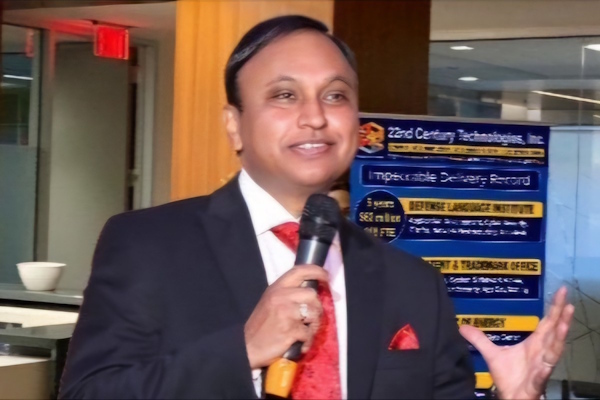
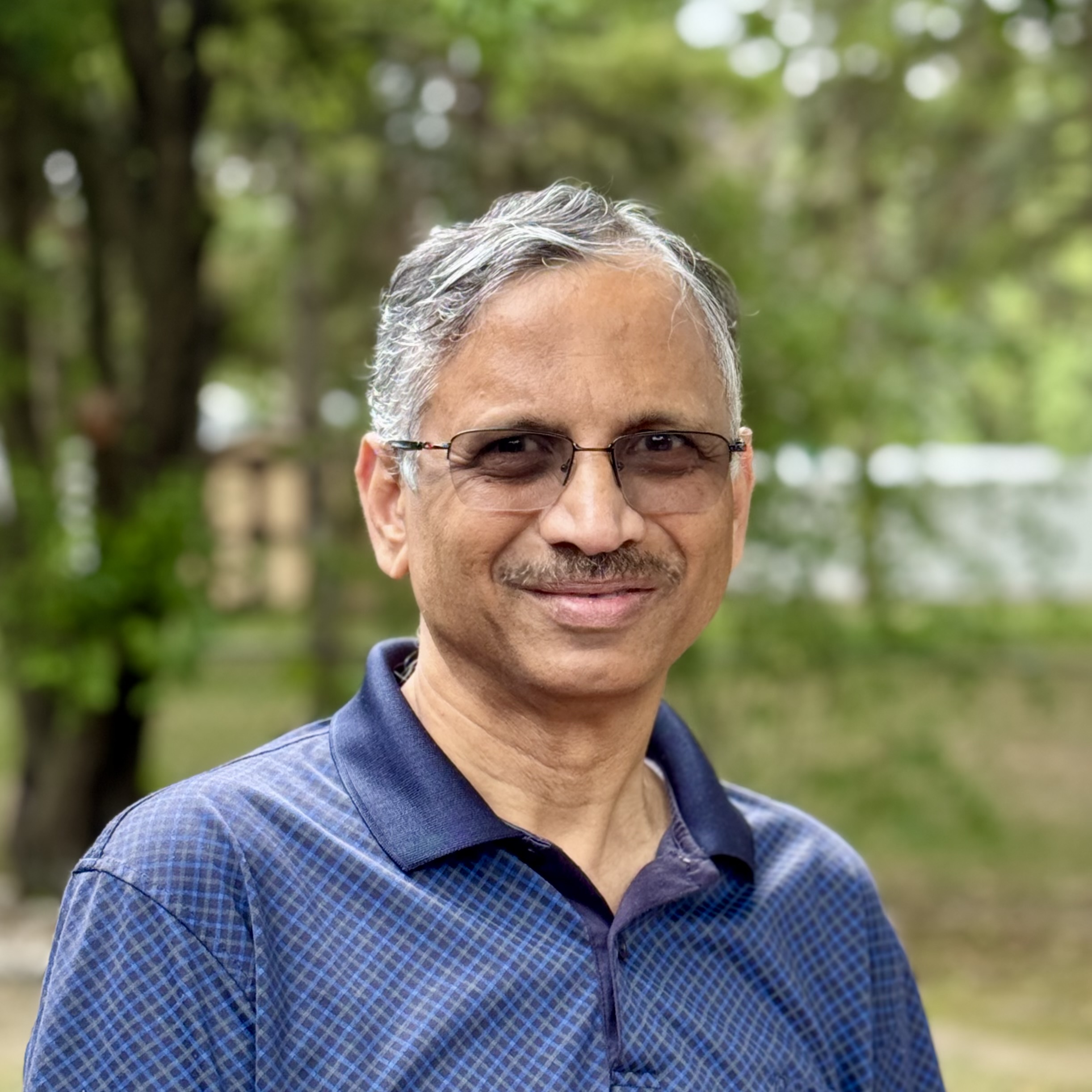 Prasad Kaipa
 -
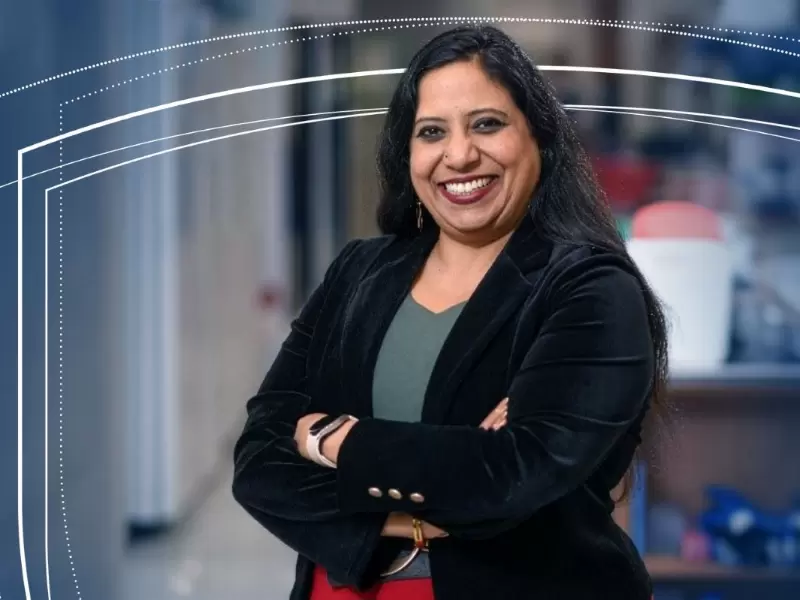
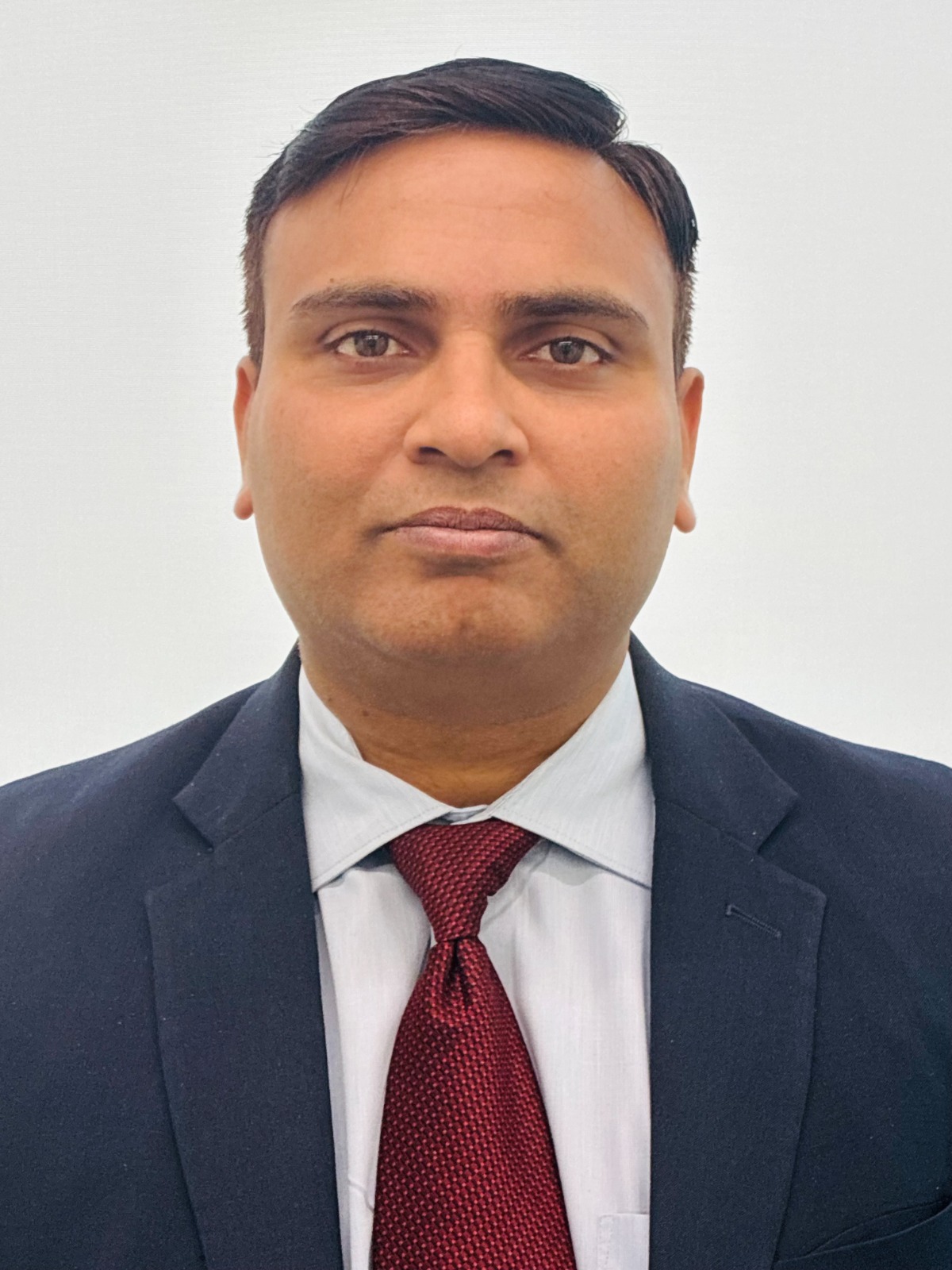 Badri Narayanan Gopalakrishnan
 - Sat, 23, May 2026
- 06:06 EDT
- 195
 Representative Image / Generated using AI
Just days ago, on May 19, at Google I/O, Sundar Pichai described a new era of AI agents that can act on our behalf across search, productivity and everyday life. He also acknowledged something many people now feel: deep anxiety about what this power may mean for work, trust and the future.
For many of us in the Indian diaspora, that moment carries both pride and unease. An Indian-origin CEO is helping shape one of the most powerful technological transitions of our time. But that also raises a larger question. If people like us are helping build these systems, what inner resources, civilizational frameworks and moral disciplines are we bringing into the room?
A few days before that keynote, I found myself speaking with engineers and researchers at one of the world’s most prominent AGI companies. These were people building systems that may reshape how billions of humans live, work and relate to one another. I opened with a story from a 20th-century Advaita teacher.
Ramana Maharshi was once asked by a disciple, “How many Upanishads must I study to realize the Self?” Ramana replied with his own question: “Do you shave every day? Do you always use the same mirror?” The disciple said no. Ramana answered, “Then the mirror is not the issue. The beard is on your face. Same thing with Upanishads. They are just mirrors for you to look into yourself.”
Later, someone told me, “That is the most clarifying thing I’ve heard about AI in months.”
The mirror we are building
After more than 35 years at the intersection of technology and human development, from Apple and academia to coaching CEOs and leadership teams, I keep returning to one realization: AI is the most powerful mirror humanity has ever built. It reflects our values, fears, blind spots and wisdom with unusual clarity and at extraordinary scale.
But we keep trying to engineer a sharper mirror when the deeper question is whether we are willing to look clearly at what it shows us.
Google’s latest I/O keynote makes that challenge more immediate. The future being presented is one in which AI agents do not just answer questions. They act in the background, anticipate needs and increasingly mediate how humans work and decide. Safety and governance matter. It matters that leaders like Pichai acknowledge public anxiety. But guardrails are still downstream of consciousness.
That is where much of the AI ethics conversation remains stuck. A new scandal appears — bias in facial recognition, discrimination in lending, opaque decision systems, autonomous systems making tragic choices — and the response is to produce another set of principles: fairness, transparency, accountability and explainability. Organizations publish frameworks. Regulators propose guidelines. Universities create courses. Yet the problems persist.
Why? Because principles are downstream of consciousness. An engineer under deadline pressure, an executive under earnings pressure, or a product leader whose identity feels threatened by critique will often encode that contracted state into the systems they build, no matter how elegant the framework.
What the Gita already knows
This is where the Indian diaspora has something important to contribute, not because AI must be Indianized, but because the wisdom traditions many of us inherited have been working on the inner life for millennia. The Bhagavad Gita reminds us that while we appear separate in body and role, we are not as separate in consciousness as we imagine. We act in fields of relationship, perception, fear and possibility.
For those of us in the diaspora working in technology, this is not abstract philosophy. It is observable reality in organizations. Two teams can use the same tools, follow the same process and still produce very different outcomes because the field from which they operate is different.
My colleagues and I have explored this idea through the notion of the human field — the patterns of awareness, relational quality, maturity and coherence that shape how people perceive and act. Years ago, a venture firm asked me to assess a startup led by two founders. Both had studied at IIT. Both had gone on to Stanford University. Both had worked in major companies. Both were now building the same kind of venture. Yet one was several times more effective than the other. Same credentials. Same access. Same opportunity. Different field.
The difference was not IQ. It was not pedigree. It was the quality of presence from which each acted. The founder who could notice insecurity and reactivity without being run by it made clearer decisions, built better relationships and created more trust. AI does not eliminate this human reality. It amplifies it.
The missing conversation
What troubles me is that wisdom traditions are finally being invited back into the technology conversation, but only partially. There is more public engagement now with Christian and Catholic voices on AI ethics. That is welcome. But the conversation remains incomplete.
Buddhist, Hindu, Jain, Sikh and other dharmic perspectives are still far less visible. That is striking because these traditions have spent centuries wrestling with questions that now sit at the center of AI — how power is used, how suffering is amplified or reduced, how desire and attachment are shaped by tools, consciousness, suffering, desire, attachment, right action and the disciplined cultivation of awareness.
If AI is a mirror, then we need the widest possible range of human wisdom in the room when we ask what it should reflect and how it should be governed. A conversation shaped mainly by one civilizational lens, however rich that lens may be, will remain narrower than the problem deserves.
There are encouraging exceptions. ServiceSpace, founded by Nipun Mehta, has spent decades building an ecosystem around compassion, generosity and small acts of service. Its work around Awakin AI points toward a model of technology rooted in wisdom and oriented toward bringing humans together rather than manipulating them.
BharatGen points in another important direction. By supporting Indian languages, dialects and cultural frameworks while engaging Indian Knowledge Systems, it shifts the conversation from translation alone to representation: whose categories, whose assumptions and whose worldview a system is built to understand.
These efforts should not be treated as side stories. They suggest that AI can be shaped not only by technical sophistication, but also by civilizational depth.
The discomfort beneath the surface
Still, an uncomfortable question remains. Are Silicon Valley companies really paying attention to Vedantic insights and dharmic frameworks? If they are, it is mostly invisible.
In several companies I have visited, I have sensed a real discomfort around bringing openly Hindu or Buddhist perspectives into product and design conversations. This discomfort is not limited to non-Indians. It often appears among diaspora professionals themselves. Many are comfortable invoking mindfulness once it has been culturally neutralized. They may quote Stoicism or mention Zen in a stylized way. But bring the Gita, the Upanishads or Patanjali into a serious design conversation, and the room often tightens. Many executives do not want others to think they are biased. What is not recognized is that not bringing in your perspective just to appear neutral could be considered reverse discrimination. How many Indians, Hindus, Buddhists and Jains are paying attention to this fact?
That discomfort matters more than it seems. When people cannot show up fully as who they are, they also struggle to design systems that can honor genuinely diverse values and frameworks. A designer who has learned to mute part of his or her own inheritance will often, without intending to, reproduce systems that flatten other forms of difference as well.
This is one of Silicon Valley’s paradoxes. It celebrates diversity at the level of identity, but often remains much narrower at the level of civilizational imagination.
What the diaspora can bring
This is where the Indian diaspora can contribute in a serious way. Not by turning AI ethics into a religious project, and not by insisting that everyone speak Sanskrit, but by bringing forward capacities our traditions have cultivated deeply.
One is Sākṣī Bhāva, the witness stance — the ability to observe one’s own fear, ambition, defensiveness or attachment without being captured by it. In AI design, that matters because identity threat often drives poor ethical judgment.
Another is Sakhi Bhāva, friendship — the discipline of meeting the other as a person rather than reducing them to a category, metric or abstraction.
A third is Mātṛbhāva, the stance of protective care — the impulse to safeguard dignity, especially when institutional pressures make it easier to ignore vulnerability.
And then there is Kartr Bhāva, responsible action — the capacity to act clearly and firmly, but from discernment rather than agitation or ego.
These are not just spiritual ideas. They are design capacities, leadership capacities and civic capacities. For an engineer, Sākṣī Bhāva may mean noticing how fear of missing a launch date is shaping ethical judgment. For a product leader, Sakhi Bhāva may mean sitting with the lived experience of affected communities instead of relying only on metrics. For a researcher, Mātṛbhāva may mean insisting that vulnerable people be considered before a system is scaled. For an executive, Kartr Bhāva may mean saying no to a project that violates conscience even when the incentives point the other way. These can be operationalized into AI design, and some of my friends are exploring how.
The real question
The builders of powerful AI systems are often asking, “Can we build safe machines?” That is an important question. But it is not the deepest one.
The deeper question is this: Are we becoming the kind of humans who can be trusted with this much power?
As AI agents move from demonstration to daily reality, the answer will not be found only in benchmarks, guardrails or policy statements. It will be found in the consciousness, character and cultures that shape how these systems are designed and governed. It will be found in whether we can remain in relationship across difference without erasing one another.
For the global Indian diaspora, there is now a particular responsibility and a particular opportunity. Many of us sit at the fulcrum of technology and tradition, helping build the systems that billions may soon use while carrying the Gita, the Upanishads, Kabir, Ramana or other lineages somewhere in memory. The question is whether we will hide those inheritances behind sanitized language, or bring them forward intelligently, critically and generously. If we, the diaspora, will not bring our full selves into these rooms, who exactly are we waiting for?
AI is the mirror. We are the light. The question is whether we, as a diaspora, are willing to shine more of who we are into that mirror so that the systems we build do not merely align with our instructions, but deepen our capacity to belong to one another.
The author is a researcher, former fellow at Apple University and CEO coach.
(The views and opinions expressed in this article are those of the author and do not necessarily reflect the official policy or position of New India Abroad.)
Discover more at New India Abroad
Related







ADVERTISEMENT

ADVERTISEMENT
E Paper
Video

Comments
Start the conversation
Become a member of New India Abroad to start commenting.
Sign Up Now
Already have an account? Login