ADVERTISEMENT
ADVERTISEMENT


Glitz glamor grit gal—Zeenat Aman
It's easy to remember Zeenat Aman as the glam girl in slinky gowns, but it's lazy to stop there.
-
 Bollywood Insider
 - Sun, 18, Jan 2026
- 03:27 EST
- 257
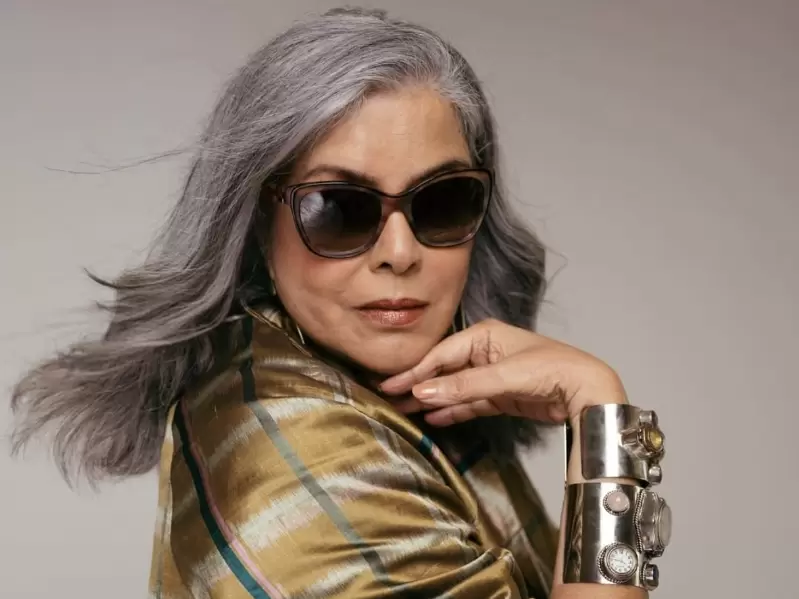 Zeenat Aman / Instagram/thezeenataman
There are stars who dazzle with their beauty, there are actors who impress with their craft, and then there are a rare few who quietly change the narrative of an entire generation. Zeenat Aman belongs to that last category - the woman who changed how Hindi cinema saw women, sensuality, and sophistication. Despite being one of the top celebrated actresses of her time, in the pantheon of celebrated female icons of Indian cinema, she remains curiously underappreciated.
UNLIKELY DISRUPTOR
In an era dominated by the pristine archetype of the "Bharatiya Nari," when heroines were expected to be virtuous, demure, and dressed in modest saris, Zeenat Aman walked in with a cigarette, a smile, and a point to prove. When she made her mark in Hare Rama Hare Krishna (1971), audiences didn't quite know what to make of her. As Janice, the free-spirited hippie lost between rebellion and remorse, she didn't just play a character she represented a cultural shift. For the first time, an Indian actress embodied modernity not as a villainous temptation but as a reflection of a changing society.
Her portrayal was raw, vulnerable, and heartbreakingly real. Zeenat didn't perform for sympathy; she demanded empathy. And yet, while she won awards, she was swiftly labeled - the "Westernized heroine," the "bold one," the "sex symbol." Rarely did anyone acknowledge the intelligence and subtlety with which she approached her roles.
Also Read: Amitabh Bachchan says learning never stops, but outsourcing is the way forward
'WESTERN WOMAN'
It's easy to remember Zeenat Aman as the glam girl in slinky gowns, but it's lazy to stop there. Beneath the shimmer lay a performer who understood screen presence like few others did. In Satyam Shivam Sundaram (1978), she turned the male gaze on its head. Her character Rupa, scarred and yet luminous, was not just about physical beauty - it was about desire, perception, and hypocrisy. The film, controversial for its sensual imagery, was also an audacious statement about how women are often reduced to their looks. Zeenat didn't play Rupa as a victim; she was both muse and mirror to society's double standards.
In Don (1978), she was the street-smart Roma fierce, vengeful, and stylishly self-reliant at a time when women in commercial cinema were mostly ornamental. In Qurbani (1980), she was all charm and control, commanding the camera even in a film teeming with testosterone. Even in films like Dhund, Ajnabee, and Heera Panna, her characters brought an unmistakable polish a mix of cosmopolitan ease and Indian warmth that no one had embodied before.
Yet, the irony remains the very sophistication that made her unique also became the reason she was underestimated. For years, her glamour overshadowed her artistry. Critics dismissed her as the "English-speaking beauty," forgetting that it takes tremendous skill to make modernity look effortless on screen, especially when the industry is steeped in tradition.
AHEAD OF HER TIME
Zeenat Aman was, in many ways, a woman before her era was ready for her. She spoke English fluently, dressed fashionably, and carried herself with an international poise that unnerved the male-dominated world of Hindi cinema. Her characters didn't need rescuing; they made their own choices, sometimes flawed, often bold.
While her contemporaries were celebrated for their emotional range and dramatic power, Zeenat's cool detachment was misread as superficiality. She didn't cry prettily or plead for attention - she commanded it, unabashed even when calling out her man for picking his 'do takiya di naukri over her lakhon ka sawan'. Her minimalism, her ability to do more with less, was decades ahead of a cinematic culture that equated loudness with talent.
Moreover, Zeenat Aman paid the price for not fitting into the traditional box. When the glamour faded and the industry moved on, there were no serious scripts waiting for her. No "comeback" roles written with respect for her legacy. The woman who had once brought international sheen to Hindi films suddenly found herself sidelined. The 1990s and early 2000s offered few opportunities, and like many actresses of her generation, she quietly stepped back.
But unlike most, she never became bitter. She stayed graceful, almost philosophical about her journey perhaps knowing that real icons are often recognized too late.
REINVENTING RELEVANCE
And then, out of nowhere, Zeenat Aman re-entered the conversation not through a film, but through Instagram. When she joined the platform in 2023, few expected the ripple effect she would create. While younger stars posted curated perfection, Zeenat chose authenticity. Her captions were reflective, witty, sometimes tinged with nostalgia, and always effortlessly articulate. She wrote about aging, about love, about film sets and loneliness, about the lessons fame had taught her. And people listened.
For a generation that had only seen her in retro film clips, she became real. For those who had grown up admiring her, she became a reminder that grace doesn't fade with years it deepens.
In an industry obsessed with youth and filters, Zeenat Aman's unfiltered selfies, grey hair, and vintage anecdotes felt radical. She proved that relevance isn't about staying young; it's about staying true. Her social media presence wasn't performative - it was poetic. Every post felt like a conversation, an invitation to rediscover the woman behind the legend.
Her posts about aging gracefully have become cultural moments. Her recollections about co-stars - from Dev Anand to Amitabh Bachchan come with humor and warmth, not gossip. She uses her platform not to sell nostalgia but to contextualize it. She has become, in a sense, the chronicler of an era that shaped Bollywood's modern identity.
She used her platform not just to reminisce but to challenge ideas of beauty and aging. In doing so, she dismantled another stereotype that actresses must fade quietly once their youth does. Instead, Zeenat showed how one could evolve, embracing every wrinkle as part of a well-lived life.
QUIET GRACE
What makes Zeenat Aman remarkable even today is not just her beauty or her legacy - it's her attitude. She has never tried to rewrite her past or pretend to be something she isn't. She owns every chapter - the triumphs, the heartbreaks, the silences.
When she speaks about her younger years now, there is no bitterness, only insight. She often writes about how she was misunderstood, how the industry and media framed her through the lens of scandal or seduction. But she also acknowledges the fun, the friendships, and the creative energy of that time. Her reflections carry no trace of defensiveness only wisdom.
That kind of composure is rare, even today. It's what makes her Instagram such a masterclass in authenticity it's not a brand exercise, it's an evolution.
TRAILBLAZER
It's perhaps time that cinema historians and audiences alike rewrite the Zeenat Aman narrative. She wasn't just the woman who brought bikinis and Bond-girl energy to Bollywood. She was the first actress to make intelligence look glamorous. She made independence aspirational. She made "modern" Indian womanhood acceptable, and then desirable.
Without Zeenat Aman, there would be no confident wave of heroines who could be both sensual and self-assured. Before Sridevi's mischievous sparkle, before Madhuri's poise, before Priyanka and Deepika's global appeal there was Zeenat, walking so they could run.
Read more stories on NewIndiaAbroad.
Leave A Comment
Related







ADVERTISEMENT

ADVERTISEMENT
E Paper
Video

Comments
Start the conversation
Become a member of New India Abroad to start commenting.
Sign Up Now
Already have an account? Login