ADVERTISEMENT
ADVERTISEMENT



Geopolitical turmoil refuses to leave Milano Cortina Olympics alone
Strange are the ways the international sporting community reacts to situations arising out of rapidly changing geopolitical developments.
-
 Prabhjot Paul Singh
 - Mon, 09, Feb 2026
- 23:13 EST
- 98
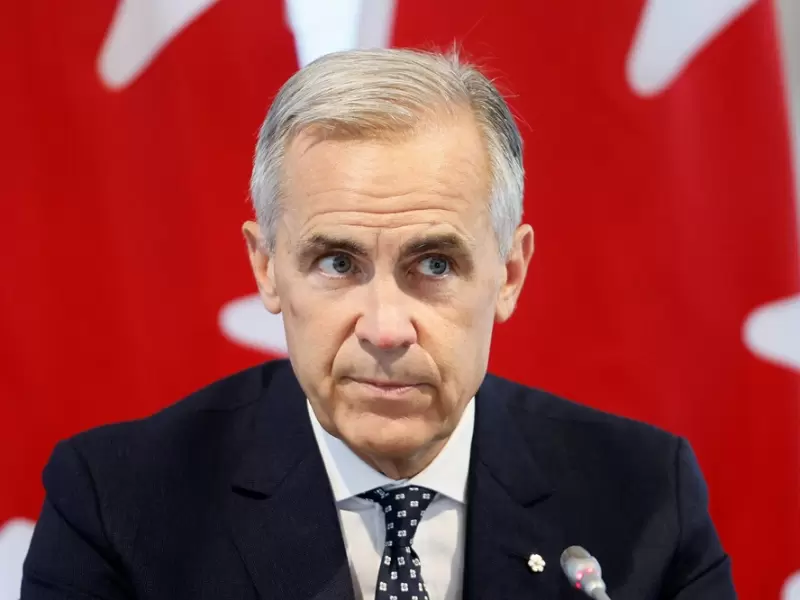 Canadian PM Mark Carney / Reuters
When Canadian Prime Minister Mark Carney addressed the World Economic Forum at Davos in Switzerland on Jan. 20, he talked about “the rupture in the world order, the end of a nice story, and the beginning of a brutal reality where geopolitics among the great powers is not subject to any constraints.”
“But I also submit to you that other countries, particularly middle powers like Canada, are not powerless. They have the capacity to build a new order that embodies our values, like respect for human rights, sustainable development, solidarity, sovereignty, and territorial integrity of states.
“The power of the less powerful begins with honesty.
ALSO READ: Milano Cortina Winter Olympic Games
“Every day we are reminded that we live in an era of great power rivalry. That the rules-based order is fading. That the strong do what they can, and the weak suffer what they must,” Mark Carney said.
The impact of his speech on the changing world order is being felt even after a little more than a fortnight as athletes from 90 countries descended on four Italian cities, including Milan and Cortina, to participate in the Winter Olympic Games. The Games are happening as Jules Boyloff, an expert in sports politics, puts it in his words, “in the most fractious political moment in the recent history of the Olympics.”
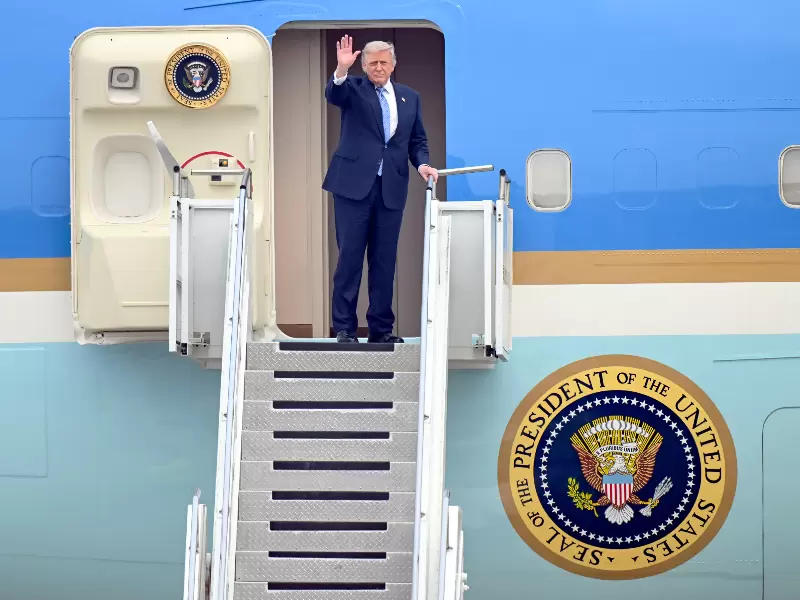
The great assembly of the world’s athletes in Italy represents a contradiction of the global class outside the confines of the sporting arenas and stadiums. Actions and utterances of U.S. President Donald Trump are not only loud and clear but have also been sending shock waves through the global sporting fraternity.
Though there was no serious threat of a boycott this time, the shadow of Donald Trump has been looming large not only over the Milano Cortina Games but also the subsequent Summer edition of the Olympic Games to be held in his territory a little more than two years from now.
Strange are the ways the international sporting community reacts to situations arising out of rapidly changing geopolitical developments. The mandate of the Olympics is to give all countries, regardless of size or political regimes, an equal chance. Small to midsize and big countries compete without being discriminated against.
ALSO READ: Olympics-U.S. hospitality space changes name
The Olympics, they say, are an occasion that brings the entire world under one roof. Does this belief hold good anymore?
Irrespective of the proclaimed policies and programs, the Olympic Games have never been free from politics. World events in general and geopolitical developments in particular not only intrude on the Games but also impact them adversely.
Five editions of the Summer Olympic Games were canceled because of the two world wars that the world witnessed in the first half of the 20th century. Armed conflicts that have been a dominating factor in world politics for more than seven decades started intruding on the Games in a big way in 1972 when Palestinian militants not only invaded the Olympic village but also kidnapped and killed several Israeli athletes. It was the beginning of a new chapter in the history of the modern Olympic Games.
In 1976, when Montreal in Canada played host to the next edition of the Games, there was a call for a boycott, this time to protest apartheid South Africa. Many countries pulled out of the Games, and hundreds of athletes the world over had their dreams of becoming Olympians dashed because of last-minute withdrawal.
The next edition of the Summer Olympic Games was the worst hit by boycotts. This time, the Western world got together to boycott the Soviet Union for its invasion of Afghanistan. The Soviet Union retaliated four years later when the Games returned to the United States in Los Angeles.
Politics refused to leave sports alone. In 1988, the conflict between North and South Korea almost disrupted the Seoul Olympic Games. North Korean agents bombed a South Korean airliner to frighten the athletes and officials heading for the Summer Olympic Games.
As the Games spread to new territories, big powers took to the environment to dissuade countries from sending their athletes and officials to Beijing in 2008, saying the air of the host city was “heavily polluted.” Contingents of some bigger nations arrived in Beijing wearing face masks to mock the organizers. At the conclusion of the Games, the same nations were all praise for the way the Games were conducted.
In 2016, when the Games made their debut on the South American continent, fears of a dreadful virus were spread to discourage the athletes and officials from going there. Rio de Janeiro not only succeeded in discounting the “virus” threat but also made extra efforts to keep the Games free from fear of “favelas.”
The 2020 Tokyo Olympic Games had to be postponed for a year because of the pandemic. It was the first time that Olympic Games were postponed. And when they were finally held a year later, there were no spectators. That was the only time when athletes performed at empty venues.
Environmental and security threats apart, the world of sports was rocked by yet another geopolitical bombshell. In 2022, a full-scale invasion of Ukraine by Russia saw both Russia and Belarus not only sanctioned but also refused participation in the Olympic Games. Though some athletes were allowed to participate as “neutral athletes,” the Russian and Belarusian flags and anthems were banned.
There have been murmurs of protests at the Milano Cortina Games as to why no action has been taken against the U.S., where President Donald Trump not only ordered military intervention against Venezuela without congressional approval but also threatened to use force to take control of Greenland, a semiautonomous territory of Denmark, a NATO ally. There were protests and demands for action against Israel for its aggressive military action in Gaza.
Contrary to what the IOC did against Russia and Belarus, it rejected all calls to bar the U.S. or Israel amid global anger at Israel’s conduct in Gaza and Donald Trump’s action in Venezuela, saying that such matters fall outside the remit of the IOC.
ALSO READ: Winter Olympics to open with star-studded ceremony
Interestingly, while the theme of the opening ceremony of Milano Cortina 2026 was harmony, the opening ceremony could not escape reminders of global unrest and tensions.
The anti-U.S. and anti-Israel anger was expressed in boos and jeers when U.S. Vice President JD Vance appeared on the jumbotron. Similarly, the Israeli delegation was also booed.
Giovanni Malagò, the president of the Games organizing committee, commented, “At a time when so much of the world is divided by conflict, your very presence demonstrates that another world is possible—one of unity, respect, and harmony.”
Kirsty Coventry, the president of the International Olympic Committee and the first woman to head the IOC, said, “The spirit of the Olympic Games is about so much more than sport… our strength comes from how we treat each other and that the best humanity is found in courage, compassion, and kindness.”
Discover more stories on NewIndiaAbroad
Related





ADVERTISEMENT

ADVERTISEMENT
E Paper
Video

Comments
Start the conversation
Become a member of New India Abroad to start commenting.
Sign Up Now
Already have an account? Login