ADVERTISEMENT

ADVERTISEMENT



WTO members try to close gap between US, India on e-commerce tariff moratorium
India’s softened stance at the WTO comes as members scramble to preserve duty-free cross-border digital trade and avert fresh uncertainty for global tech and streaming services.
-
 Reuters
 - Sat, 28, Mar 2026
- 17:50 EDT
- 18
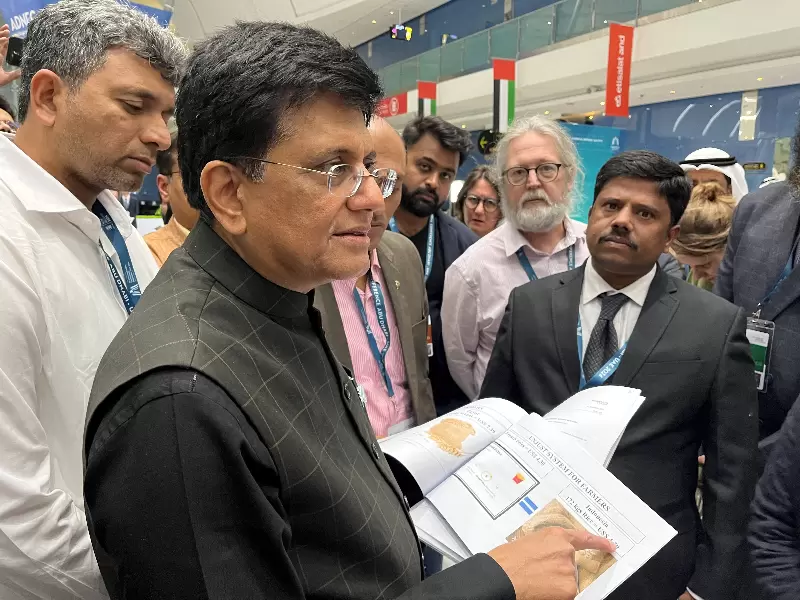 Indian Commerce Minister Piyush Goyal speaks in the final hours of negotiations at the World Trade Organization (WTO) biennial gathering of ministers, in Abu Dhabi, United Arab Emirates, March 1, 2024. / REUTERS/Emma Farge
Countries are working to close the gap between the U.S. and India to extend a global agreement not to impose tariffs on electronic transmissions such as digital downloads and streaming, diplomats said on March 28.
India signalled it may drop its opposition to an extension of the e-commerce moratorium - which is due to expire this month - and allow a two-year prolongation at the World Trade Organization meeting in Cameroon, three diplomats told Reuters.
Also Read: India looking forward to participate in G20 Summit hosted by US
U.S. Trade Representative Jamieson Greer, however, has said Washington was not interested in a temporary extension to the ban, only a permanent one.
Two senior diplomats and a trade official said members are negotiating to find a middle ground. One said that could be a five- to 10-year extension, while a third said they believe it is unlikely it would go beyond two years.
Business leaders say an extension is critical to guarantee predictability, fearing duties could be introduced if the agreement lapses.
E-COMMERCE A KEY TEST TO WTO
The extension of the e-commerce moratorium during the WTO meeting in Yaounde is being seen as a key test for the global watchdog's relevance, following a year of tariff-fuelled trade turmoil and major disruption to shipping, energy prices and supply chains due to the Middle East conflict.
Extending the moratorium permanently would give the U.S. confidence to "remain fully engaged" in the WTO as it would demonstrate its relevance in today's economy, U.S. Ambassador Joseph Barloon told Reuters in the lead-up to talks.
The U.S. delivered a "strong message" to delegates at the conference about the need to permanently extend the moratorium, after 30 years of temporary extensions, a senior European diplomat said.
"If the moratorium does not get extended, the U.S. will use it as an excuse to beat the WTO on the head," a fourth senior diplomat said.
The U.S. was described as being "frustrated" during the conference, including at a perceived lack of minister-level representation during talks in Yaounde, as well as organisational issues, a diplomat and a senior diplomat told Reuters.
BUSINESSES FEAR UNCERTAINTY
For nearly three decades, the e-commerce moratorium has been extended until the next ministerial conference.
The U.S. wants major American tech businesses such as Amazon, Microsoft and Apple to have a stable regulatory environment without the fear and costs of countries introducing duties that could affect cross-border digital trade.
John Bescec, director, customs and trade affairs at Microsoft, said businesses already face uncertainty around digital services across borders and require predictability.
Some developing countries believe the e-commerce moratorium deprives them of potential tax revenue that they could invest back into their countries.
OTHER BLOCKAGES IN TALKS
India on Saturday reiterated its opposition to the incorporation into the WTO rulebook of a plurilateral WTO agreement aimed at boosting investment in developing countries.
New Delhi opposes the use of such agreements among a subset of willing members, saying it risks eroding the foundational principles of the WTO.
Greer told delegates that allowing more flexibility into the system through bilateral and plurilateral deals would be part of the "new order", while the EU commissioner for trade said they were key to reforming the WTO.
Following built-up frustration, 66 WTO members agreed to sidestep adoption hurdles for the world's first baseline on digital trade rules, opting to bring the agreement into force among consenting participants.
A senior European diplomat said it was a strong message to India, which has twice blocked the E-Commerce Agreement - which is separate to the moratorium - that countries would move forward without them if they blocked any reform process.
"For too long, a minority has vetoed progress by countries wanting to liberalize their digital trade. Today, that veto died. The WTO now moves forward in a more flexible format," said Simon Evenett, professor of geopolitics and strategy at IMD business school.
Discover more at New India Abroad.
Related







ADVERTISEMENT

ADVERTISEMENT
E Paper
Video

Comments
Start the conversation
Become a member of New India Abroad to start commenting.
Sign Up Now
Already have an account? Login