ADVERTISEMENT
ADVERTISEMENT



Warsh’s hands-off Federal Reserve policy is not business friendly
He announced this policy and right away started its practice by openly refusing to answer any questions that could in any way prognosticate monetary policy.
-
 A.D. Amar
 - Fri, 19, Jun 2026
- 17:07 EDT
- 42
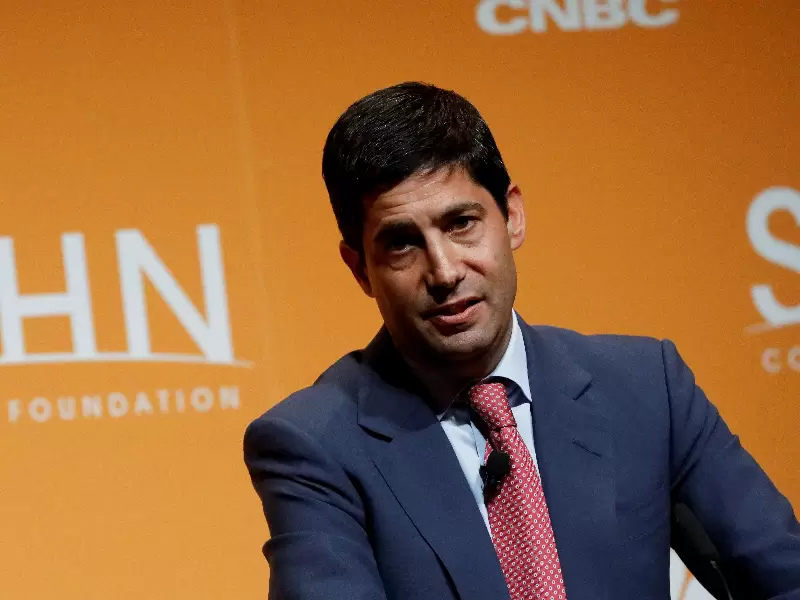 FILE PHOTO: Kevin Warsh, Fellow in Economics at the Hoover Institution and lecturer at the Stanford Graduate School of Business, speaks during the Sohn Investment Conference in New York City, U.S., May 8, 2017. / REUTERS/Brendan Mcdermid/File Photo
I am not surprised by the about-turn that the stock market took today since Kelvin Warsh, the incoming Federal Reserve Chair, conveyed the new direction the Federal Open Market Committee (FOMC) will take under his term as its chair.
First, he basically interpreted his job to bring prices down and it very quickly turned into increasing interest rates rather than decreasing — the goal that Trump communicated in anticipation of his appointment.
Also read: AAHOA welcomes Oklahoma vote on wage proposal
At his press conference afterwards, while answering questions from the press, after every few minutes, he did not give an answer and if he did, he openly refused to own the answer by stating that it was based on what the members (FOMC) had said and that, “the members were unanimous,” or that of the “19 members of the Federal Open Market Committee, 18 who responded were in unison.” And that the one who did not vote was him, himself.
He conveyed that he will not direct the country’s monetary policy, but has created five monetary policy taskforces that are charged with the responsibility of the five policies that constitute the Fed: Policy Communications, Balance Sheet Management, Data Systems Construction, Productivity, Employment & AI, and Inflation Framework.
This operationalized his “hands-off policy,” each one of these taskforces to handle one of the five functions that typically had fallen in the responsibility basket of the Federal Reserve Chair. This means, he would not take lead but just pass the matter to the respective taskforce to look into. Then, will take their answers, narrate to the press and shirk off the responsibility by saying that he is only agreeing with the respective taskforces.
He would not release to the press any forward-looking answers to the FOMC questions to which the businesses look forward. I sensed it as not helping the business community in making projections in the management of their operations. He announced this policy and right away started its practice by openly refusing to answer any questions that could in any way prognosticate monetary policy.
This policy made the otherwise tense investment community fast take down the stock market. In its own way, it conveyed its disapproval of the Federal Open Market Committee policy.
I do not see this as a business-friendly move. In fact, it conveys that businesses are on their own — blank and confused, going all over the opaque future. Some techies would say that this is AI Federal Open Market Committee.
The writer is a Professor of Management at the Stillman School of Business, Seton Hall University.
(The views and opinions expressed in this article are those of the author and do not necessarily reflect the official policy or position of New India Abroad.)
Discover more at New India Abroad.
Related





ADVERTISEMENT

ADVERTISEMENT
E Paper
Video

Comments
Start the conversation
Become a member of New India Abroad to start commenting.
Sign Up Now
Already have an account? Login