ADVERTISEMENT
ADVERTISEMENT



Trump unveils sweeping US election overhaul plan
The president announced executive actions, declassified intelligence releases and a legislative push aimed at tightening voting rules.
-
 IANS
IANS - Fri, 17, Jul 2026
- 06:08 EDT
- 17
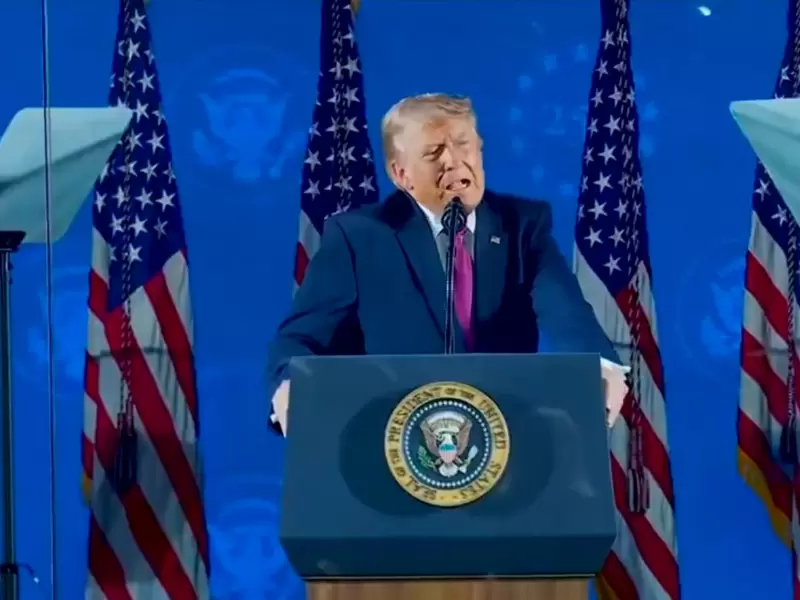 Donald Trump / X/ WhiteHouse
President Donald Trump on July 17 announced a broad election reform agenda, combining the release of declassified intelligence with executive actions and renewed calls for legislation aimed at tightening voting rules ahead of the 2026 U.S. midterm elections.
Speaking in a prime-time address from the White House, Trump said the United States faced an urgent election security challenge and outlined what he described as a plan to strengthen confidence in the electoral system.
Also read: US unveils visa curbs on far-left groups
"No country can be great without fair and honest elections," Trump said. "You have to trust your country because, if there can be no trust, there can be no greatness."
Trump announced the immediate release of intelligence, FBI and law enforcement records that he said detailed vulnerabilities in U.S. election infrastructure and alleged foreign efforts to exploit them. He said the disclosures were intended "not to weaken confidence in election, but to earn that confidence by confronting vulnerabilities and correcting them very, very quickly."
The president also outlined a series of actions his administration plans to take in the coming weeks.
He said he had directed the Office of the Director of National Intelligence, the Department of Justice, the FBI and the CIA to investigate why intelligence related to alleged election threats had been withheld and to determine whether disciplinary action or criminal charges were warranted.
Trump said his administration had begun notifying governors, senators and members of Congress whose states were identified in the released records as potentially affected by election-related cyber vulnerabilities.
He also announced that the Department of Homeland Security would work with state and local election officials to identify and address technical vulnerabilities in election systems before the 2026 midterm elections.
"We're also committing to be working with those states and local jurisdictions to help them fix and patch known technical vulnerabilities before the midterm elections," Trump said.
Trump further said he had directed the Department of Homeland Security to notify states about non-citizens identified on voter rolls and instruct election officials to remove ineligible registrations.
At the center of Trump's legislative agenda is what he called the SAVE America Act.
He urged Congress to pass the legislation, saying it would require voters to present photo identification, provide proof of U.S. citizenship and restrict mail voting to cases involving illness, disability, military deployment or travel.
"This landmark bill requires that all voters must show photo voter ID," Trump said. "All voters must provide proof of citizenship."
Trump argued that election security should have bipartisan support.
"Every American, whether you're a Republican, Democrat, independent or otherwise, should be able to agree that we deserve the most secure, honest, and fair election system anywhere in the world," he said.
He added that election integrity "should not be a partisan issue" but "a cause to unite us, not to divide us."
The president also criticized widespread mail voting, extended vote-counting periods and what he described as weaknesses in electronic election systems. He said his administration would continue working with federal, state and local officials to strengthen election infrastructure before next year's elections.
The address marked Trump's most comprehensive public statement on election policy since returning to office. Along with announcing the release of declassified records, the speech outlined the administration's election priorities, signaling that voting security, voter eligibility and election administration will remain central issues ahead of the 2026 congressional elections.
Discover more at New India Abroad.
Leave A Comment
Related







ADVERTISEMENT

ADVERTISEMENT
E Paper
Video

Comments
Start the conversation
Become a member of New India Abroad to start commenting.
Sign Up Now
Already have an account? Login