ADVERTISEMENT
ADVERTISEMENT



The market is cheering. I am not.
During periods of market euphoria, people often forget that markets can move violently in both directions
-
 Jayesh Chandra Gupta
 - Thu, 14, May 2026
- 06:50 EDT
- 18
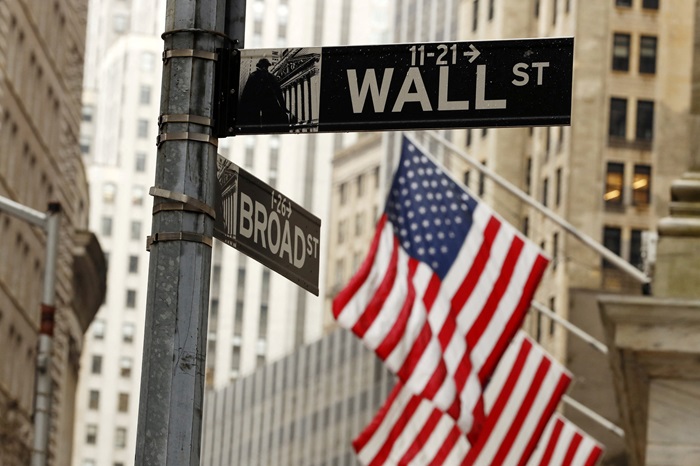 American flags are seen outside the New York Stock Exchange in New York City. / Reuters
There are moments in markets when optimism becomes detached from reality.
I believe we are entering one of those moments now.
Across Wall Street, investors are celebrating another rally in the S&P and Nasdaq. Artificial intelligence stocks are surging. Retail investors are once again buying aggressively into options markets. Many people believe this is the beginning of another multiyear boom.
I disagree.
What we are witnessing today is not a fundamentally healthy rally. It is a liquidity-driven squeeze built on derivatives activity, leverage, and speculation. Beneath the surface, the risks are growing larger by the day.
At Peptomist LLC, we study market cycles through a proprietary quantitative framework that applies physics-based analysis to financial markets. Over time, our models have identified several major turning points, including previous geopolitical and market disruptions. Today, those signals are once again flashing red.
I believe global markets are approaching a significant correction.
This is not a prediction of financial collapse. Corrections are part of healthy markets. But investors should understand that a 20% to 25% decline in equities is entirely possible over the coming months.
What concerns me most is that many ordinary investors are unprepared for such a move.
During periods of market euphoria, people often forget that markets can move violently in both directions. Retail investors are increasingly participating in call-option buying, which has created what professionals call a “gamma squeeze.” As more investors buy call options, market makers are forced to buy underlying stocks to hedge their exposure, pushing prices even higher.
But the same mechanism works in reverse.
Once sentiment changes, downside pressure can accelerate just as quickly.
The geopolitical backdrop only adds to the fragility.
The war-related disruptions in energy markets are already affecting the physical supply chain. Many outside the commodities world do not fully appreciate what is happening underneath the headlines. Physical deliveries of crude oil, diesel, jet fuel, and LNG are already trading at elevated premiums because supply routes and insurance costs have become major obstacles.
The Strait of Hormuz remains one of the most critical choke points in the global economy. If instability continues there, emerging economies will bear the largest burden.
Countries like India face particular vulnerability because they are major importers of energy. Higher crude prices place pressure on currencies, inflation, and household spending simultaneously.
The consequences do not stop at fuel stations.
Fertilizer shortages are emerging because petroleum products are deeply tied to urea production. Rising agricultural costs eventually become food inflation. And food inflation ultimately hurts middle-class families the most.
At the same time, another risk is quietly building in private credit markets and artificial intelligence infrastructure.
AI data centers consume enormous amounts of electricity. Much of that energy comes from gas and other traditional fuels. Rising energy costs increase operational pressure across the system. Meanwhile, some private credit funds have already started placing restrictions on withdrawals.
These are not isolated events. They are connected signals.
When investors ignore these warning signs, markets become vulnerable to sudden repricing.
That is why I believe caution matters now more than excitement.
This is not the time for excessive leverage. It is not the time for speculative derivatives trading by inexperienced investors. And it is certainly not the time to assume markets only move upward.
Many Americans depend heavily on their 401(k) retirement accounts. Too often, investors fail to examine where their retirement money is actually allocated during periods of extreme market valuations.
Protecting capital matters more than chasing the final stages of a rally.
Even Warren Buffett appears to understand this reality. Berkshire Hathaway is sitting on historically large cash reserves while broader valuations remain elevated.
Cash is not weakness during uncertain times. Patience is not fear.
Markets will eventually offer opportunities again. They always do.
But before investors think about the next upside, they should first focus on surviving the downside.
(The views and opinions expressed in this article are those of the author and do not necessarily reflect the official policy or position of New India Abroad.)
Discover more at New India Abroad
Related








ADVERTISEMENT

ADVERTISEMENT
E Paper
Video

Comments
Start the conversation
Become a member of New India Abroad to start commenting.
Sign Up Now
Already have an account? Login