ADVERTISEMENT
ADVERTISEMENT


Should the world read too much into US ambassador's remarks about J&K? Experts say not
While Gor's remarks have been welcomed by Indian observers across the state, geopolitical watchers and former diplomats say that his remarks cannot be construed as "a change in the US stand."
-
 Shikha Salaria
 - Thu, 20, Aug 2026
- 11:04 EDT
- 42
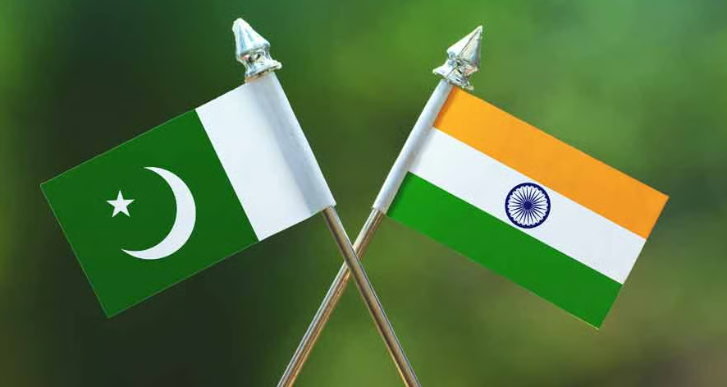 Representative Image / File Photo
It may be a positive development for India but should the world be reading too much into the remarks made by the US ambassador to India Sergio Gor on Jammu and Kashmir?
Gor, who also serves as the Donald Trump administration's special envoy to South and central Asian affairs travelled to the northernmost state of India on Aug. 18 where he remarked that “J&K is an important part of India” after his meeting with the state's Chief Minister Omar Abdullah.
The remark triggered a backlash from Pakistan that summoned the US Charge d' Affairs to the country and "strongly condemned and categorically rejected the characterisation of J&K as an important part of India."
Also Read: Pakistan lodges protest over US Ambassador’s remarks on J&K
While the remarks have been welcomed by several strategic commentators in India, a look at history suggests that serving US ambassadors have tried to align their statements with the Indian stand on J&K in the past as well without any change in the policy of the country towards J&K. In fact, a US ambassador to Pakistan had in the past triggered controversy when he had repeatedly used the Pakistani political term "Azad (independent) Jammu and Kashmir" instead of calling the area as "Kashmir," thereby aligning his remarks with the Pakistani stand on J&K.
While Gor's remarks have been welcomed by Indian observers across the state, geopolitical watchers and former diplomats say that his remarks cannot be construed as "a change in the US stand."
Sources point out that Gor's visits to several of the Indian states have been largely targeted at attempts to explore trade possibilities for US entities and invite investments into the US.
Consider this: Before JK, Gor has visited Maharashtra, Kerala, Tamil Nadu, Karnataka, Rajasthan and Telangana as well and has met chief ministers or deputy chief ministers of the states concerned. In fact, Gor has visited Maharashtra and Karnataka more than once after taking over as the US envoy in New Delhi and has discussed trade and bilateral cooperation with the CMs of the two states.
In fact, last weekend, Gor visited Maharashtra and called on the state’s CM Devendra Fadnavis and stated that "Maharashtra offers immense opportunity for American businesses across technology, energy and health," even as he congratulated the state for having entered into an MoU with the Cleveland Clinic based in Ohio in the US.
Strategic thinkers and diplomats note that during such visits, Gor has been largely focused on exploring business opportunities in the states that he has visited and that as the US envoy, he tends to make comments that suit the government of India with an aim to improve ties between India and Pakistan.
"One must acknowledge he is generating intense activity and maintaining a high profile. Also, probably looking for some business deals. He has high level access in Washington DC, but so far has shown no concrete result to undo damage caused by US President Trump's comments on India-Pakistan 2025 conflict and the fidgety tariff policy followed by the US towards India. He is building his own profile, for the next pitch in his career, and also get some deals that he has probably been asked to do," remarked a former diplomat.
Commenting on the issue, strategic thinker Brahma Chellaney said that "US ambassadors often adapt their messaging to the countries where they are posted but the official State Department policy does not change."
"During a visit to Srinagar on Tuesday, US Ambassador to India Sergio Gor said that Jammu and Kashmir is "an important part of India," prompting a swift diplomatic protest from Pakistan. In October 2022, it was India that protested when US Ambassador to Pakistan Donald Blome visited the Pakistan-held part of Jammu and Kashmir and repeatedly used the Pakistani political term "Azad [Independent] Jammu and Kashmir" instead of neutral terminology.
New Delhi regards the entire territory of Jammu and Kashmir as an integral part of India. After touring historical sites there, Blome described them as “symbols of the cultural and historical richness of Pakistan,” a remark viewed as tacitly legitimizing Pakistan's control over the region. Under Trump's second presidency, US-India relations have reached a new low. As ambassador, Gor is naturally trying to repair the relationship, as his latest statement suggests. But his boss, President Trump, resurrected the Kashmir issue last year," Chellaney said.
Apart from the irritation caused by the US President Donald Trump claiming for dozens of times (over 80 times according to some reports), to have brokered peace between India and Pakistan, India and the US have failed to finalize a trade deal that the two nations are negotiating for over a year now.
Chellaney further observed that Trump has "remained silent on the root cause of the 2025 India-Pakistan conflict — cross-border terrorism — while repeatedly portraying Kashmir as the central dispute."
"That framing mirrors Pakistan's longstanding effort to use the Kashmir issue as a smokescreen for its cross-border terrorist operations," he added.
Another diplomat pointed out that the standalone visit of any US Ambassador to Kashmir was Kenneth Juster’s in August 2018 — a little less than two months after the fall of the elected government of PDP-BJP.
Juster had then met with Governor NN Vohra, who vacated the position soon after and Omar Abdullah who was then a former CM. Juster had visited Ladakh as well.
Juster had again visited JK in January 2020, but this time, he was a part of a larger 15-member ambassadorial delegation for which New Delhi had arranged a visit to the state in the post-August 2019 and was seen as a "guided tour" by some sections of the media.
However, after Juster' visit, the US had called upon India to “swiftly” release political leaders being held in Kashmir and grant “regular” access to its diplomats to the area even as it had acknowledged measures taken by the Indian government towards the normalization of the situation in the Valley.
“I was pleased to see some incremental steps, including the partial return of internet service in Kashmir,” Alice Wells, principal deputy assistant secretary of state for South and Central Asia had commented back then while speaking about her then visit to India, Pakistan and Sri Lanka.
Commenting on Juster's visit, she had remarked that the "visit of foreign diplomats to the region, which included American envoy Ken Juster, was a useful step and had added that the US "continued to urge the government of India to permit regular access by US diplomats, and to move swiftly to release those political leaders detained without charge."
The last time a US Ambassador met with a sitting JK Chief Minister was 15 years ago when Timothy Roemer had called on Omar Abdullah in March 2011. Roemer had also gone to Ladakh the previous year.
Meanwhile, following his visit to Srinagar, Gor also landed at Ladakh with a large convoy of security. While there was confusion about whether or not Gor would visit Ladakh, the Buddhist-majority union territory that borders China, Gor landed in the UT on Wednesday afternoon.
Some reports noted that Gor may also call on the Dalai Lama.
Discover more at New India Abroad.
Leave A Comment
Related





ADVERTISEMENT

ADVERTISEMENT
E Paper
Video

Comments
Start the conversation
Become a member of New India Abroad to start commenting.
Sign Up Now
Already have an account? Login