ADVERTISEMENT

ADVERTISEMENT



Rep. Khanna slams "systemic neglect" at California's largest detention center
Many detainees he met including some Indian nationals, said they were never informed why they were detained.
-
 Malvika Choudhary
 - Wed, 07, Jan 2026
- 13:06 EST
- 93
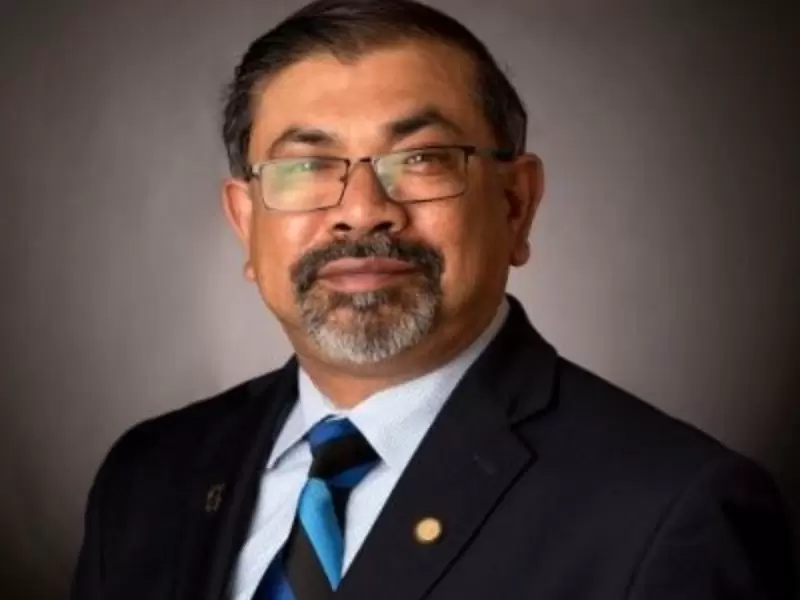
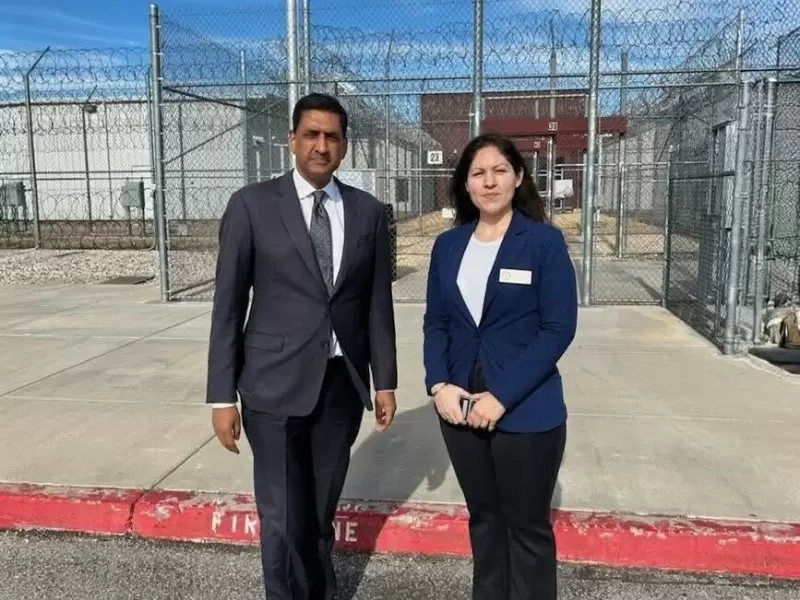 Ro Khanna at detention centre / X (Ro Khanna)
Indian American Congressman Ro Khanna called for urgent federal oversight after touring the California City ICE Detention Center, the largest immigration detention facility in the state, describing what he witnessed as “systemic neglect” that cannot be normalized or ignored.
Offering a detailed account of his visit on social media, Khanna wrote, “I left with a profound sense of urgency, concern, and moral responsibility. What we witnessed cannot be ignored, excused, or normalized.”
Also Read: Rep. Khanna to succeed Krishnamoorthi as top Democrat on China panel
The visit, conducted at the start of 2026, was prompted by the case of a constituent from Sunnyvale who was beaten, unlawfully detained and held at the same facility before being deported.
The privately operated center, which is run by CoreCivic under a federal contract that began in September 2025, is located in the California desert near Nevada. Khanna said the center was holding 1,428 detainees, including 215 women at the time of his visit.
I might be the first Member of Congress to enter alongside a staff member who took detailed notes to tour the ICE California City Detention Center.
— Rep. Ro Khanna (@RepRoKhanna) January 6, 2026
This is the largest detention facility in the state of California. I left with a profound sense of urgency, concern, and moral… pic.twitter.com/n1PuguU6nN
Despite operating for several months, Khanna said the Office of Detention Oversight has not conducted a single inspection. No Performance-Based National Detention Standards audits have taken place, and compliance with the Prison Rape Elimination Act and the Americans with Disabilities Act has not been independently verified.
Khanna and his staff spoke with 47 detainees from countries including Afghanistan, India, Bangladesh, Mexico, Venezuela, and El Salvador. Many said they were never informed why they were detained and described long periods of confinement, poor food quality, and inadequate access to medical care.
Families waiting outside the facility told Khanna detainees were being given inadequate food, that there was visible mold inside the center and that the water “tastes like metal.” He said many were afraid to speak openly because detainees have no privacy during phone visits.
Medical care was among the most serious concerns he cited. Staff told Khanna that sick call requests could go unanswered for one to two weeks, while detainees reported waiting as long as 20 days for treatment.
According to detainees, treatment for common illnesses is limited, with medication often unavailable unless purchased through the commissary at high prices. The facility reportedly has only one doctor serving hundreds of detainees. Khanna said he spoke with individuals suffering from serious medical conditions who had yet to receive treatment.
Khanna said the facility lacked meaningful access to legal and educational resources. Only one immigration judge is assigned to the center, leading to delays of up to six months in some cases, and there is no GED program or regular substance abuse or religious services.
The California City facility reopened in late 2025 under a new contract with ICE and has capacity for up to 2,560 people. Since then, it has drawn scrutiny from civil rights groups and state officials.
In November 2025, detainees filed a federal lawsuit alleging unsanitary conditions, sewage leaks, inadequate medical care and denial of access to legal counsel. In December, California Attorney General Rob Bonta said a state inspection found unsafe and unsanitary conditions that appeared to violate ICE’s own detention standards.
Disability Rights California has also reported that the facility fails to provide adequate medical and mental health care and sufficient access to basic necessities.
Khanna said immigration enforcement must not come at the expense of basic human rights and urged Congress to investigate conditions at the facility.
“America can enforce its laws without abandoning its humanity,” he said. “A detention system that operates without transparency or accountability does not reflect our values.”
Related







ADVERTISEMENT

ADVERTISEMENT
E Paper
Video

Comments
Start the conversation
Become a member of New India Abroad to start commenting.
Sign Up Now
Already have an account? Login