ADVERTISEMENT
ADVERTISEMENT



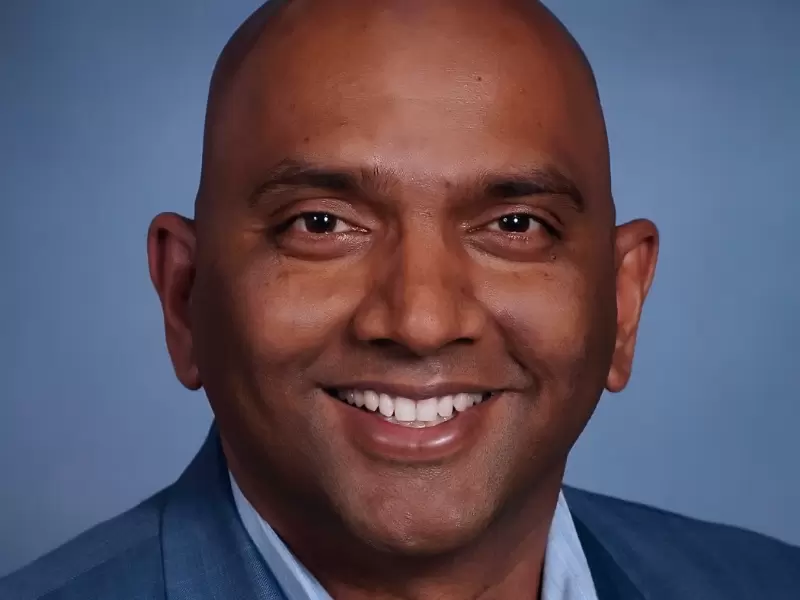
One-on-one conversation with Tony Thurman, Democratic candidate for Governor of California
In a political landscape increasingly shaped by spectacle and shorthand, the conversation felt, at moments, like a return to something slower: a candidate asking to be understood in totality, not just in fragments.
-
 Ritu Marwah
 - Wed, 06, May 2026
- 19:16 EDT
- 24
 Tony Thurman / Facebook
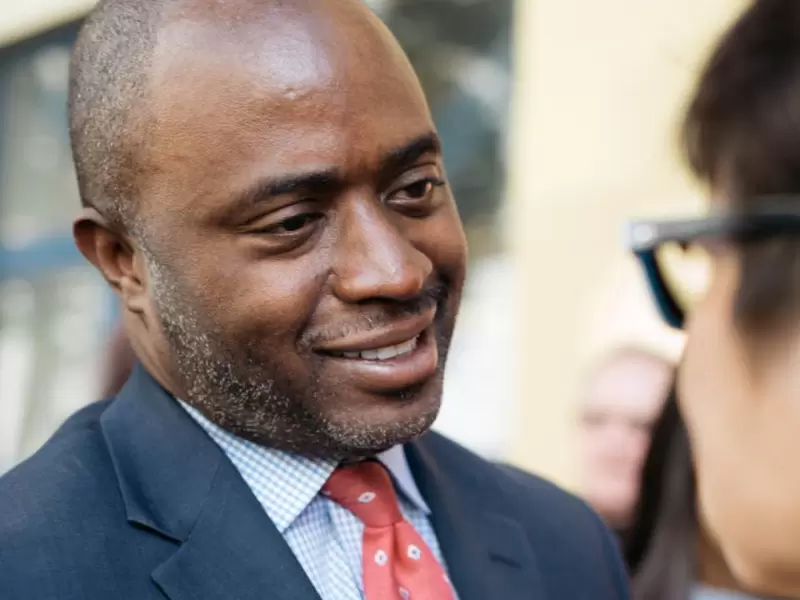
There are stories that begin in policy, and there are stories that begin in loss. Tony Thurman’s begins in both. Democratic candidate for Governor of California, Thurman was speaking with the community at a recent American Community Media briefing, one of those earnest, necessary forums where community journalists ask the questions that large debates often glide past.
Thurman did not open with numbers or plans. He began with a memory: a six-year-old boy, a mother lost to cancer, four siblings scattered, and a journey that moved from an Army base to a cousin’s doorstep in Philadelphia, where survival meant food stamps, free lunches, and what he called, without sentimentality, “government cheese.”
It is a distinctly American inheritance, fractured, improvised, sustained by public systems that are both safety net and scaffolding. Thurman’s argument, threaded through the conversation, is that those systems did not merely sustain him; they built him. Education, he said plainly, “changed my life.”
From there, the narrative unfolds in the familiar cadence of public service: social worker, city council member, school board member, legislator, and twice-elected State Superintendent. But what is striking is not the trajectory itself, it is the insistence that each rung of that ladder corresponds to a lived problem. Housing was not an abstraction; he built it. Foster care was not a statistic; he worked inside it. Healthcare was not a policy plank; it was a brother lost at thirty-five for lack of insurance.
If politics often trades in distance, Thurman’s campaign is an attempt to collapse it.
Also read: California forestry jobs initiative expands opportunity amid tight job market
His platform is unapologetically expansive. Two million housing units by 2030. A single-payer healthcare system. A tax on billionaires that would, in his telling, reverse the arithmetic of inequality, redistributing not just wealth but breathing room, in the form of tax credits for working and middle-class Californians navigating the rising costs of gas, groceries, and rent.
He does not pretend the state can simply decree affordability. “The governor can’t just make prices go down,” he said, with a candor rare in campaign rhetoric. Instead, he frames the role as one of conditions: increase supply, relieve immediate pressure, and, crucially, intervene where the market has calcified, land held idle, housing unbuilt, systems underfunded.
There is, too, a moral vocabulary to his economics. Billionaires, in his framing, are not villains so much as untapped reservoirs of public possibility. Small businesses, by contrast, are described with a kind of civic tenderness, the “backbone,” deserving of relief from bureaucracy, access to capital, and a fair share of state contracts.
But it is on immigration that Thurman moves from reformist to radical, at least within the current political climate. He calls for the abolition of ICE, not as provocation, but as a conclusion. The agency, he argues, has strayed from its stated purpose, becoming instead a system that deports workers, detains the vulnerable, and, in his words, allows profit to be extracted from suffering.
His alternative is not the absence of enforcement, but its reinvention: a pathway to citizenship, protections for undocumented residents, restored healthcare access, and a willingness, unusual for a gubernatorial candidate, to confront federal authority directly. “If you break California law, you will be arrested,” he said, referring even to federal agents.
It is a stance that will be read, depending on one’s vantage point, as either principled or impractical. Thurman seems untroubled by the distinction.
Education, unsurprisingly, remains his most instinctive terrain. When asked about efforts in other states to bar undocumented children from public schooling, his response was less policy than conviction: the Constitution, he said, guarantees education for all children. In California, under his governorship, that guarantee would not be negotiated.
There are, scattered through his answers, glimpses of a broader philosophy: childcare as economic infrastructure; debt-free college as deferred investment; elder care as a looming crisis that demands collective solutions. The connective tissue is the idea that public spending, properly directed, is not merely cost but catalyst.
And yet, hovering over the conversation is the quiet reality of electoral math. Thurman has not led in the polls. He did not qualify for a recent debate. He is, by conventional metrics, an underdog in a crowded field.
He dismisses this with a kind of practiced resilience. Polls, he says, do not elect candidates, people do. He has been underestimated before. He is still here.
There is something almost anachronistic in that insistence, in an era where campaigns are often calibrated to viability before they are articulated as vision. Thurman, by contrast, seems to be making a different wager: that if voters hear the story in full, the child, the loss, the systems that intervened, and the policies that might extend that intervention to others, they may yet choose it.
“I’m in it to the end,” he said, not as defiance, but as declaration.
In a political landscape increasingly shaped by spectacle and shorthand, the conversation felt, at moments, like a return to something slower: a candidate asking to be understood in totality, not just in fragments. Whether that is enough, whether narrative can still compete with machinery, is a question the election will answer.
For now, Thurman continues, carrying with him both the memory of scarcity and the conviction that government, at its best, can be the difference between falling through and finding a way forward.
Discover more stories on NewIndiaAbroad
Related






ADVERTISEMENT

ADVERTISEMENT
E Paper
Video

Comments
Start the conversation
Become a member of New India Abroad to start commenting.
Sign Up Now
Already have an account? Login