ADVERTISEMENT
ADVERTISEMENT


Krishnamoorthi asks Trump admin to end mass immigration hearings
The lawmakers claimed many of those appearing have never been inside a courtroom, are unrepresented, do not speak English or Spanish fluently, do not understand the requirements of immigration proceedings and are seeking asylum.
-
1759953093.png) Staff Reporter
Staff Reporter - Wed, 19, Aug 2026
- 00:39 EDT
- 30
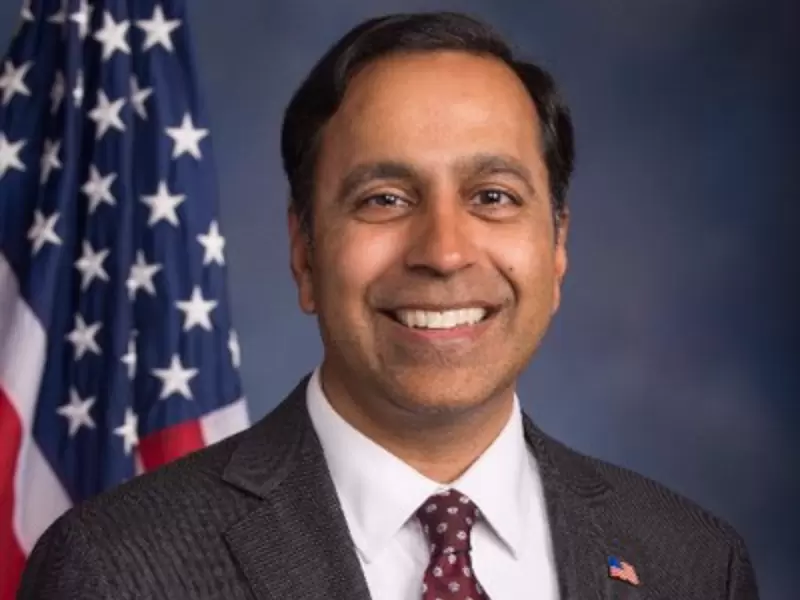 Congressman Raja Krishnamoorthi / X
Congressman Raja Krishnamoorthi and his colleagues on Aug. 18 demanded an end to the Trump administration’s use of so-called mass immigration hearings, in which as many as 185 noncitizens can be called to court on a single docket, saying these proceedings are meant to advance the government’s mass deportation campaign.
Krishnamoorthi, a senior member of the House Committee on Oversight and Government Reform, and U.S. Senate Democratic Whip Dick Durbin, D-Ill., ranking member of the Senate Judiciary Committee, led 13 of their Illinois colleagues in sending a letter to Attorney General Todd Blanche on the matter.
ALSO READ: H-1B fee may drive American jobs abroad: Krishnamoorthi
“The Trump administration is packing Chicago’s immigration courtrooms with as many as 185 people at a time, many without lawyers or a real opportunity to exercise their rights,” Krishnamoorthi said in a post on X.
“My colleagues and I are demanding an end to these mass hearings. No one should be railroaded through our immigration system,” he said.
They called on the Trump administration to end its use of so-called “mega master” immigration hearings, mass proceedings in which as many as 185 noncitizens can be called to court on a single docket.
The lawmakers warned that the Department of Justice (DOJ) is intentionally overcrowding dockets with little notice to immigrants in an effort to increase removal orders and advance the Trump administration’s mass deportation campaign.
The Trump Administration is packing Chicago's immigration courtrooms with as many as 185 people at a time, many without lawyers or a real opportunity to exercise their rights.
— Congressman Raja Krishnamoorthi (@CongressmanRaja) August 18, 2026
My colleagues and I are demanding an end to these mass hearings. No one should be railroaded through our… pic.twitter.com/RwbZhaNsml
The other signers of the letter were U.S. Sen. Tammy Duckworth and U.S. Reps. Danny Davis, Jonathan Jackson, Delia Ramirez, Jesús G. “Chuy” García, Nikki Budzinski, Sean Casten, Mike Quigley, Eric Sorensen, Bill Foster, Jan Schakowsky, Brad Schneider, and Robin Kelly.
Reports suggest that the DOJ is calling as many as 185 noncitizens to court on a single docket, an action designed to drive mass deportations through chaos and confusion, they said.
In May, the DOJ’s EOIR instituted a policy requiring judges in nondetained immigration courts to conduct master calendar hearings for 100 individuals twice per week while also maintaining their previously scheduled dockets and individual merits hearings, they added.
The lawmakers claimed many of those appearing have never been inside a courtroom, are unrepresented, do not speak English or Spanish fluently, do not understand the requirements of immigration proceedings and are seeking asylum.
In Chicago, the median notice time given to immigrants to appear in court fell from 229 days in May to just 34 days in June, they said.
Courtrooms handling upward of 150 respondents in a judge’s morning docket raise serious concerns about whether individuals are receiving a meaningful opportunity to be heard, they said.
Dozens of unrepresented respondents appear in a single hearing in courtrooms designed to accommodate approximately 25 individuals. This limits meaningful opportunities for them to understand their rights, seek legal representation or even obtain adequate translations during the hearing.
The lawmakers also warned about mega master hearings involving children, particularly unaccompanied children who may have already experienced trauma, abuse and exploitation and have limited access to legal counsel.
These proceedings can make it harder for unaccompanied children to understand what is happening, ask questions, identify errors or communicate with attorneys, advocates or caregivers, they said.
In Illinois, the letter places the mega master hearings alongside other elements of the Trump administration’s mass deportation campaign, including Operation Midway Blitz, the attempted deployment of the National Guard in Chicago and repeated attempts to withhold federal funding based on policy disagreements.
The lawmakers argue that mega master hearings at the Chicago Immigration Court are the latest example of policies prioritizing enforcement and deportation quotas over due process while creating fear, confusion and uncertainty for Illinois communities.
The members requested responses by Sept. 1, 2026, including answers to questions such as: In light of policy changes regarding preliminary asylum interviews, what procedures is the DOJ using to ensure that each asylum applicant receives a full and fair evaluation of the merits of their claim?
They asked what factors account for the significant reduction in hearing notice periods between May and June 2026 in immigration courts, what steps are being taken to ensure respondents in immigration court receive adequate notice of their proceedings, and what is the appropriate process for a respondent in immigration court to request additional time to obtain an attorney.
They also asked the DOJ what measures it is taking to ensure that unrepresented respondents are afforded adequate due process, including sufficient notice to appear before an immigration court, and how the DOJ is ensuring that the current immigration court system has adequate personnel, meets courtroom capacity needs and provides staff with the proper administrative resources to manage increased caseloads and ensure due process for every noncitizen respondent.
“We urge the Administration to discontinue practices that undermine due process, including the use of mega master hearings,” lawmakers said.
Instead, the administration should ensure that asylum seekers receive fair and meaningful hearings and uphold the integrity of the nation’s immigration system, they said.
The second Donald Trump administration has executed a hardline, large-scale mass deportation campaign utilizing the U.S. Department of Homeland Security and U.S. Immigration and Customs Enforcement (ICE).
Discover more at New India Abroad.
Leave A Comment
Related










ADVERTISEMENT

ADVERTISEMENT
E Paper
Video

Comments
Start the conversation
Become a member of New India Abroad to start commenting.
Sign Up Now
Already have an account? Login