ADVERTISEMENT
ADVERTISEMENT


Indian-origin researchers named to Simons Foundation’s Fellows-to-Faculty program
Fellows receive funding toward the end of their postdoctoral careers and a $600,000 faculty research grant commitment over three years.
-
1759953093.png) Staff Reporter
Staff Reporter - Fri, 21, Aug 2026
- 04:05 EDT
- 18
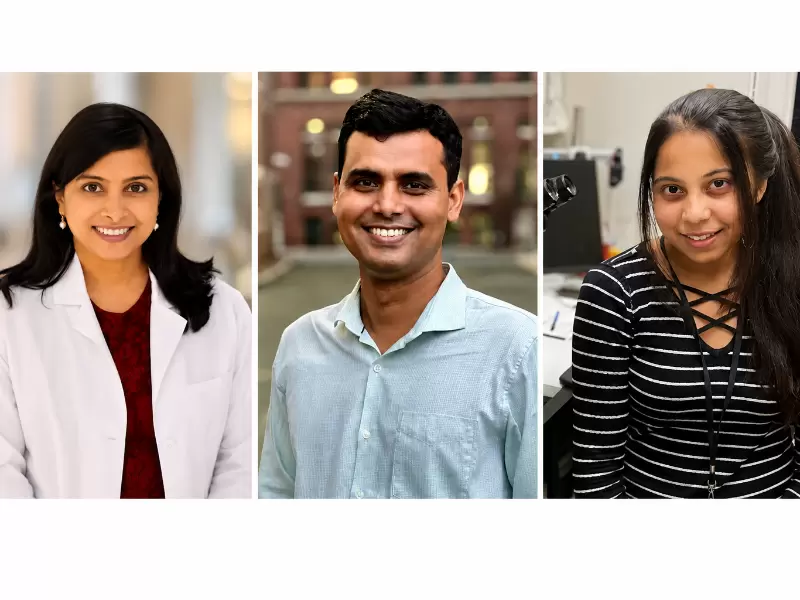 Simons Foundation / Simons Foundation
Three Indian-origin researchers have been named to the Simons Foundation’s 2026 class of its Fellows-to-Faculty program to support talented early-career scientists and their research visions as they transition into tenure-track faculty positions in their fields.
Rajan Thakur, Krithi Irmady and Titas Sengupta will join 15 recipients who will be supported through the Simons Foundation Autism Research Initiative (SFARI) and the Simons Collaboration on Plasticity and the Aging Brain (SCPAB).
ALSO READ: Stanford professor Saumitra Jha among Social Science Breakthrough finalists
Fellows receive funding toward the end of their postdoctoral careers and a $600,000 faculty research grant commitment over three years.
“We are excited to welcome this talented cohort of scientists to the Simons community,” said Kelsey Martin, executive vice president of autism and neuroscience at the Simons Foundation.
“Their diverse expertise, including clinical insights and computational approaches, reflects the increasingly interdisciplinary nature of basic science, and we look forward to seeing all that they accomplish,” Martin said.
Thakur is a research associate in the Department of Neuroscience at Brown University. He received his B.Sc. in microbiology from Pune University and his Ph.D. in cell and developmental biology from the National Centre for Biological Sciences in India.
During his doctoral studies with Raghu Padinjat, Thakur made significant contributions to understanding the role of lipids in photoreceptor function through in vivo studies in Drosophila, identifying a light-dependent lipid signaling process critical for maintaining photoreceptor sensitivity.
Building on this foundation, Thakur’s postdoctoral work with Kate O’Connor-Giles has focused on the roles of lipid transfer proteins in neurodevelopment and how their disruption may contribute to neurological disorders.
His research integrates CRISPR-based genetic models, functional analyses of neuronal development, function and behavior; in vivo cell biological approaches; and proteomics and genomics to uncover fundamental mechanisms in lipid signaling in the nervous system.
Thakur’s long-term research aim is to define how lipids and lipid-dependent inter-organelle communication regulate nervous system development and function by directly investigating lipid signaling genes implicated in autism and related neurodevelopmental disorders.
Irmady is an assistant professor and physician-scientist at Rockefeller University. She received her medical degree from Mysore Medical College in India and her doctoral degree in neuroscience from the University of Heidelberg in Germany.
She completed her residency in neurology at Yale University, followed by a movement disorders fellowship at Columbia University and a master’s degree in clinical and translational research at Rockefeller University.
Irmady’s research program seeks to understand how RNA regulation shapes synaptic plasticity and neuronal function. She is investigating how RNA-binding proteins control cell-type-specific RNA processing in the brain and how these mechanisms influence resilience and vulnerability during cognitive and motor aging.
By integrating genomics and molecular neuroscience, her work seeks to identify RNA-based mechanisms that can be targeted to preserve brain function with aging.
Irmady’s research is currently supported by the National Institutes of Health through a K08 award, the Simons Foundation Fellows-to-Faculty Award and the George C. Cotzias Fellowship from the American Parkinson Disease Association. Her work has previously received support from the American Academy of Neurology and the Bumpus Foundation.
Sengupta is a postdoctoral fellow in Coleen Murphy’s lab at Princeton University. She completed her B.S. and M.S. in biological sciences at the Indian Institute of Science Education and Research in Kolkata, India, and earned her Ph.D. in cell biology from Yale University.
Congratulations to Rockefeller's Krithi Irmady (@k_irmady), a 2026 recipient of the Fellows-to-Faculty Award from the @simonsfdn! She investigates how RNA regulation shapes synaptic plasticity and neuronal function.
— Rockefeller University (@RockefellerUniv) August 19, 2026
: https://t.co/EEbf6x1Pg6 pic.twitter.com/DmqpS7bbUx
As a graduate student in Daniel Colón-Ramos’ lab at Yale University, Sengupta asked how developing neurons sort into specific nerve bundles to integrate into the correct neural circuits.
She collaborated with microscopists and computer scientists to establish new imaging and labeling systems in C. elegans embryos and showed that differential adhesion regulates the placement of neurites, not through conventional neurodevelopmental programs such as outgrowth from the tips or endings, but through a new mechanism of retrograde zippering.
Sengupta’s postdoctoral research in Coleen Murphy’s lab showed that forgetting of short-term associative memory requires new gene transcription on rapid timescales, challenging the idea that short-term memories are regulated solely at the protein level.
She further discovered that epigenetic dysregulation of forgetting-associated transcription accelerates forgetting with age and that pathways promoting active forgetting of memories can be targeted to reverse age-related memory decline.
As she transitions to independence, Sengupta’s work will address how conserved epigenetic modifiers are regulated, targeted to specific loci and influenced by external and internal states in the adult and aging nervous system.
Sengupta is a recipient of numerous awards, including the Damon Runyon Fellowship Award, the Dale F. Frey Award for Breakthrough Scientists and the Gruber Science Fellowship.
Discover more at New India Abroad.
Leave A Comment
Related



ADVERTISEMENT

ADVERTISEMENT
E Paper
Video

Comments
Start the conversation
Become a member of New India Abroad to start commenting.
Sign Up Now
Already have an account? Login