ADVERTISEMENT

ADVERTISEMENT



India stands firm on Atmanirbharta in fluid global landscape: Former RBI chief
Das pointed out that in this fluid global landscape, India has embraced Atmanirbharta, a vision of self-reliance, as the overarching principle of the country’s policies.
-
 IANS
IANS - Fri, 09, Jan 2026
- 13:49 EST
- 18
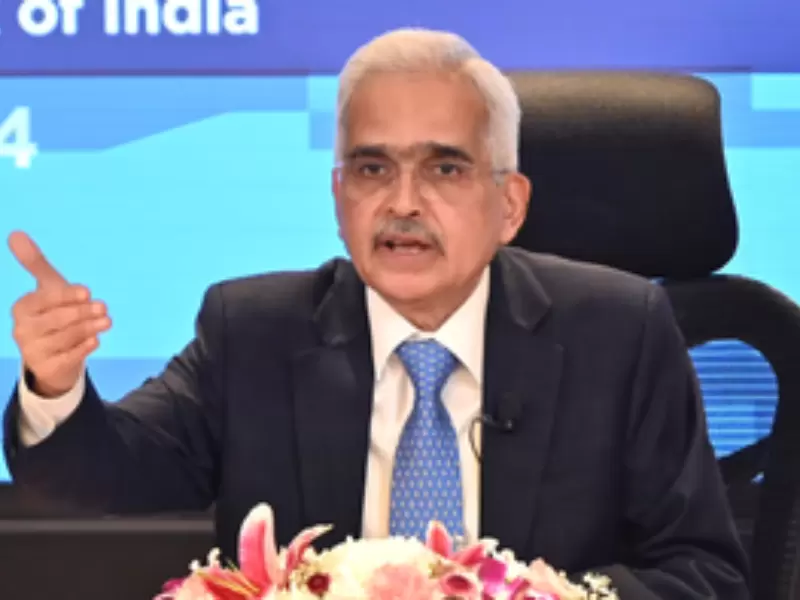 India stands firm on Atmanirbharta in fluid global landscape: Principal Secretary to Indian PM / Courtesy: IANS
Shaktikanta Das, Principal Secretary-2 to the Prime Minister, said on Jan. 9 that India is headed to be the fastest-growing economy in the world, despite geopolitical tensions and trade barriers.
Delivering the Inaugural Bibek Debroy Memorial Lecture, Das highlighted that the shifting geopolitical winds and trade policies are reshaping the global economic order. Traditional multilateralism, once a cornerstone of global governance, is increasingly being sidelined by geopolitical rivalries, protectionism, and fragmentation.
Das pointed out that in this fluid global landscape, India has embraced Atmanirbharta, a vision of self-reliance, as the overarching principle of the country’s policies.
“Recognizing these realities, India’s stance in the changing world order is clear. India stands for a cooperative and rules-based global system, but at the same time, we are proactively forging partnerships and strategies to secure our national interest in a world where power is more diffused,” he explained.
He said, "Atmanirbharta envisioned by Prime Minister Modi is not being isolationist but a strategy to build core competence and resilience. Atmanirbharta has two complementary dimensions: economic self-reliance and geopolitical autonomy."
"A self-reliant economy, with strong domestic capabilities, gives us greater strength to sustain our economic growth, and an autonomous foreign policy enables us to deal with the external environment in our best national interest."
He further stated that underpinning India’s stability and growth is a continuity of structural reforms that the government has implemented over the past decade across taxation, financial architecture, labor regulations, and business facilitation.
Highlighting the strength of the Indian economy, he said in 2025–26, the real GDP is expected to grow at 7.4 percent as per the projections of the National Statistics Office (NSO). Further, India is projected to contribute around 18 percent to the global GDP growth in 2025-26.
Equally important, inflation has been brought under control due to prudent monetary policy and supply-side measures.
Fiscal consolidation is progressing well, with the central government’s gross fiscal deficit falling from 9.2 percent in 2020-21 to 4.8 percent in 2024-25. This commitment to fiscal prudence is restoring headroom for future counter-cyclical policies and keeping the public debt levels sustainable.
The former RBI governor also said that the financial sector has also witnessed remarkable recovery over the past decade. The health of the banks, NBFCs, and other financial entities is now perhaps at its best. The Gross Non-Productive Assets (GNPA) of banks have fallen to incredible levels. The banking sector has also witnessed significant improvement in governance.
On the external front, India’s balance of payments position is healthy with a sustainable current account deficit. Our foreign exchange reserves remain robust at a little below US $700 billion and are acting as a buffer against external shocks. Strong reserves give investors the confidence that India will be able to service its external payment obligations.
Das pointed out that these outcomes are the result of prudent policies and resilient buffers built over time.
He highlighted that the government’s continuity and consistency of reform momentum has been driving growth with stability. The Goods and Services Tax (GST) has been a game-changer for India’s economy. It unified the country into a single common market by replacing a web of cascading indirect taxes. It has increased tax compliance and efficiency, broadened the tax base, and removed interstate barriers.
The recent comprehensive review and next-gen reforms in GST (Sept. 2025) have made the tax structure simpler and even more consumer-friendly. It has unleashed a strong impulse to domestic consumption and growth.
The Insolvency and Bankruptcy Code (IBC)—2016 has fundamentally reformed India’s credit culture. Prior to the IBC, resolving a stressed company in India was almost a futile saga dragging on for years. The IBC established a modern, time-bound insolvency resolution process, shifting power to creditors and enabling faster recovery of value. It is a major reform that aids and fosters banking sector stability, Das explained.
In parallel, reforms in the real estate sector through the Real Estate (Regulation and Development) Act (RERA) have enhanced transparency, accountability, and consumer protection.
The four Labour Codes which were enacted in 2020 and notified for implementation in Nov. 2025, mark a transformative consolidation of 29 labor laws into four unified Labour Codes, covering wages, social security, industrial relations, and occupational safety, Das added.
Related











ADVERTISEMENT
ADVERTISEMENT
E Paper
Video

Comments
Start the conversation
Become a member of New India Abroad to start commenting.
Sign Up Now
Already have an account? Login