ADVERTISEMENT

ADVERTISEMENT



India and its American diaspora: How to move from engagement to partnership
As Indian Americans grow in economic and political influence; New Delhi has an opportunity to deepen its global outreach by fostering dialogue that goes beyond lobbying the U.S. government and remittances to include shared democratic values.
-
1758210324.png) Sital Kalantry
Sital Kalantry -
 Ashini Jagtiani-Williams
 - Thu, 29, Jan 2026
- 15:00 EST
- 58
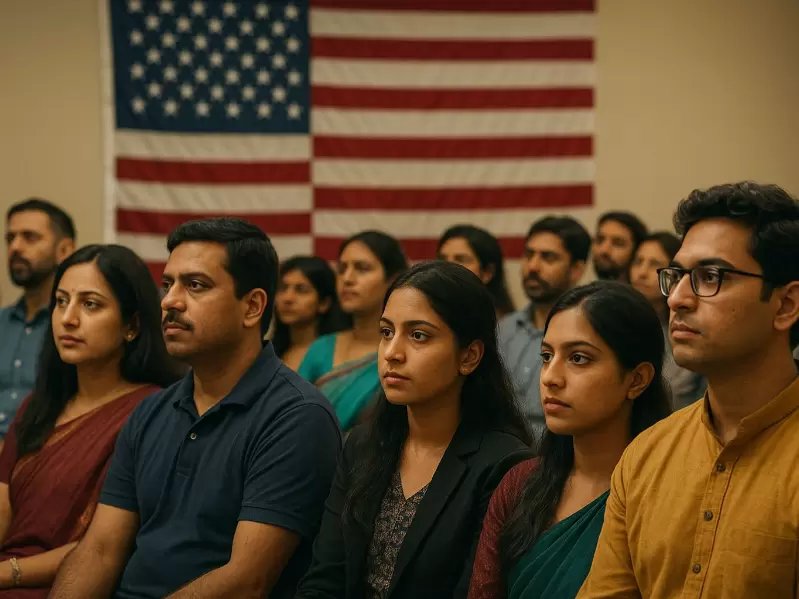 Representative image / AI generated
Indian Americans today occupy a distinctive place in the relationship between the world’s two largest democracies. They are among the most economically successful immigrant communities in the United States, increasingly visible in public life, and many of them are deeply invested—financially, culturally, and emotionally—in India’s future.
Over the last two decades, New Delhi has recognized this growing influence and worked to strengthen its engagement with the diaspora. The next step is to ensure that this relationship continues to mature as a genuine partnership rather than a one-way channel for advocacy on behalf for India’s interests.
The Government of India has built a significant institutional architecture to connect with its overseas population. The creation of the Ministry of Overseas Indian Affairs in 2004—later merged into the Ministry of External Affairs in 2016—signaled a formal commitment to diaspora outreach.
The annual Pravasi Bharatiya Divas has become a high-profile platform to celebrate overseas Indians and highlight their role in India’s global standing. These efforts reflect an understanding that the diaspora is not only a cultural community, but also a strategic asset.
That role is particularly visible in economic terms. India is the world’s largest recipient of remittances, receiving approximately $135 billion annually. About 28 percent—more than $35 billion—comes from the United States alone.
Beyond remittances, Indian Americans contribute through investment, philanthropy, entrepreneurship, and professional networks that shape how India is perceived in business, technology, education, and policy circles across the United States.
It is in this context that Member of Parliament Shashi Tharoor recently encouraged Indian Americans to take a more active role in lobbying the U.S. government for lower tariffs on Indian goods. His appeal underscored the idea that the diaspora can serve as an important bridge between Washington and New Delhi, advancing shared economic and strategic interests at a moment of global realignment.
Tharoor’s observation that the “India lobby” in Washington has lost some of its edge prompted a range of reactions as further elaborated in a discussion on the Roundglass India Center’s podcast with U.S.-India expert Kapil Sharma. The broader question that has emerged is about the kind of engagement that is appropriate with a mature and influential diaspora.
This question came into sharper focus when New York City Mayor Zohran Mamdani expressed concern about the prolonged pre-trial detention of Indian student activist Umar Khalid, arrested in connection with the 2020 Delhi riots.
Mamdani wrote a letter urging adherence to fair trial norms—principles that India itself has long championed in international forums and diplomatic settings. Mamdani’s family is from India and he was elected into office by Indian American voters in New York.
Indian American Representative Pramila Jayapal echoed these concerns in a joint letter to the Indian Ambassador to the United States, co-signed by seven other U.S. lawmakers. Their communications focused on due process and international legal standards not on partisan or geopolitical considerations.
The Ministry of External Affairs forcefully responded by claiming that Mamdani and others were inappropriately interfering in Indian domestic affairs. Indian Americans who raise these issues often do so not as external critics, but as members of a global Indian community with personal, familial, and civic ties to the country.
For them, engagement with India is not limited to trade, investment, or strategic alignment; it also includes dialogue about values, rights, and the strength of democratic institutions.
The Indian American community itself is remarkably diverse—generationally, religiously, politically, and professionally. It includes business leaders, academics, lawyers, technologists, healthcare workers, and elected officials. Consequently, they are bound to have diverse viewpoints.
Many are accustomed to participating in robust democratic debate in the United States, and they bring those expectations into their relationship with India as well. This diversity can be a source of strength, offering New Delhi a wide range of perspectives and global connections.
None of this suggests that India should shape its domestic policies based on diaspora opinion, or that every critique requires an official response. Sovereign decision-making remains, and should remain, firmly within India’s democratic institutions. But as India’s global influence grows, so too does the opportunity to model a form of diaspora engagement that is confident, open, and rooted in dialogue.
India’s outreach to its overseas community has already achieved much—economically, culturally, and diplomatically. The next phase can build on that success by fostering spaces for conversation that go beyond celebration and advocacy to include thoughtful, respectful exchange. If engagement is understood not merely as mobilization, but as partnership, it can deepen the bond between India and one of its most dynamic global communities—and strengthen the democratic values that both countries hold in common.
Sital Kalantry is a professor of law and Associate Dean at Seattle University School of Law and Founding Director of the Roundglass India Center.
Ashini Jagtiani-Williams is the Assistant Director at Roundglass India Center at Seattle University
(The views and opinions expressed in this article are those of the author and do not necessarily reflect the official policy or position of New India Abroad)
Related



.png)



ADVERTISEMENT

ADVERTISEMENT
E Paper
Video

Comments
Start the conversation
Become a member of New India Abroad to start commenting.
Sign Up Now
Already have an account? Login