ADVERTISEMENT

ADVERTISEMENT



Hindu values, the U.S. Constitution, and a silent American contradiction
Hindu civilizational values emphasize ethical conduct, restraint of power, pluralism of thought, and the balance between rights and responsibilities.
-
 Geeta Sikand
 - Thu, 15, Jan 2026
- 03:24 EST
- 568
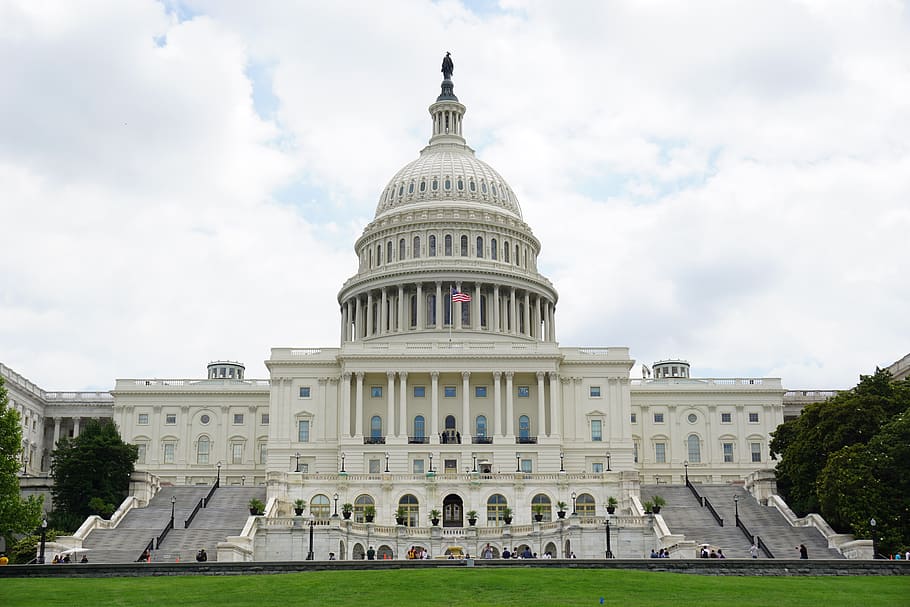 USA Parliament House / Google
Hindu Dharma—also referred to as Sanatan Hindu Dharma, or Hindutva in its civilizational sense—offers an ethical compass for governance, while the U.S. Constitution provides a civic framework. Together, they are not opposing systems but complementary ones. Each empowers individuals to live meaningful lives while contributing to society. Far from being in conflict, Hindu Dharmic values and American constitutional principles are philosophically, morally, and practically aligned.
The U.S. Constitution rests on three foundational pillars: liberty, equality, and pluralism. Liberty and equality are the ideals; pluralism is the mechanism that allows diverse communities to coexist under a shared civic framework without abandoning their identities. Federalism, separation of powers, and constitutional protections were designed to manage difference, not erase it. These principles were not rhetorical aspirations but practical guarantees of equal treatment and fundamental rights.
For Hindu Americans, this promise has long felt intuitive. Hindu civilizational values emphasize ethical conduct, restraint of power, pluralism of thought, and the balance between rights and responsibilities. In everyday life, these values express themselves through respect for the law, investment in education, entrepreneurship, and strong commitments to family, community, and civic duty.
ALSO READ: HinduACTion plans Capitol Hill briefing on minorities
A Shift in American Experience
And yet, something has shifted. Despite their alignment with constitutional ideals and a strong record of contribution, Hindu Americans are increasingly viewed with suspicion rather than trust. Their faith is mischaracterized, their civic loyalty questioned, and their presence reframed as something to be managed rather than valued.
How did this contradiction take hold?
Relentlessly appalling attacks on Vivek Ramaswamy’s candidacy ultimately drove him off social media platforms. In recent years, Hindu candidates—including Vivek Ramaswamy and Neil Patel—have faced overt religious hostility. In one notable incident, a public question suggested that Ramaswamy’s Hindu faith disqualified him from political office, revealing a basic misunderstanding of America’s constitutional guarantee of religious liberty.
These incidents are not isolated. They reflect a broader rise in Hinduphobia—religious prejudice against Hindus—documented by organizations such as the Coalition of Hindus of North America and the Hindu American Foundation. The implication that Hindu faith and American democracy are incompatible demands serious scrutiny. The answer is unequivocally no.
Hindu Dharma and the Constitution
At the heart of Hindu Dharma lies a central idea: the same divine reality exists in all beings. The Upanishadic teaching Sarvam Khalvidam Brahman expresses this plainly. Every individual carries equal spiritual potential. Discrimination and dehumanization, therefore, are violations of Hindu Dharma itself.
Hindu traditions have never required uniformity of belief. They emphasize Shastra Bodha and Shatru Bodha—the practices of reasoned inquiry, debate, and discernment, alongside the responsibility to identify and resist genuine threats. Ethical wealth creation, entrepreneurship, respect for law, and accountable governance are not peripheral values in Hindu civilization; they are foundational.
For American readers, the parallels are unmistakable. Liberty of conscience, equality before the law, pluralism, and the expectation that freedom be paired with responsibility form the core of the U.S. Constitution. Hindu Dharma is not at odds with these principles. It arrived at them through its own civilizational journey.
Much of today’s confusion centers on the term “Hindutva,” which has been widely misrepresented in U.S. academic and media spaces. At the World Hindu Congress in Bangkok in 2023, the term was clarified as referring to the civilizational essence of Sanatan Hindu Dharma, not a political ideology. This clarification responded directly to academic campaigns that falsely equated Hindutva with extremism or white supremacy.
As documented by Hindu advocacy organizations and scholars, these portrayals reflect distortion rather than careful scholarship. When civilizational concepts are interpreted through ideological bias rather than historical and cultural context, misleading narratives harden into institutional prejudice.
The irony is difficult to miss. A tradition rooted in pluralism, debate, moral restraint, and civic responsibility is increasingly portrayed as incompatible with democracy—even though its values mirror the very constitutional principles designed to protect all Americans.
A Record That Speaks for Itself
The lived record of Hindu Americans reinforces this alignment. While Hindus make up roughly 1.5 percent of the U.S. population, they contribute close to 6 percent of federal income taxes. Indian immigrants, according to economic research, provide the largest net positive fiscal contribution of any immigrant group, saving U.S. taxpayers an estimated $1.7 million per household over a 30-year period.
Public data on welfare usage further underscores this distinction: when immigrant reliance on public assistance is ranked by country of origin, India is notably absent. Hindu Americans are prominently represented in medicine, technology, engineering, small business, academia, and public service. Their temples are self-funded, non-proselytizing, and their civic participation steady and consistent.
This reality is widely recognized across the political spectrum. Surveys show broad acknowledgment that America has benefited from Indian immigration. The community is deeply invested in the nation’s success.
From Fringe Hostility to Institutional Suspicion
Despite this record, Hindu Americans have increasingly become targets of hostility driven by narrative rather than evidence. Fringe white supremacist figures have amplified anti-Indian and anti-Hindu rhetoric online, portraying skilled immigrants as demographic or economic threats. Investigations show that much of this content is artificially amplified by foreign bot networks rather than organic American discourse.
The H-1B visa program has become a focal point of this manufactured hostility. Labor-market versions of “replacement” rhetoric portray Hindu and Indian professionals as fraudsters or job thieves, despite data showing that H-1B workers fill critical shortages and make up a small fraction of the overall labor force. Claims of widespread fraud remain unsupported and function primarily as racialized propaganda.
More troubling is how these narratives have moved beyond online spaces and into public institutions. Hindu candidates have faced overt religious hostility. Legislative actions such as California’s SB-403 and subsequent measures have disproportionately framed Hindus as suspect, despite existing civil rights laws already prohibiting discrimination. When such narratives enter law, the result is not protection but stigmatization.
The consequences are no longer abstract. Hindu Americans are still reeling from a wave of attacks on Hindu temples across the United States. What begins as distortion, when left unchecked, moves from rhetoric to institutions—and from institutions to real harm.
The Human Cost
Hindu families and young people bear the brunt of these distortions. Educational materials that falsely equate Hinduism with caste oppression have contributed to bullying and psychological harm in schools, placing Hindu students in the position of defending identities misrepresented by authority figures.
Data from academic research centers, hate-crime statistics, and state reporting programs show a clear rise in anti-Hindu incidents. Studies also indicate that some Diversity, Equity, and Inclusion frameworks may intensify hostility rather than reduce it when built on flawed assumptions.
History offers a warning: when manufactured hatred becomes normalized, it rarely remains rhetorical.
A Question That Demands an Answer
If Hindu values align closely with the moral foundations of the U.S. Constitution, and if Hindu Americans have demonstrated consistent civic contribution and lawful conduct, why has this community become a focus of growing suspicion?
The answer does not lie in constitutional principles or lived experience. It lies in selective narratives that distort pluralism and apply equality through ideological lenses rather than impartiality.
A Call for Fairness
Hindu Americans are not asking for special treatment. They are asking for equal treatment under a Constitution they respect, uphold, and help sustain.
A democracy committed to pluralism cannot afford selective suspicion—especially toward communities whose values and conduct align so closely with its founding ideals. The contradiction is now visible. Whether American institutions confront it openly or allow it to deepen silently will determine how faithfully those ideals are upheld.
Geeta Sikand is a Hindu author specializing in countering Hinduphobia, a media analyst, and an associate clinical professor of medicine (cardiology) at the University of California, Irvine. She is vice president for communications and community outreach at Americans4Hindus.
(The views and opinions expressed in this article are those of the author and do not necessarily reflect the official policy or position of New India Abroad.)
Discover more on NewIndiaABroad
Related
.jpg)






ADVERTISEMENT

ADVERTISEMENT
E Paper
Video

Comments
Start the conversation
Become a member of New India Abroad to start commenting.
Sign Up Now
Already have an account? Login