ADVERTISEMENT
ADVERTISEMENT



Haq Ka Pani: Reclaiming India’s Rightful Share
For decades, India exercised patience, even at tangible cost to its own development. That era is giving way to one of clarity and balance.
-
1782424848.png) Atul Jain
Atul Jain - Thu, 25, Jun 2026
- 18:01 EDT
- 32
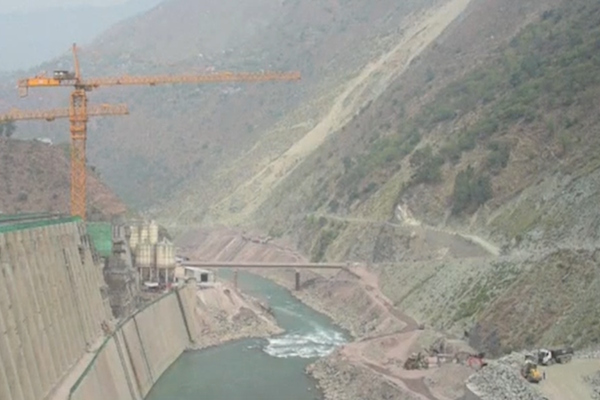 Indus River /
The Hon’ble Prime Minister’s Independence Day assertion last year that- “Haq ka pani will serve Indian farmers”- marks a decisive shift in India’s approach to the Indus Waters.
Far from being a departure, it is a long overdue correction of historical restraint that has disproportionately disadvantaged India while enabling persistent misuse downstream. It signals that India will no longer allow its rightful share of water to go underutilized and wasted while its own farmers face scarcity.
When the Indus Waters Treaty was signed in 1960, India, as the upper riparian, made a remarkable concession by agreeing to restrict itself to about 20% of the Indus system waters, allocating the overwhelming 80% share to Pakistan. This decision reflected extraordinary goodwill. The expectation was that such generosity would be matched by responsible conduct and a cooperative spirit. Instead, over the decades, that spirit was never reciprocated.
The Hon’ble Prime Minister’s statement must also be seen against the backdrop of repeated acts of cross-border terrorism emanating from Pakistan that have vitiated the trust. The long-standing reality, captured in the phrase, “blood and water cannot flow together”, is no longer rhetorical. Incidents such as the Pulwama terror attack, along with other attacks in the Valley, including the Pahalgam region, have underscored how sustained hostility undermines the very foundation on which cooperative arrangements like the Treaty rest. No agreement, however well-crafted, can remain insulated from a complete breakdown of trust.
At a structural level, the Treaty itself contained asymmetries that became increasingly untenable. It imposed considerable restrictions on India’s use of its allocated waters, yet places no corresponding obligation on Pakistan to justify its requirements or ensure efficient utilization. This is reflected in the widespread inefficiencies, losses in irrigation systems (estimated at about 47 MAF), inadequate storage, and poor water management on their side leading to large volumes of Indus waters (upto 35 MAF) flowing to the Arabian Sea unutilized.
Meanwhile, India has borne the cost of restraint. Region such as Rajasthan, Haryana have remained water-stressed, their agricultural potential constrained despite the availability of water that India is entitled to use. This imbalance is precisely what the statement seeks to correct.
“Haq ka pani” is, therefore, about rightful utilization—not denial. India is asserting that every drop of Indus system will now be used productively for irrigation, hydropower, and development.
Indian projects on the Western rivers, including Baglihar and Salal, highlight another dimension of the challenge. Over time, sedimentation has reduced their efficiency and storage capacity.
Flushing operations, essential for maintaining dam safety and performance, were delayed for years due to unfounded objections and procedural hurdles created by Pakistan. The eventual need to remove accumulated sediment only reinforced the cost of such delays. Going forward, India’s approach will prioritize timely, state of art technical interventions, without being held hostage by malign and hyperbolic political theatrics disguised as technical differences.
The broader message is clear. First, India will fully utilize its rightful share of water in water-stressed regions. Second, it will no longer accept a framework where inefficiency and waste go unchecked on one side while artificial and unscientific constraints are sought to be imposed on the other. Third, it will assert its technical autonomy, ensuring that infrastructure creation and maintenance proceed apace, in line with current scientific thinking and international best practices.
This is not a repudiation of any customary principles; it is a response to the destruction of the foundational pillars of the Treaty. When the very promises that undergird a treaty are breached by hostility, terror, misinformation, and misuse, recalibration becomes inevitable.
For decades, India exercised patience, even at tangible cost to its own development. That era is giving way to one of clarity and balance.
“Haq ka pani” is an overdue commitment that India’s water will serve its people, its farmers, and its future. While some vested interests may try to mischaracterize it as a threat, it is nothing but a necessary course correction in a changing context.
The writer is Former Chairman of India's Central Water Commission
(The views and opinions expressed in this article are those of the author and do not necessarily reflect the official policy or position of New India Abroad.)
Discover more at New India Abroad.
Related











ADVERTISEMENT

ADVERTISEMENT
E Paper
Video

Comments
Start the conversation
Become a member of New India Abroad to start commenting.
Sign Up Now
Already have an account? Login