ADVERTISEMENT
ADVERTISEMENT



Foreign Influence and the Lessons America Can Draw from India
As U.S. scrutinizes foreign funding, India's FCRA offers lessons on transparency, regulation and institutional influence.
-
 Mandar Pattekar
 - Thu, 30, Jul 2026
- 01:44 EDT
- 21
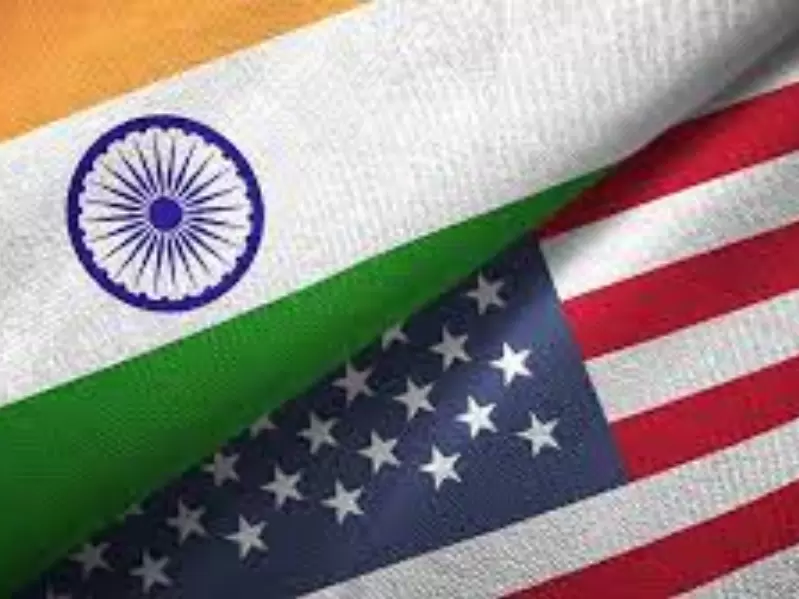 Representative image / File photo/IANS
As Congress expands its investigations and legislative scrutiny of foreign funding and influence in American universities, Washington is confronting a challenge India identified years ago.
India’s Foreign Contribution (Regulation) Act, or FCRA, was enacted in 2010 and tightened in 2020 to regulate foreign funding received by Indian organizations, with the stated aim of protecting national sovereignty, security, and democratic institutions. The scale of such funding is substantial. Between fiscal years 2019–20 and 2021–22, FCRA-registered organizations received approximately ₹55,450 crore, or about US$7.5 billion at contemporaneous exchange rates, in foreign contributions.
Over the past decade, more than 22,000 FCRA registrations have been canceled, while thousands of others have been allowed to lapse, leaving roughly 14,500 active registrations. American lawmakers and officials have repeatedly criticized this approach. During a 2024 Senate Foreign Relations Committee hearing, Senator Tim Kaine said the FCRA “makes it very difficult for NGOs operating in India to receive donations from people around the world,” noting that organizations such as Amnesty International had been forced to shut down their operations in the country. In 2017, after India blocked the Christian nonprofit Compassion International from receiving foreign funds, the State Department said it would raise the matter directly with New Delhi. India’s response was blunt: any NGO operating in the country must comply with Indian law.
Now, the chickens are coming home to roost.
The irony is precise, not merely poetic. Washington complained that the FCRA made it too difficult for foreign money to reach Indian civil society. America’s current anxiety runs in the opposite direction: that it has been too easy for foreign money to reach U.S. universities and think tanks, with too little transparency about where that money comes from or what influence it may purchase. Washington is now discovering a problem whose solution it rejected when India invoked it.
The scale of the issue in the United States is significant. The Department of Education data show that U.S. colleges and universities reported more than $5.2 billion in foreign gifts and contracts in 2025, spanning over 8,300 transactions, with Qatar alone accounting for more than $1.1 billion. These disclosures do not prove wrongdoing, but they reveal the extent of foreign financial ties to institutions that educate America’s future judges, diplomats, military officers, scientists, and policymakers. This raises a legitimate question: Can foreign money become a vehicle for advancing another nation’s strategic interests within democratic institutions, and do governments have a legitimate role in ensuring transparency around that risk?
Concern over undisclosed foreign influence has increasingly crossed party lines. Lawmakers have proposed tougher disclosure requirements under Section 117 of the Higher Education Act, while bipartisan legislation has sought to extend similar transparency obligations to think tanks and other tax-exempt policy organizations.
India, meanwhile, has moved one step further. Its newest FCRA amendment extends this logic by creating a legal framework for managing assets acquired through foreign contributions after an organization’s registration has lapsed. Supporters argue that the measure closes a genuine regulatory gap; critics warn that any expansion of government authority must be accompanied by strict due-process protections.
The United States already treats foreign influence as a national-security concern in other contexts. The Foreign Agents Registration Act, or FARA, requires certain individuals and organizations acting on behalf of foreign principals to disclose their activities. The Committee on Foreign Investment in the United States, or CFIUS, reviews certain foreign acquisitions and investments. Federal law also requires universities to disclose qualifying foreign gifts and contracts.
All of these mechanisms rest on the same premise: transparency matters when foreign governments or entities seek to build influence within democratic institutions. The question is whether existing safeguards remain adequate when influence increasingly flows through universities, think tanks, and advocacy organizations rather than through traditional espionage or statecraft.
India’s approach is not a perfect model. But criticizing India’s experience and then quietly adopting its underlying logic years later would be a mistake worth acknowledging. The geopolitical contests of the 21st century will not be defined solely by military or technological competition. They will also be shaped by struggles for influence within the institutions that generate ideas, train leaders, and shape public policy.
On this front, America has something real to learn from India, not because India’s approach is ideal, but because it recognized the challenge and accepted the political cost of acting on it before Washington was prepared to do the same.
(The views and opinions expressed in this article are those of the author and do not necessarily reflect the official policy or position of New India Abroad.)
Discover more at New India Abroad.
Leave A Comment
Related










ADVERTISEMENT

ADVERTISEMENT
E Paper
Video

Comments
Start the conversation
Become a member of New India Abroad to start commenting.
Sign Up Now
Already have an account? Login