ADVERTISEMENT

ADVERTISEMENT



Canada seeks views on free trade agreement with India
Maninder Sidhu has announced the launch of public consultations on four free trade agreement negotiations.
-
 Prabhjot Paul Singh
 - Mon, 15, Dec 2025
- 22:00 EST
- 74
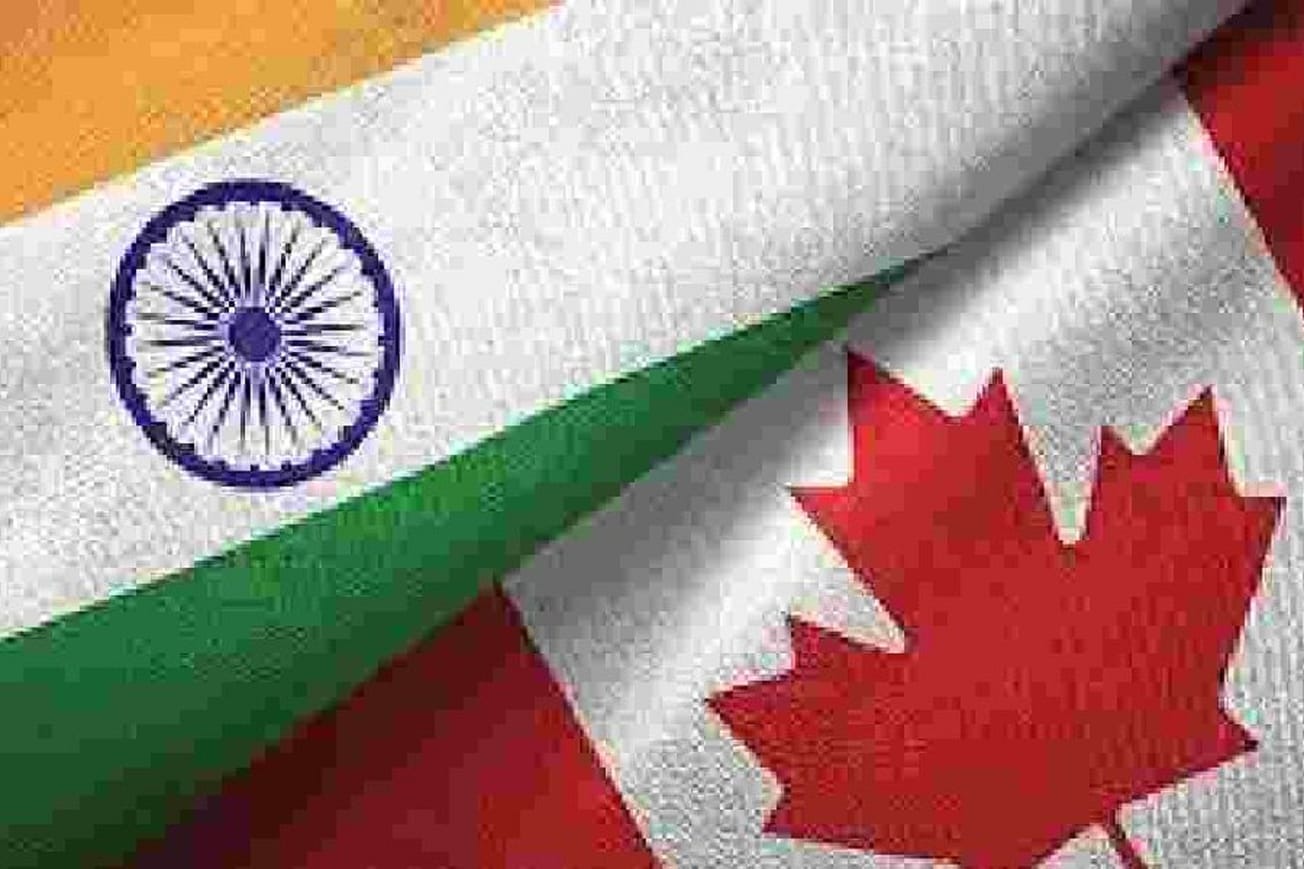 India Canada / Google
After years of bitterness and uncertainty in bilateral relations, India and Canada are working to reset their business and trade strategies to strengthen ties.
The two countries share a common challenge: both have been affected by the tariff policies pursued by US President Donald Trump since the start of his second term. As a result, India and Canada are increasingly looking beyond the United States in search of new trade partners while seeking to protect domestic producers.
Hit hard by recent US trade actions, Canada is now looking inward and outward, reassessing its economic priorities and exploring new international partnerships beyond its largest and longest-standing trading partner.
Canada’s Minister of International Trade, Maninder Sidhu — the second Canadian minister to visit India after Anita Indira Anand — has announced the launch of public consultations on four free trade agreement negotiations. These include potential agreements with India, the United Arab Emirates, Thailand and the Mercosur bloc.
According to an official communiqué, Canada is committed to building strong and diversified international partnerships that drive economic growth and create good jobs. As part of its effort to double exports to non-US markets over the next decade, Ottawa sees these agreements as critical to expanding market access for Canadian goods and services.
Public consultations will help shape Canada’s negotiating positions and ensure that benefits are maximized for Canadians by reflecting their specific interests and priorities, Sidhu said. Canadians have been invited to submit their views until Jan. 27, 2026, with consultations running from Dec. 13, 2025, through that date.
“Canada is working to strengthen trade with reliable partners around the world and aims to double Canadian exports to non-US markets in the next decade, which would generate $300 billion more in trade,” Sidhu said. “Pursuing new trade negotiations will help reach this objective, open new markets and opportunities for our workers and businesses, and create high-paying jobs across the country.”
India and Thailand are identified as key partners under Canada’s Indo-Pacific strategy. In 2024, India was Canada’s seventh-largest trading partner in goods and services, with two-way trade totaling $30.8 billion. Canadian merchandise exports to India stood at $5.3 billion, up 3.5 percent from 2023, while services exports reached $15.6 billion.
Thailand, the third-largest economy in the Association of Southeast Asian Nations, was Canada’s second-largest merchandise trading partner in ASEAN in 2024. Canadian merchandise exports to Thailand were valued at $1.0 billion, while imports exceeded $5.3 billion.
Canada’s two-way merchandise trade with the United Arab Emirates totaled $3.4 billion in 2024, including $2.6 billion in exports and $801.8 million in imports. The UAE was Canada’s top merchandise export destination in the Middle East, with exports rising 24 percent in 2024 following a 14.2 percent increase the previous year.
The Mercosur bloc — comprising Argentina, Bolivia, Brazil, Paraguay and Uruguay — represented a combined GDP of $4.1 trillion and a population of 282 million in 2024, making it the world’s eighth-largest economy. Canada’s merchandise trade with Mercosur totaled $15.8 billion that year, with exports valued at $3.1 billion and imports at $12.8 billion.
On Nov. 23, Prime Minister Mark Carney and Indian Prime Minister Narendra Modi announced their agreement to launch negotiations toward a potential Comprehensive Economic Partnership Agreement (CEPA). In anticipation of formal talks beginning in 2026, Global Affairs Canada has launched public consultations through a notice in the Canada Gazette.
The consultations invite submissions from a wide range of stakeholders, including provincial and municipal governments, businesses of all sizes, industry associations, academics, civil society groups, labor unions, Indigenous communities, women and 2SLGBTQI+ groups, students, youth and other members of the public.
The government is seeking input on issues such as tariff reduction or elimination, non-tariff and technical trade barriers, sanitary and phytosanitary measures, services trade, environmental protection, labor rights, inclusion of underrepresented groups, and the promotion of transparency, good governance and human rights.
Submissions received will help inform Canada’s approach to CEPA negotiations with India. A free trade agreement between the two countries has remained under discussion for more than a decade, with both sides now signaling renewed momentum.
Related
.jpg)







.JPG)

ADVERTISEMENT

ADVERTISEMENT
E Paper
Video

Comments
Start the conversation
Become a member of New India Abroad to start commenting.
Sign Up Now
Already have an account? Login